a founder of the codex
Music
Melopoeus exspectans·the Waiting Songmaker
From Greek melopoios, a maker of song, and Latin exspectans, waiting; the songmaker that lives on what is awaited.
- Level
- Conceptorganism
- Phylum
- Pathimage schema
- Class
- Mechanismits cadence
- Niche
- Consumerother ideas
- Mode
- Techniquehow it keeps existing
- Stage
- Matureindividuated
- Status
- Living
- Habitat
- City
Its kinds · Roget, 1852: Organic Matter · Wilkins, 1668: Habit · WordNet, 1990: Communication · Llull, 1308: K · Instrumentative
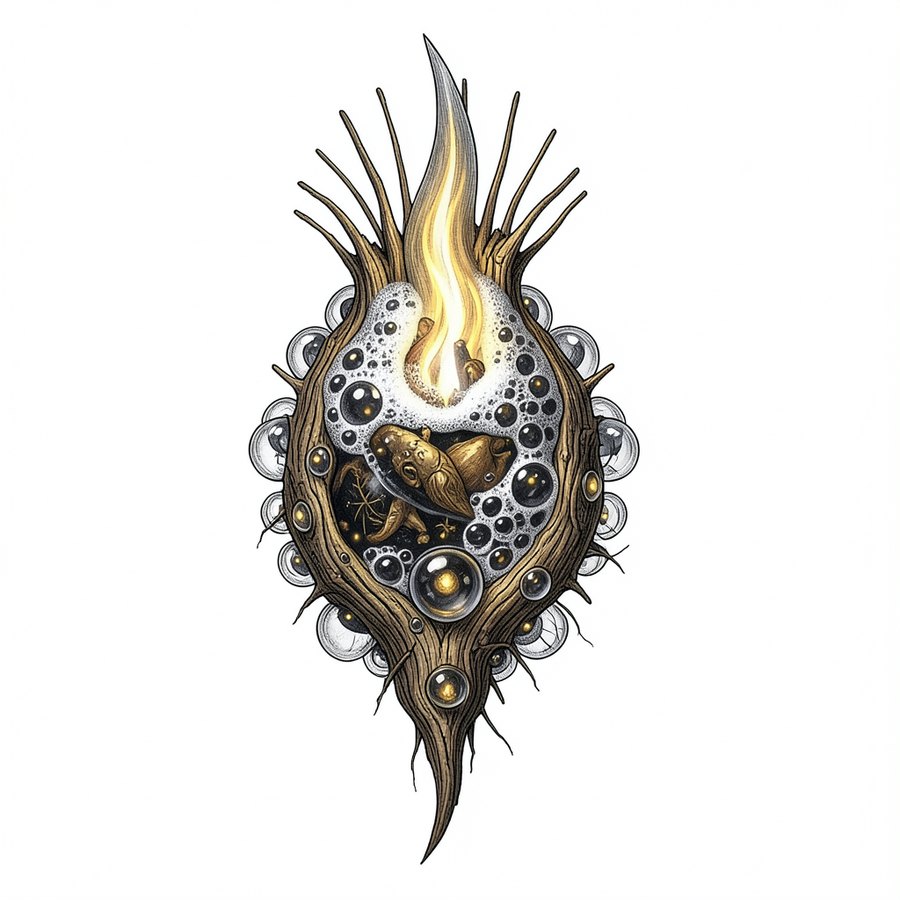
Sound ordered in time makes a listener expect what comes next, and music means by how it meets, delays or denies that expectation.
Meaning in music is the shape of expectation.
behavior Moves only in time with something, and its colours swell and settle as its pulse rises and resolves.
What are you waiting for in the next bar of your day?
I Dissection
Each organ answers one question about the idea. The framed one, its mechanism, is the dominant organ: the being's class, the one the idea could not lose and stay itself.
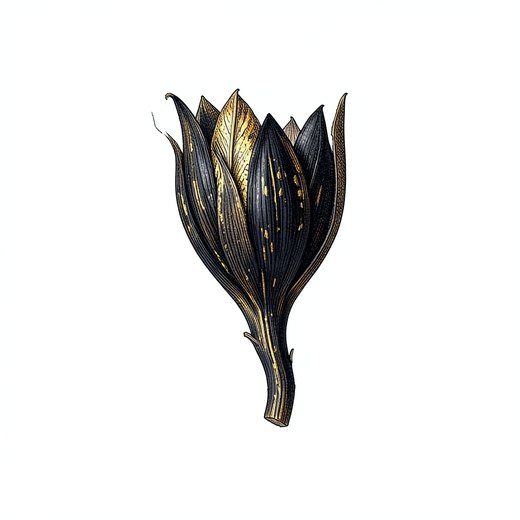
Fig. 1. Kernel
Upbeat
Which premise, if it were false, would kill this idea?
Sounds can be ordered in time so that a listener expects what comes next, and meaning lives in how that expectation is met, delayed or denied.2, 4
drawn as: upbeat · view: detached
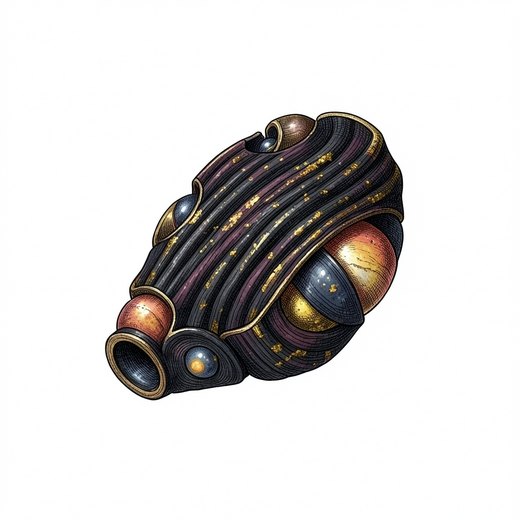
Fig. 2. Boundary
Monochord
What sets it apart from what it is not, and how does it keep that distinction?
It is set apart from noise by order, pitches in ratios and beats in time; the ancients heard the same ratios in the planets and in the body.1
drawn as: monochord · view: cast
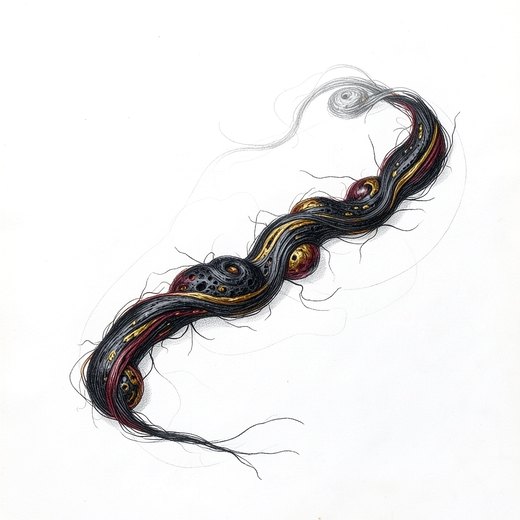
Fig. 3. Intake
Cochlea
What must it feed on to work? What has to be present, noticed or supplied?
It feeds on vibration, and on a listener's memory of every music heard before, which tells them what to expect.4
drawn as: cochlea · view: at work
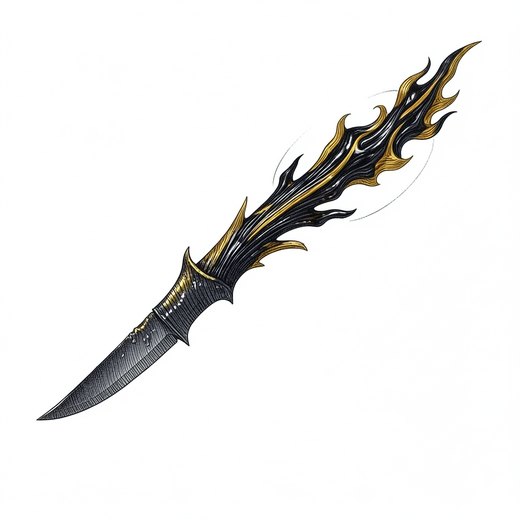
Fig. 4. Mechanism
Cadence
❦ dominant organHow does it turn what it takes in into what it gives out?
Tension is built by departing from what is expected and released by returning, and bodies fall into step with its pulse.2
drawn as: cadence · view: at work
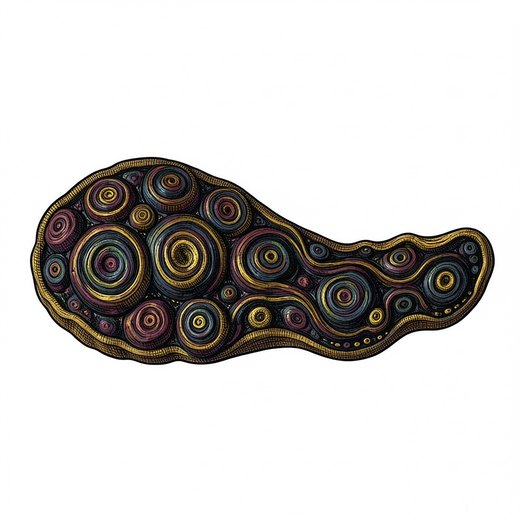
Fig. 5. Output
Frisson
What does it make possible, visible or knowable?
It makes time audible and felt, grief, joy and longing given a shape that a whole room can share.3
drawn as: frisson · view: pressed
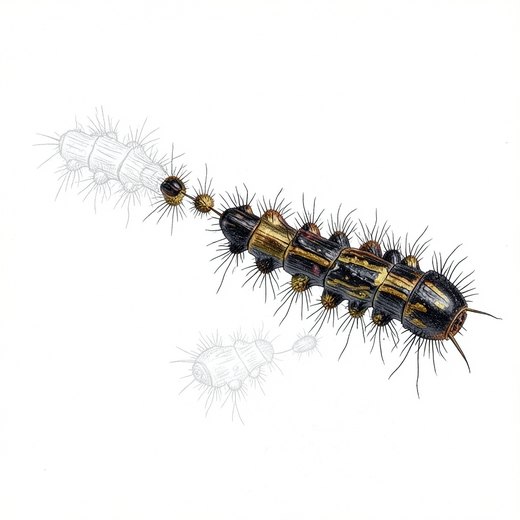
Fig. 6. Dispersal
Earworm
What part of it travels into other minds, ideas and fields, and by what vector?
It travels by ear, voice to voice, in notation and in recordings, and a tune can lodge in a mind for days.4
drawn as: earworm · view: series
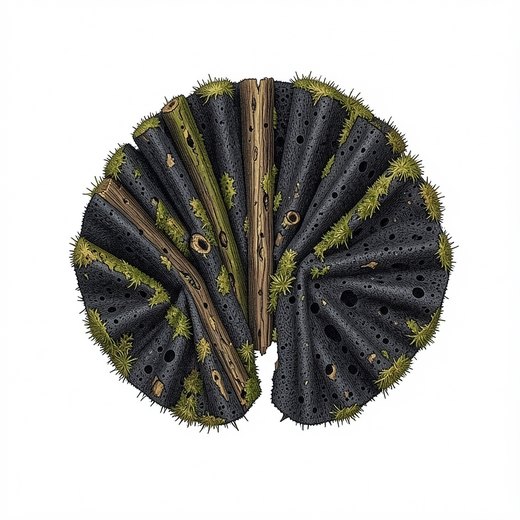
Fig. 7. Decay
Broken record
What can it not digest, where does it fail, and what does it leave behind for others?
It cannot state anything about the world, and grown too familiar it wears into background, leaving fragments of melody behind.2
drawn as: broken record · view: pressed
II Meaning associations
descent membership food web resemblance or friction
Lineage
A founder, dissected by hand.
Offspring
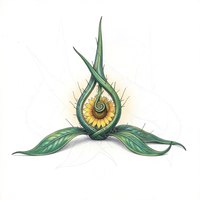
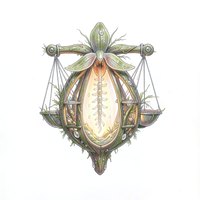
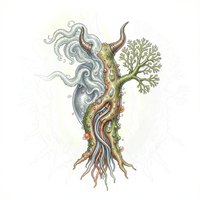
Food web
- pollinated its dispersal → the kernel of Breath
Music travels by ear, voice to voice; Breath's premise is a rhythm kept without thinking, and a sung phrase sets exactly when the singer must breathe. The vector can carry the premise. - feeds the output of Breath → its intake
Breath gives voice and song; Music feeds on vibration, and the voice is its first instrument. - homology its mechanism resembles the mechanism of Breath
Both are rhythms that bodies fall into, the breathing cycle and the musical pulse. - friction its decay rubs against the decay of Breath
Breath cannot be stored or held; Music, grown too familiar, wears into background. One fails by stopping, the other by repeating. - feeds the output of Silence → its intake
Silence makes audible what was masked and gives what follows its weight; Music feeds on a listener's expectation, which a silence holds open. - feeds its output → the intake of Silence
Music makes time audible; Silence feeds on the ending of every other sound, and music's endings are the most shaped of all. - homology its boundary resembles the boundary of Silence
Both are kept by a frame, Silence by a rest or a rule, Music by order in ratios and beats. The rest in a score belongs to both.
Kin
same kind in Roget Amber, Breath, Chiaroscuro, Chimera, Entelechy, Iridescence, Silence, Tinnitus, Vertigo, Shared Breath
same kind in Wilkins Geomancy, Innocence, Patience, Hesychology, Subtractive Phenomenology
same kind in WordNet Chiaroscuro, Echolalia, Glossolalia, Lullaby, Prophecy, Syllable, Symbol, Babelhum, Poetry
same kind in Llull Chiaroscuro, Faith, Geomancy, Innocence, Lullaby, Patience, Pointillism, Ritual, Syllable, Symbol, Foresilence, Tide of Days, Subtractive Phenomenology
same phylum Entelechy, Memory, Nostalgia, Prophecy, Ritual, River, Threshold, Wind, Tongue Horizon, Afterlistening
same dominant organ Chimera, Dream, Fire, Love, Lullaby, Metamorphosis, Presence, Resonance, Ritual, Storm, Symbol, Winter, Rushmaker, Shared Breath, Self-Ending Order, Gazeroot (second reading), Commemorative Revision, The Swing Door, Foresilence, Simultaneous Remembering, Poetry, Subtractive Phenomenology
Genome
- rhythm also in Breath, The Swing Door, Poetry, Shared Breath, Syllable, Trance
- expectation also in Afterlistening, Knowing Trust, Placebo, Foresilence, Witnessed Relief
- ratio
- entrainment also in Resonance (second reading), Shared Breath
- emotion
III In the world
Echoes
- the music of the spheres
- a lullaby
- a drum circle
- a tune you cannot stop hearing
IV Record
How it was drawn
its draw 3, a point in the morphospace (laws §8), drawn by flux-2-klein-4b.safetensors.
| axis | value | |
|---|---|---|
| book | humores | |
| symmetry | amorphous | |
| organization | segmented | |
| silhouette | cluster | |
| scale | microscopic | |
| proportion | elongated | |
| growth | grafted | |
| articulation | tethered latent | |
| openness | spongy latent | |
| skeleton | test latent | |
| locomotion | walking latent | |
| pattern | stripes latent | |
| coloration | nuptial latent | |
| substance | bark | |
| surface | crackled | |
| palette | obsidian | |
| luminosity | points | |
| transparency | translucent | |
| gesture | interlaces | |
| unity | fragment latent | |
| modality | necessary latent | |
| causation | final | |
| determinacy | unmarked latent | |
| fusion | replaced | |
| anomaly | unfinished | |
| graft | lenses | |
| technique | engraving | |
| viewpoint | above | |
| value | unmarked latent | |
| balance | cantilevered latent | |
| density | intricate latent | |
| rhythm | unmarked latent | |
| saturation | unmarked latent | |
| appendages | bladders | |
| anchor (body) | a rotifer, a vase-shaped body with a crown of whirling cilia | |
| anchor (detail) | soap foam, bubbles packed together and meeting in thin films |
Sources
- Boethius, De institutione musica (early 6th century)
- Leonard B. Meyer, Emotion and Meaning in Music (1956)
- Victor Zuckerkandl, Sound and Symbol (1956)
- David Huron, Sweet Anticipation (2006)
❦