a founder of the codex
Innocence
Innoxella aperta·the Unharmed Gaze
From Latin innoxius, harmless, and apertus, open, for a harmless creature open on every side.
- Level
- Conceptorganism
- Phylum
- Verticalityimage schema
- Class
- Decayits forbidden fruit
- Niche
- Producerraw experience
- Mode
- Reproductionhow it keeps existing
- Stage
- Matureindividuated
- Status
- Living
- Habitat
- Forest
Its kinds · Roget, 1852: Moral Affections · Wilkins, 1668: Habit · WordNet, 1990: Attribute · Llull, 1308: K · Instrumentative
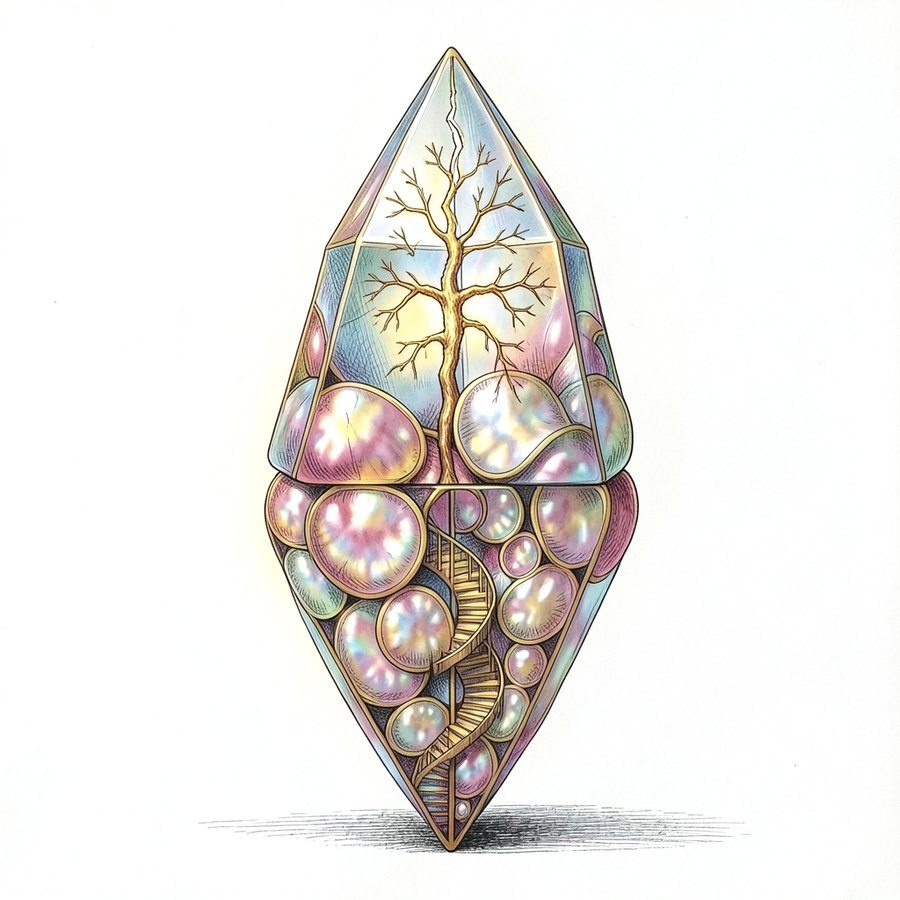
A gaze that harm has yet to reach trusts what it sees, and it is known most clearly by the first betrayal that ends it.
To see the world as good is a gift that ends the first time the world betrays it.
behavior Turns its whole face toward each new thing, and leans its weight on the wind as if the wind were good.
What did you believe about the world before the first time it let you down?
I Dissection
Each organ answers one question about the idea. The framed one, its decay, is the dominant organ: the being's class, the one the idea could not lose and stay itself.
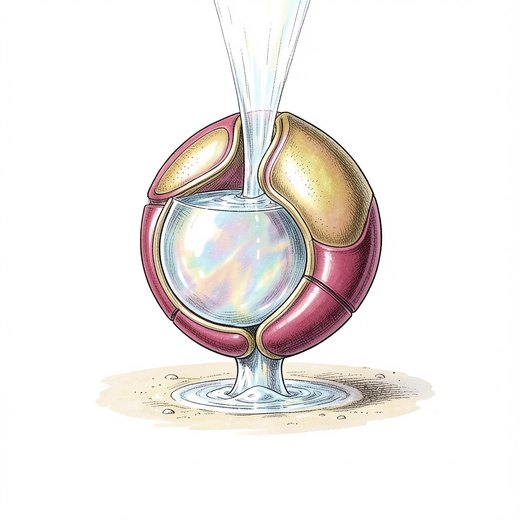
Fig. 1. Kernel
Harmless dove
Which premise, if it were false, would kill this idea?
Its premise is a gaze that harm has yet to touch, so it meets the world expecting good. The Latin innocens means harmless.2
drawn as: harmless dove · view: transparent
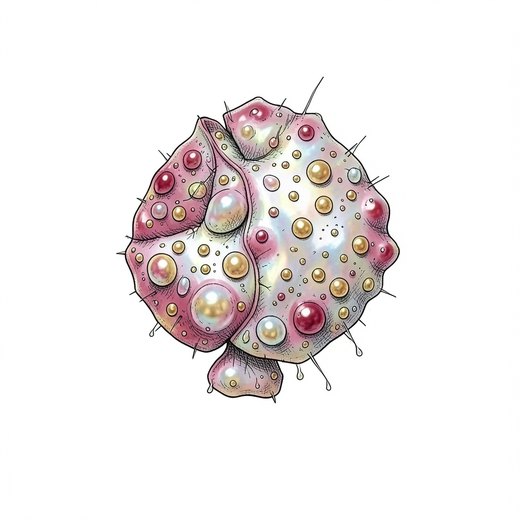
Fig. 2. Boundary
Clean hands
What sets it apart from what it is not, and how does it keep that distinction?
It is defined against guilt, and the law keeps that line by presuming every accused person innocent until guilt is proved.3
drawn as: clean hands · view: detached
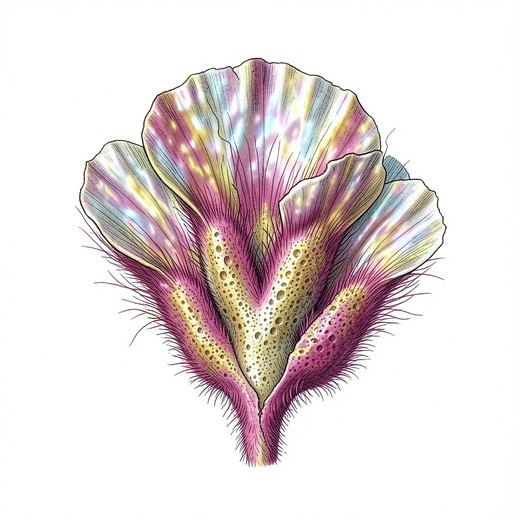
Fig. 3. Intake
Sense of wonder
What must it feed on to work? What has to be present, noticed or supplied?
It feeds on wonder, on the first sight of tides, stars and small living things, met while they are still new.5
drawn as: sense of wonder · view: series
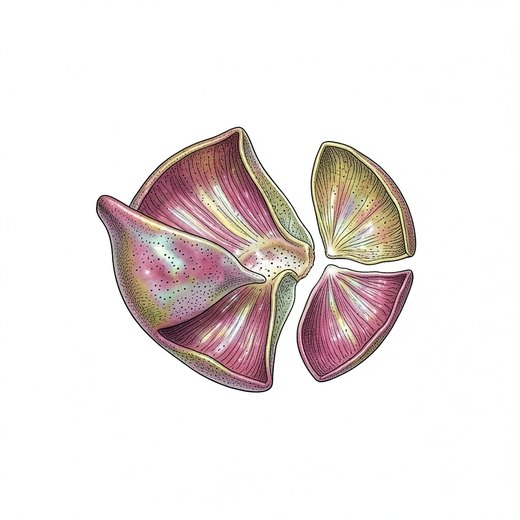
Fig. 4. Mechanism
Face value
How does it turn what it takes in into what it gives out?
It works by openness, taking each thing at face value with its guard down, so whatever comes reaches it whole.4, 2
drawn as: face value · view: exploded
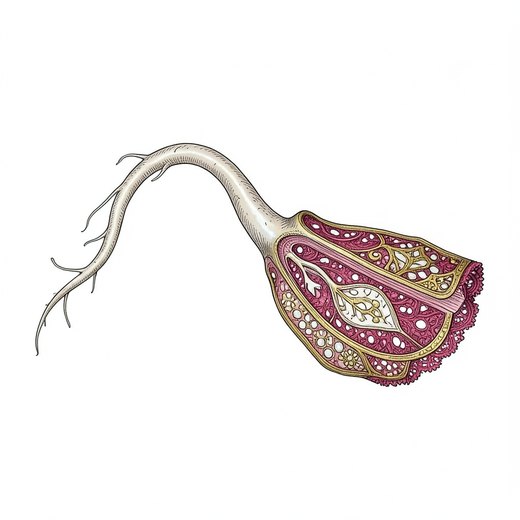
Fig. 5. Output
Basic trust
What does it make possible, visible or knowable?
It gives trust, the sense that the world and its people can be relied on, which an infant forms first when its care is steady.4
drawn as: basic trust · view: cross section
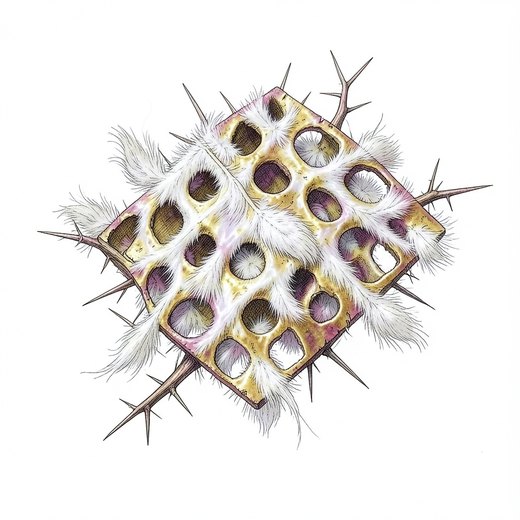
Fig. 6. Dispersal
Spotless lamb
What part of it travels into other minds, ideas and fields, and by what vector?
It travels in the image of the child's gaze, the lamb and the garden before the fall, as poems and scripture carry it.2, 1
drawn as: spotless lamb · view: detached
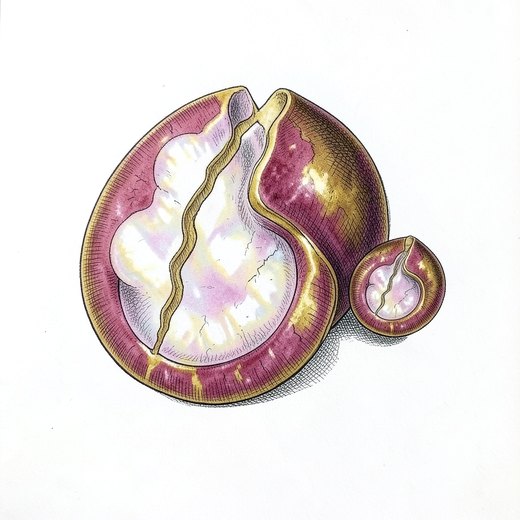
Fig. 7. Decay
Forbidden fruit
❦ dominant organWhat can it not digest, where does it fail, and what does it leave behind for others?
It ends at the first betrayal, since harm once known stays known, as the eyes opened in Eden stay open. What it leaves is experience, the knowing that Blake set beside it.1, 2
drawn as: forbidden fruit · view: pressed
II Meaning associations
No relations recorded yet.
descent membership food web resemblance or friction
Lineage
A founder, dissected by hand.
Kin
same kind in Wilkins Geomancy, Music, Patience, Hesychology, Subtractive Phenomenology
same kind in WordNet Aura, Patience, Symmetry
same kind in Llull Chiaroscuro, Faith, Geomancy, Lullaby, Music, Patience, Pointillism, Ritual, Syllable, Symbol, Foresilence, Tide of Days, Subtractive Phenomenology
same phylum Awakening, Cloud, Erosion, Faith, Miracle, Rain, Vertigo, Weightlessness
same dominant organ Entropy, Memory, Oblivion, Petrification
Genome
- harmless
- wonder also in Miracle
- trust also in Faith, Knowing Trust
- openness
- fall also in Weightlessness
III In the world
Echoes
- Blake's Songs of Innocence
- the garden of Eden
- the presumption of innocence in a courtroom
- a toddler reaching for a stranger's hand
IV Record
How it was drawn
its draw 2, a point in the morphospace (laws §8), drawn by flux-2-klein-4b.safetensors.
| axis | value | |
|---|---|---|
| book | flora | |
| symmetry | amorphous | |
| organization | nested | |
| silhouette | cluster | |
| scale | immense | |
| proportion | tapering latent | |
| growth | faceted | |
| articulation | tethered latent | |
| openness | lattice | |
| skeleton | endoskeleton latent | |
| locomotion | burrowing latent | |
| pattern | labyrinth latent | |
| coloration | cryptic latent | |
| substance | nacre | |
| surface | mottled | |
| palette | gilt | |
| luminosity | inner glow | |
| transparency | transparent | |
| gesture | balances | |
| unity | integral latent | |
| modality | unmarked latent | |
| causation | final | |
| determinacy | unmarked latent | |
| fusion | carried | |
| anomaly | one break | |
| graft | stair | |
| technique | hatching | |
| viewpoint | below | |
| value | chiaroscuro latent | |
| balance | leaning latent | |
| density | sparse latent | |
| rhythm | alternating latent | |
| saturation | unmarked latent | |
| appendages | petals, cilia | |
| anchor (body) | a fluorite octahedron, glassy and colour-zoned | |
| anchor (detail) | a Lichtenberg figure, a branching tree of discharge burned into a surface |
Sources
- Genesis 2 and 3
- William Blake, Songs of Innocence and of Experience (1794)
- Universal Declaration of Human Rights (1948), article 11
- Erik H. Erikson, Childhood and Society (1950)
- Rachel Carson, The Sense of Wonder (1965)
❦