a founder of the codex
Geomancy
Punctolithus respondens·the Oracle Stone
From Latin punctum, a point, Greek lithos, stone, and Latin respondere, to answer; a stone of points that answers.
- Level
- Conceptorganism
- Phylum
- Centre and peripheryimage schema
- Class
- Kernelits four Mothers
- Niche
- Producerraw experience
- Mode
- Religionhow it keeps existing
- Stage
- Senescentdissolving
- Status
- Living
- Habitat
- Desert
Its kinds · Roget, 1852: Religious Affections · Wilkins, 1668: Habit · WordNet, 1990: Act · Llull, 1308: K · Instrumentative
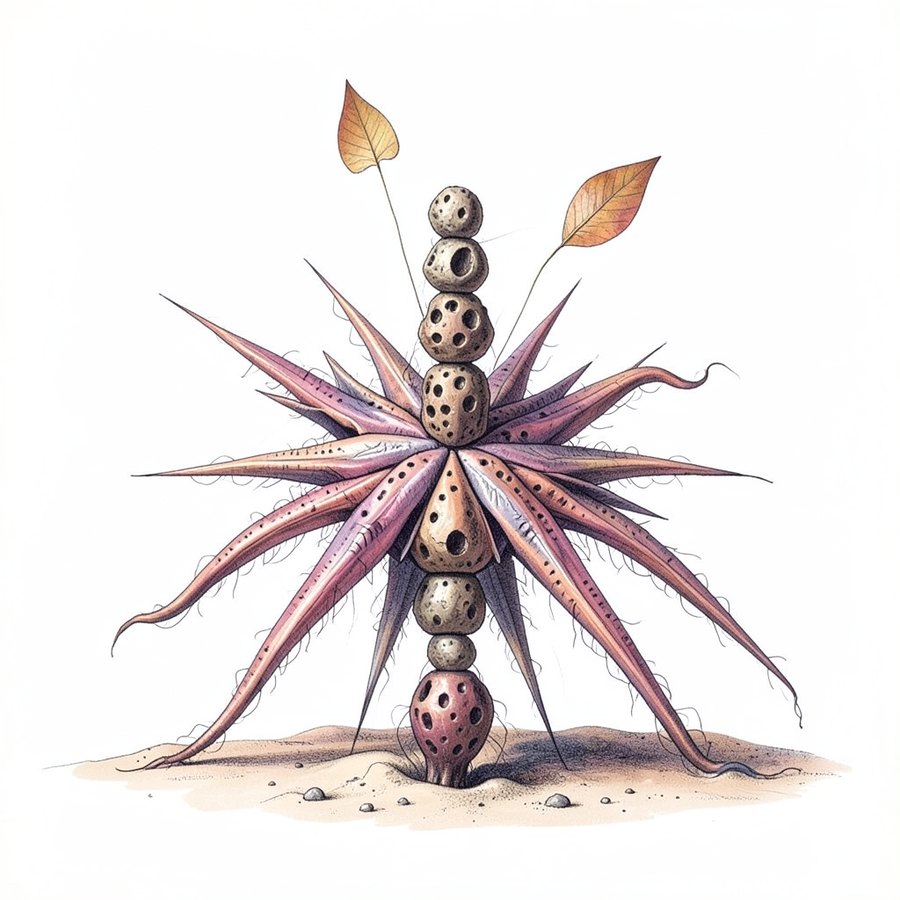
A finite set of forms can turn any random mark into an answer, which says as much about the forms as about chance.
Chance becomes counsel when it is read through a fixed alphabet.
behavior Lies half buried in sand, and when touched, rows of points rise on its faces and settle into a figure.
What fixed set of figures do you already use to read the accidents of your life?
I Dissection
Each organ answers one question about the idea. The framed one, its kernel, is the dominant organ: the being's class, the one the idea could not lose and stay itself.
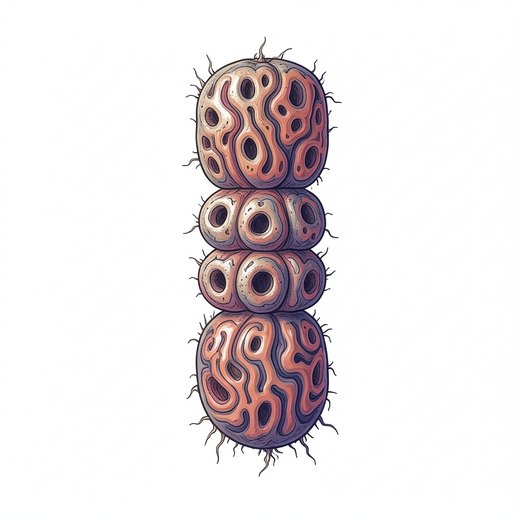
Fig. 1. Kernel
Four Mothers
❦ dominant organWhich premise, if it were false, would kill this idea?
Marks made by chance, read through a fixed set of sixteen figures, give an answer to a question.1
drawn as: four Mothers · view: transparent
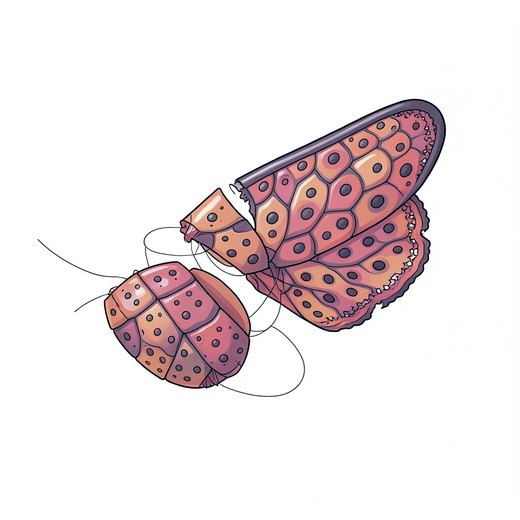
Fig. 2. Boundary
Sixteen figures
What sets it apart from what it is not, and how does it keep that distinction?
It is set apart from chance by its fixed alphabet; marks read outside the sixteen figures are only marks.1
drawn as: sixteen figures · view: exploded
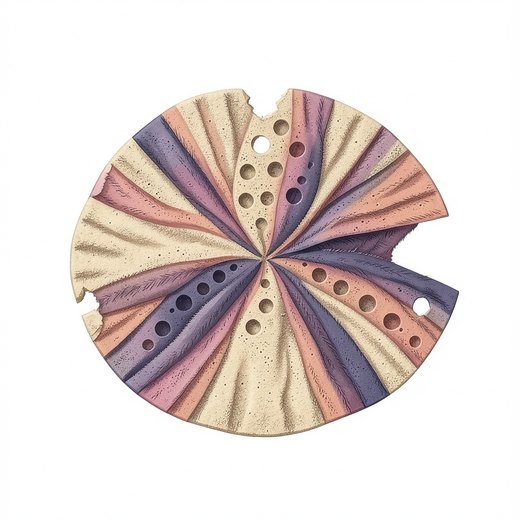
Fig. 3. Intake
Dust board
What must it feed on to work? What has to be present, noticed or supplied?
It needs a question, a surface of sand or earth, and a hand making rows of marks without counting them.1, 2
drawn as: dust board · view: in situ
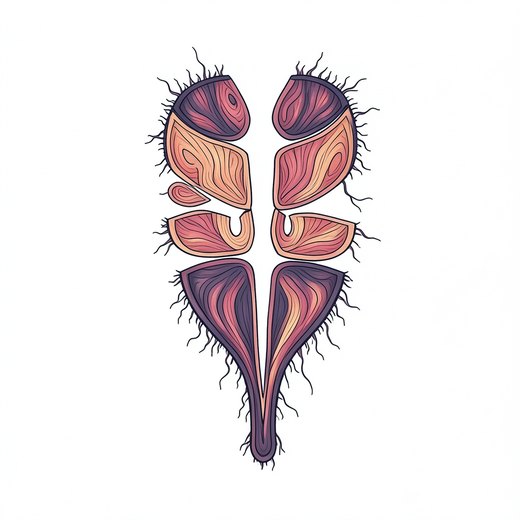
Fig. 4. Mechanism
Shield chart
How does it turn what it takes in into what it gives out?
Each row is reduced to one point or two by its parity, four rows make a figure, and figures are combined in a fixed chart until a judge appears.1
drawn as: shield chart · view: exploded
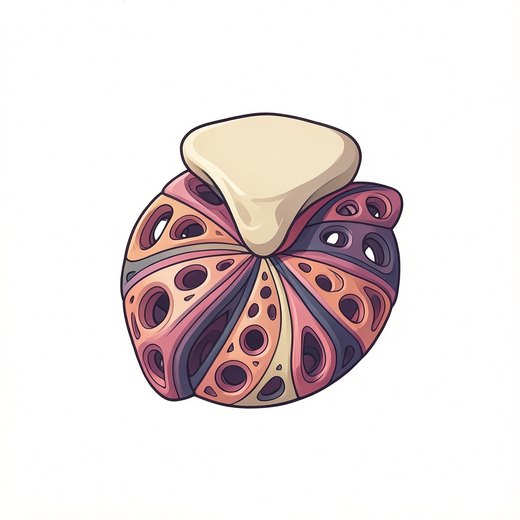
Fig. 5. Output
Judge
What does it make possible, visible or knowable?
It gives an answer that feels found rather than chosen, and a chart that a reader interprets for the one who asked.1
drawn as: Judge · view: at work
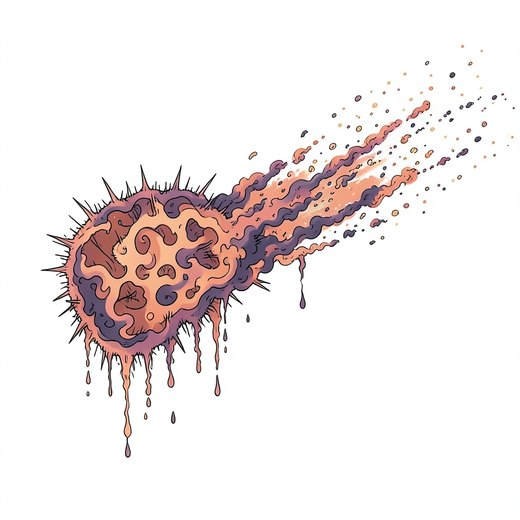
Fig. 6. Dispersal
Divining chain
What part of it travels into other minds, ideas and fields, and by what vector?
It travelled from the Arabic science of the sand across Africa, as sikidy and alongside Ifá, and into medieval Europe, its figures later echoed in binary arithmetic.2, 3
drawn as: divining chain · view: cast
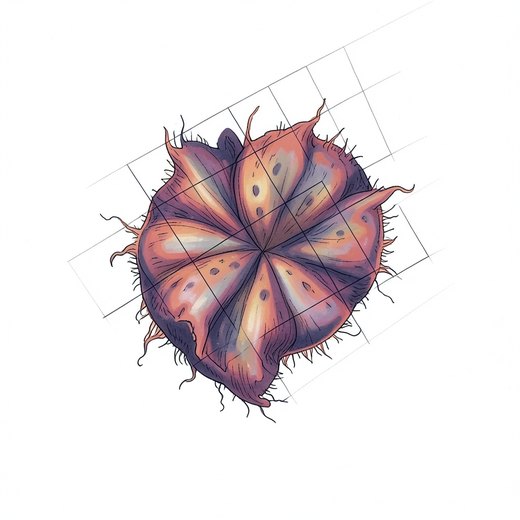
Fig. 7. Decay
Parlour game
What can it not digest, where does it fail, and what does it leave behind for others?
It cannot tell signal from chance except by trust in its figures, and outside belief it shrinks into a parlour game or a footnote in the history of binary.3
drawn as: parlour game · view: magnified
II Meaning associations
descent membership food web resemblance or friction
Lineage
A founder, dissected by hand.
Food web
- homology its kernel resembles the kernel of Apophenia
Both make a figure out of chance. Apophenia finds one where there is none; Geomancy builds one on purpose, out of marks made without counting. - feeds the intake of Apophenia → its intake
They eat the same food, noise and random marks. Two beings on one food compete rather than feed each other. - friction its boundary rubs against the boundary of Apophenia
Apophenia is told from discovery only by whether the pattern holds; Geomancy is told from chance by its fixed alphabet of sixteen figures. One has no rule, the other is nothing but rule.
Kin
same kind in Roget Miracle, Possession, Ritual, Trance
same kind in Wilkins Innocence, Music, Patience, Hesychology, Subtractive Phenomenology
same kind in WordNet Mimesis, Pointillism, Ritual, Knowing Trust
same kind in Llull Chiaroscuro, Faith, Innocence, Lullaby, Music, Patience, Pointillism, Ritual, Syllable, Symbol, Foresilence, Tide of Days, Subtractive Phenomenology
same phylum Aura, Eternity, Presence, Qualia
same dominant organ Archipelago, Entanglement, Entelechy, Eternity, Qualia, Salt, Syllable, Symmetry, Vertigo, Volition, Weightlessness, Knowing Trust, Hesychology
Genome
- chance
- figure
- binary
- divination
- ground
III In the world
Echoes
- the sixteen figures of Western geomancy
- sikidy divination in Madagascar
- Ifá divination among the Yoruba
- binary numbers
IV Record
How it was drawn
its draw 3, a point in the morphospace (laws §8), drawn by flux-2-klein-4b.safetensors.
| axis | value | |
|---|---|---|
| book | nidi | |
| symmetry | amorphous | |
| organization | segmented | |
| silhouette | fan | |
| scale | microscopic | |
| proportion | sheared latent | |
| growth | apical | |
| articulation | tethered | |
| openness | lattice latent | |
| skeleton | test | |
| locomotion | undulating latent | |
| pattern | reticulate latent | |
| coloration | disruptive latent | |
| substance | smoke | |
| surface | iridescent | |
| palette | dusk | |
| luminosity | sheen | |
| transparency | transparent latent | |
| gesture | closes | |
| unity | aggregate latent | |
| modality | contingent latent | |
| causation | final latent | |
| determinacy | fraying | |
| fusion | carried | |
| anomaly | orbiting | |
| graft | origami | |
| technique | chromolith | |
| viewpoint | below | |
| value | unmarked latent | |
| balance | unmarked latent | |
| density | unmarked latent | |
| rhythm | regular latent | |
| saturation | muted latent | |
| appendages | spines, sails | |
| anchor (body) | a brittle star, a small disc with five long serpentine arms | |
| anchor (detail) | a maple samara, a winged seed that spins as it falls |
Sources
- Stephen Skinner, Terrestrial Astrology: Divination by Geomancy (1980)
- Emilie Savage-Smith and Marion B. Smith, Islamic Geomancy and a Thirteenth-Century Divinatory Device (1980)
- Ron Eglash, African Fractals (1999)
❦