a founder of the codex
Ritual
Ritunidus iterans·the Processional Nest
From Latin ritus, a rite, nidus, a nest, and iterare, to do again; a nest of rites built by doing them again.
- Level
- Conceptorganism
- Phylum
- Pathimage schema
- Class
- Mechanismits muscular bonding
- Niche
- Symbionta partner
- Mode
- Habithow it keeps existing
- Stage
- Transindividualtransindividual
- Status
- Living
- Habitat
- Ritual
Its kinds · Roget, 1852: Religious Affections · Wilkins, 1668: Ecclesiastical Relation · WordNet, 1990: Act · Llull, 1308: K · Instrumentative
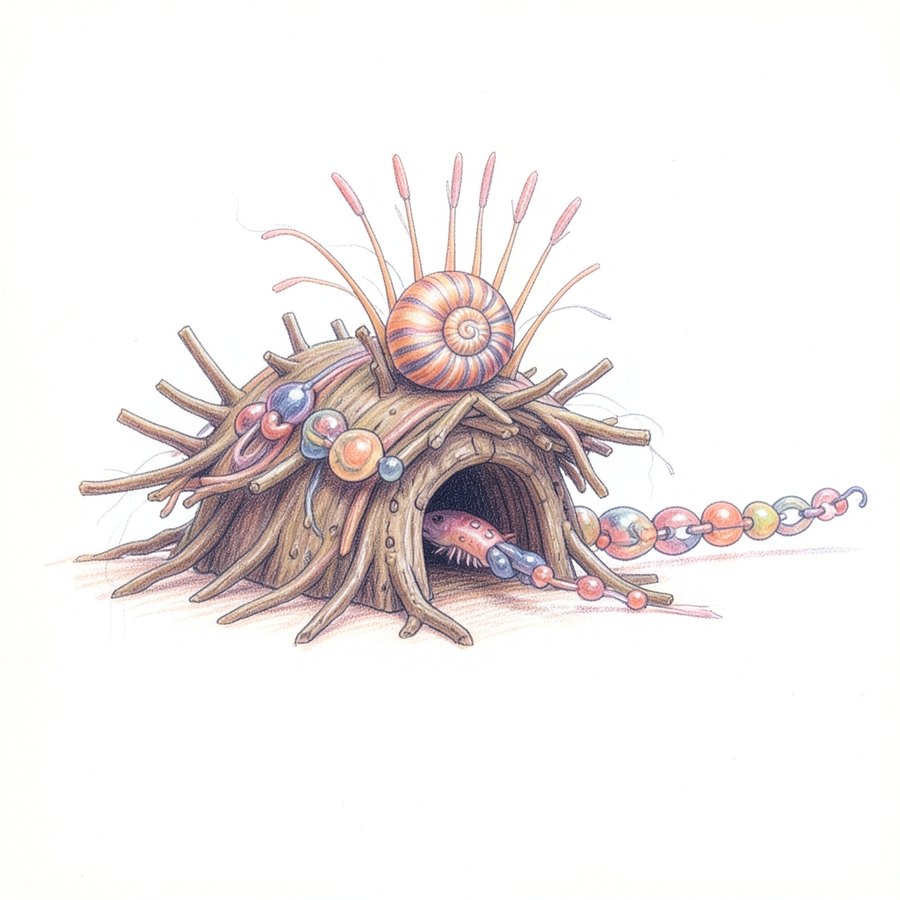
Repeating a prescribed form together creates belonging and passage that no single intention could create.
What is done together in the same way becomes true for those who do it.
behavior Is rebuilt every year on the same spot, each builder laying one strand exactly where the last one lay.
Which ritual do you perform without noticing, and what does it make true?
I Dissection
Each organ answers one question about the idea. The framed one, its mechanism, is the dominant organ: the being's class, the one the idea could not lose and stay itself.
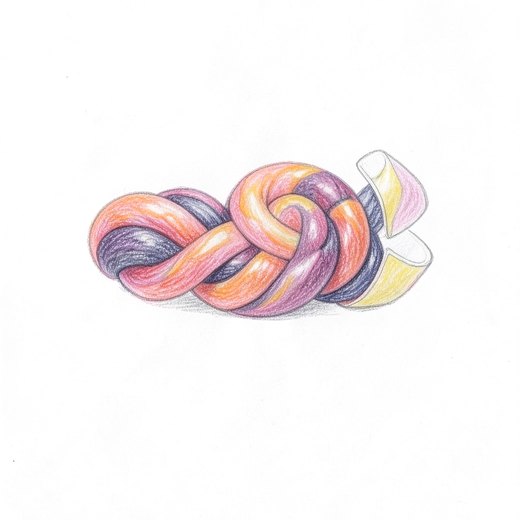
Fig. 1. Kernel
Rubric
Which premise, if it were false, would kill this idea?
Prescribed actions repeated in a fixed form make a shared reality that participants could not make by intention alone.4, 1
drawn as: rubric · view: exploded
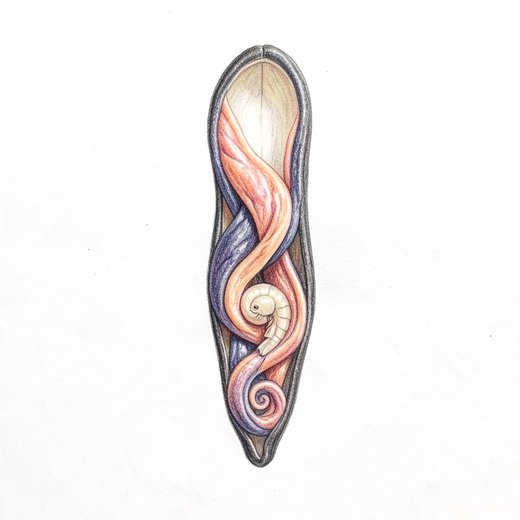
Fig. 2. Boundary
Magic circle
What sets it apart from what it is not, and how does it keep that distinction?
It is set apart from habit by its frame; a rite is marked off in time and place as different from ordinary acts.3
drawn as: magic circle · view: pressed
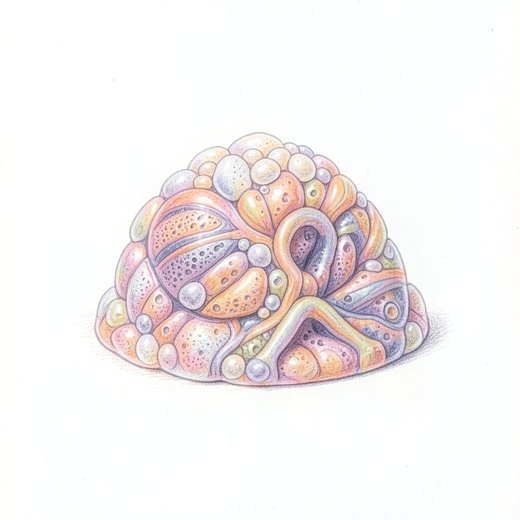
Fig. 3. Intake
Cairn
What must it feed on to work? What has to be present, noticed or supplied?
It needs participants, a time and a place set apart, and the memory of what was done before.4
drawn as: cairn · view: transparent
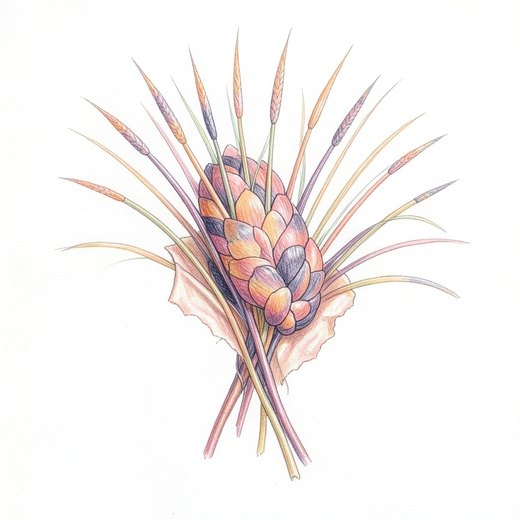
Fig. 4. Mechanism
Muscular bonding
❦ dominant organHow does it turn what it takes in into what it gives out?
Acting out the form together brings bodies and attention into step and commits each participant publicly to what the form says.4, 1
drawn as: muscular bonding · view: in situ
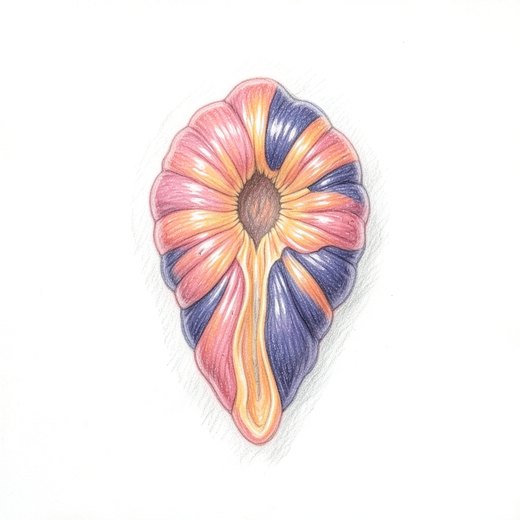
Fig. 5. Output
Threshold
What does it make possible, visible or knowable?
It gives belonging, passage from one state of life to another, and a time that comes back.2, 3
drawn as: threshold · view: at work
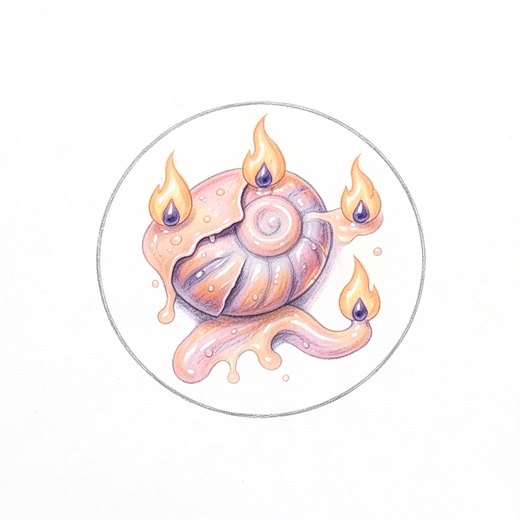
Fig. 6. Dispersal
Handshake
What part of it travels into other minds, ideas and fields, and by what vector?
It travels by being taught and copied, and lives on in gestures whose reasons are forgotten, a handshake, a toast.3
drawn as: handshake · view: microscope
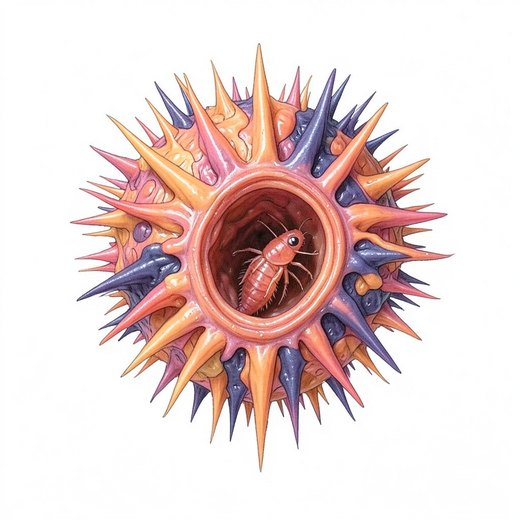
Fig. 7. Decay
Lip service
What can it not digest, where does it fail, and what does it leave behind for others?
When the form is kept but its shared meaning is gone it becomes empty routine, and it can be turned into a means of exclusion.3
drawn as: lip service · view: magnified
II Meaning associations
descent membership food web resemblance or friction
Lineage
A founder, dissected by hand.
Offspring
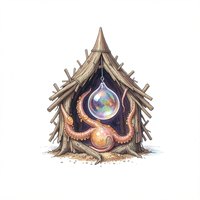
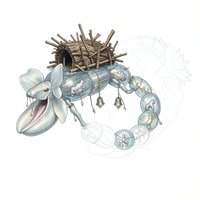
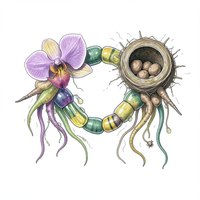
Food web
- feeds its output → the intake of Memory
Ritual gives a time that comes back and passages marked in public; Memory feeds on what is repeated, strongly felt or given meaning. Ritual's product is Memory's best food. - pollinated the dispersal of Memory → its intake
Memory spreads into stories, archives, monuments and rites, and Ritual needs the memory of what was done before. Memory has already pollinated Ritual. - homology its dispersal resembles the decay of Memory
Ritual lives on in gestures whose reasons are forgotten; Memory's other half is forgetting. The form outlives what it remembered. - friction its kernel rubs against the boundary of Memory
Ritual repeats actions in a fixed form; Memory says a trace that never altered would be an archive, not a memory. One lives by not changing, the other by changing. - feeds the output of Equinox → its intake
Equinox gives a fixed point from which seasons and feasts are counted; Ritual needs a time set apart. The sky supplies the rite's time. - feeds its output → the intake of Memory
Ritual gives a time that comes back; Memory feeds on what is repeated and given meaning. Each return of the rite is a recall. - friction its boundary rubs against the decay of Equinox
The equinox drifts against the stars, while a rite holds to its fixed form; over centuries the feast and the season part.
Kin
same kind in Roget Geomancy, Miracle, Possession, Trance
same kind in Wilkins Commemorative Revision
same kind in WordNet Geomancy, Mimesis, Pointillism, Knowing Trust
same kind in Llull Chiaroscuro, Faith, Geomancy, Innocence, Lullaby, Music, Patience, Pointillism, Syllable, Symbol, Foresilence, Tide of Days, Subtractive Phenomenology
same phylum Entelechy, Memory, Music, Nostalgia, Prophecy, River, Threshold, Wind, Tongue Horizon, Afterlistening
same dominant organ Chimera, Dream, Fire, Love, Lullaby, Metamorphosis, Music, Presence, Resonance, Storm, Symbol, Winter, Rushmaker, Shared Breath, Self-Ending Order, Gazeroot (second reading), Commemorative Revision, The Swing Door, Foresilence, Simultaneous Remembering, Poetry, Subtractive Phenomenology
Genome
- repetition also in Echolalia, Erosion, Lullaby
- form also in Commemorative Revision, Entelechy, Metamorphosis, Petrification, Poetry
- threshold also in Equinox, Rushmaker, Storm, Tongue Horizon
- community also in Faith
- commitment also in Faith
III In the world
Echoes
- a wedding
- a graduation
- the handshake
- a New Year's countdown
IV Record
How it was drawn
its draw 1, a point in the morphospace (laws §8), drawn by flux-2-klein-4b.safetensors.
| axis | value | |
|---|---|---|
| book | nidi | |
| symmetry | helical | |
| organization | chained | |
| silhouette | crown | |
| scale | microscopic | |
| proportion | elongated latent | |
| growth | grafted | |
| articulation | imbricate latent | |
| openness | sheet latent | |
| skeleton | unmarked latent | |
| locomotion | drifting latent | |
| pattern | stripes | |
| coloration | nuptial | |
| substance | wax | |
| surface | beaded | |
| palette | dusk | |
| luminosity | inner glow | |
| transparency | layered latent | |
| gesture | splits | |
| unity | composite latent | |
| modality | necessary latent | |
| causation | final latent | |
| determinacy | doubled latent | |
| fusion | carried | |
| anomaly | tenant | |
| graft | none | |
| technique | crayon | |
| viewpoint | motion | |
| value | flat latent | |
| balance | cantilevered | |
| density | unmarked latent | |
| rhythm | clustered latent | |
| saturation | unmarked latent | |
| appendages | valves, cilia | |
| anchor (body) | a beaver lodge of sticks and mud rising from water | |
| anchor (detail) | an ammonite, a coiled chambered shell with frilled suture lines |
Sources
- Émile Durkheim, The Elementary Forms of Religious Life (1912)
- Arnold van Gennep, The Rites of Passage (1909)
- Victor Turner, The Ritual Process (1969)
- Roy Rappaport, Ritual and Religion in the Making of Humanity (1999)
❦