a founder of the codex
Wind
Anemopora aequans·the Levelling Current
From Greek anemos, wind, and poros, passage, and Latin aequans, levelling, a passage of air that evens out what is uneven.
- Level
- Conceptorganism
- Phylum
- Pathimage schema
- Class
- Dispersalits thistledown
- Niche
- Producerraw experience
- Mode
- Metamorphosishow it keeps existing
- Stage
- Matureindividuated
- Status
- Living
- Habitat
- Ocean
Its kinds · Roget, 1852: Inorganic Matter · Wilkins, 1668: Element · WordNet, 1990: Phenomenon · Llull, 1308: I · Elementative
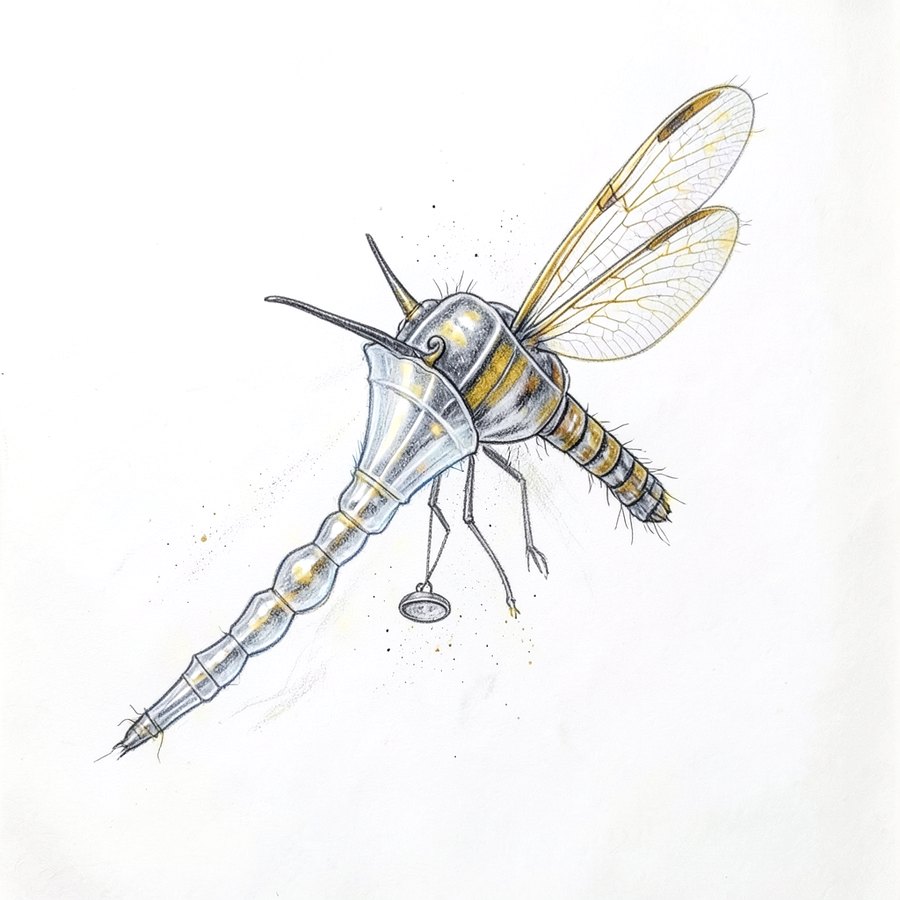
Wind is air moving down a difference of pressure, so it exists only while the world is uneven, and it carries whatever it passes through.
Wherever one place presses on another, something is set moving and carries the rest along.
behavior It is seen only in what it moves, leaning grass and running cloud, and it slackens to stillness the moment the difference that drives it is spent.
What difference in your life is moving you now, and what are you carrying because of it?
I Dissection
Each organ answers one question about the idea. The framed one, its dispersal, is the dominant organ: the being's class, the one the idea could not lose and stay itself.
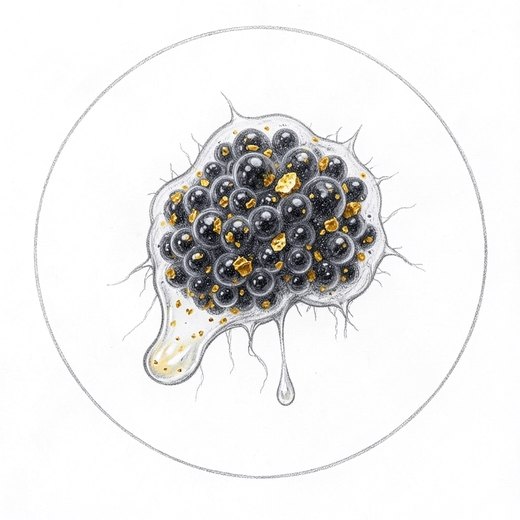
Fig. 1. Kernel
Pressure gradient
Which premise, if it were false, would kill this idea?
Wind is air set moving by an uneven world, and it lasts only while one place presses harder than its neighbour.2
drawn as: pressure gradient · view: microscope
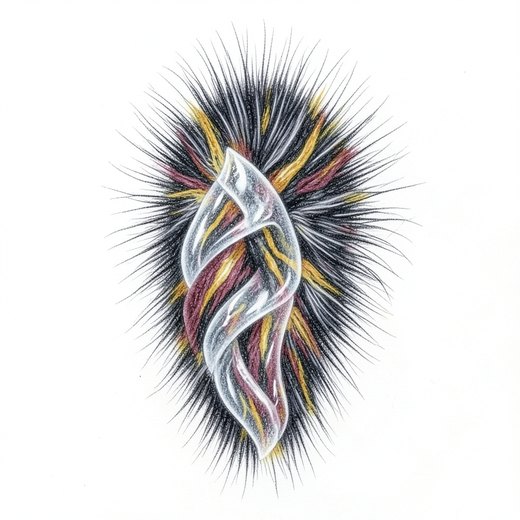
Fig. 2. Boundary
Friction layer
What sets it apart from what it is not, and how does it keep that distinction?
It is set apart from still air by speed alone, graded from calm to hurricane, and friction slows its lowest layer toward calm.3
drawn as: friction layer · view: transparent
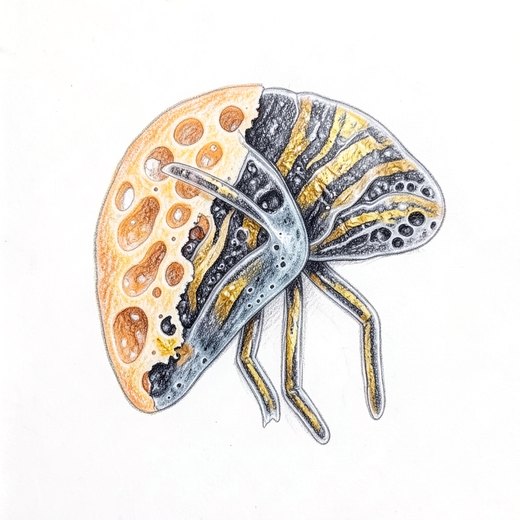
Fig. 3. Intake
Differential heating
What must it feed on to work? What has to be present, noticed or supplied?
It feeds on differences of pressure, made when the sun warms land and sea, equator and poles, unevenly.1, 2
drawn as: differential heating · view: in situ
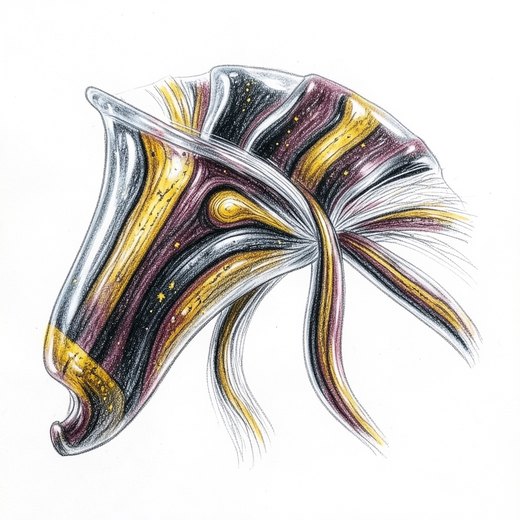
Fig. 4. Mechanism
Geostrophic flow
How does it turn what it takes in into what it gives out?
Air flows from high pressure toward low, and the turning of the earth bends the flow sideways, so the trade winds blow from the east.2
drawn as: geostrophic flow · view: magnified
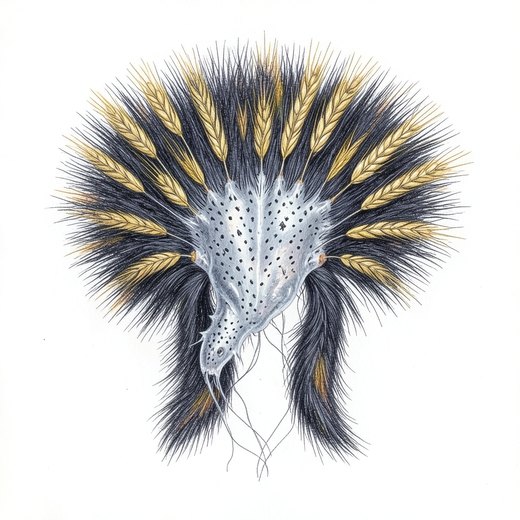
Fig. 5. Output
Full sail
What does it make possible, visible or knowable?
It carries heat, moisture and dust around the globe, raises the waves, and filled the sails that first crossed the oceans.1
drawn as: full sail · view: series
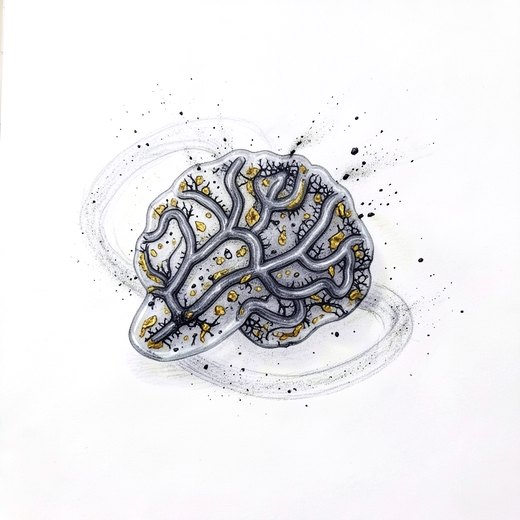
Fig. 6. Dispersal
Thistledown
❦ dominant organWhat part of it travels into other minds, ideas and fields, and by what vector?
It carries pollen, seeds and spores across seas, and it travels into thought as the figure of spirit, the breath that blows where it will.4, 5
drawn as: thistledown · view: at work
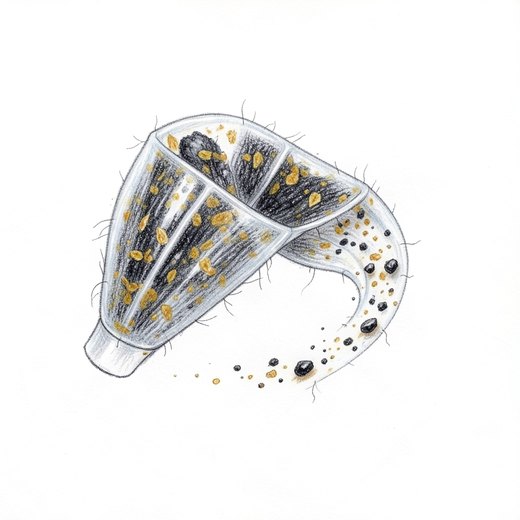
Fig. 7. Decay
Doldrums
What can it not digest, where does it fail, and what does it leave behind for others?
Where pressure evens out it dies to calm, as in the windless belt along the equator. It leaves dunes, leaning trees and carved rock behind.2, 3
drawn as: doldrums · view: transparent
II Meaning associations
No relations recorded yet.
descent membership food web resemblance or friction
Lineage
A founder, dissected by hand.
Kin
same kind in Roget Archipelago, Ash, Clay, Cloud, Diamond, Erosion, Fire, Frost, Lake, Rain, River, Salt, Sand, Storm
same kind in Wilkins Cloud, Fire, Frost, Lake, Rain, River, Storm
same kind in WordNet Emergence, Frost, Iridescence, Placebo, Rain, Reflection, Resonance, Resonance (second reading), Storm
same kind in Llull Amber, Archipelago, Ash, Clay, Cloud, Diamond, Emergence, Entanglement, Entropy, Erosion, Fire, Frost, Iridescence, Lake, Petrification, Rain, Reflection, Resonance, Resonance (second reading), River, Salt, Sand, Storm, Weightlessness, Winter, Self-Ending Order
same phylum Entelechy, Memory, Music, Nostalgia, Prophecy, Ritual, River, Threshold, Tongue Horizon, Afterlistening
same dominant organ Ash, Breath, Miracle, Pointillism, River, Sand, Witnessed Relief
Genome
- gradient also in Entropy, Self-Ending Order
- flow also in River, Self-Ending Order
- carrying also in River
- inspiration
- possession
III In the world
Echoes
- the trade winds of the age of sail
- dandelion seeds lifted on a breeze
- the spirit that blows where it will
- a sand dune walking downwind
IV Record
How it was drawn
its draw 5, a point in the morphospace (laws §8), drawn by flux-2-klein-4b.safetensors.
| axis | value | |
|---|---|---|
| book | nidi | |
| symmetry | helical | |
| organization | segmented | |
| silhouette | bell | |
| scale | hand | |
| proportion | sheared | |
| growth | unmarked latent | |
| articulation | seamless latent | |
| openness | solid latent | |
| skeleton | woody latent | |
| locomotion | burrowing latent | |
| pattern | stripes | |
| coloration | warning | |
| substance | ice | |
| surface | pleated | |
| palette | obsidian | |
| luminosity | points | |
| transparency | clouded latent | |
| gesture | emits | |
| unity | composite latent | |
| modality | contingent latent | |
| causation | formal latent | |
| determinacy | fraying | |
| fusion | mirrored | |
| anomaly | unfinished | |
| graft | scales pans | |
| technique | crayon | |
| viewpoint | motion | |
| value | chiaroscuro latent | |
| balance | grounded latent | |
| density | graded detail latent | |
| rhythm | alternating latent | |
| saturation | unmarked latent | |
| appendages | cilia, horns | |
| anchor (body) | a waterspout, a slender twisting funnel | |
| anchor (detail) | a dragonfly wing, a clear membrane divided by a fine net of veins |
Sources
- Edmond Halley, An Historical Account of the Trade Winds, and Monsoons, Observable in the Seas between and near the Tropicks (Philosophical Transactions, 1686)
- George Hadley, Concerning the Cause of the General Trade-Winds (Philosophical Transactions, 1735)
- Francis Beaufort, the Beaufort wind force scale (1805)
- Henry N. Ridley, The Dispersal of Plants Throughout the World (1930)
- John 3:8
❦