a founder of the codex
Amber
Succinaria perennis·the Outlasting Resin
From Latin succinum, amber, and perennis, lasting through the years, the resin that outlives the tree that wept it.
- Level
- Conceptorganism
- Phylum
- Containerimage schema
- Class
- Boundaryits weathering crust
- Niche
- Consumerother ideas
- Mode
- Referencehow it keeps existing
- Stage
- Matureindividuated
- Status
- Living
- Habitat
- Archive
Its kinds · Roget, 1852: Organic Matter · Wilkins, 1668: Stone · WordNet, 1990: Substance · Llull, 1308: I · Elementative
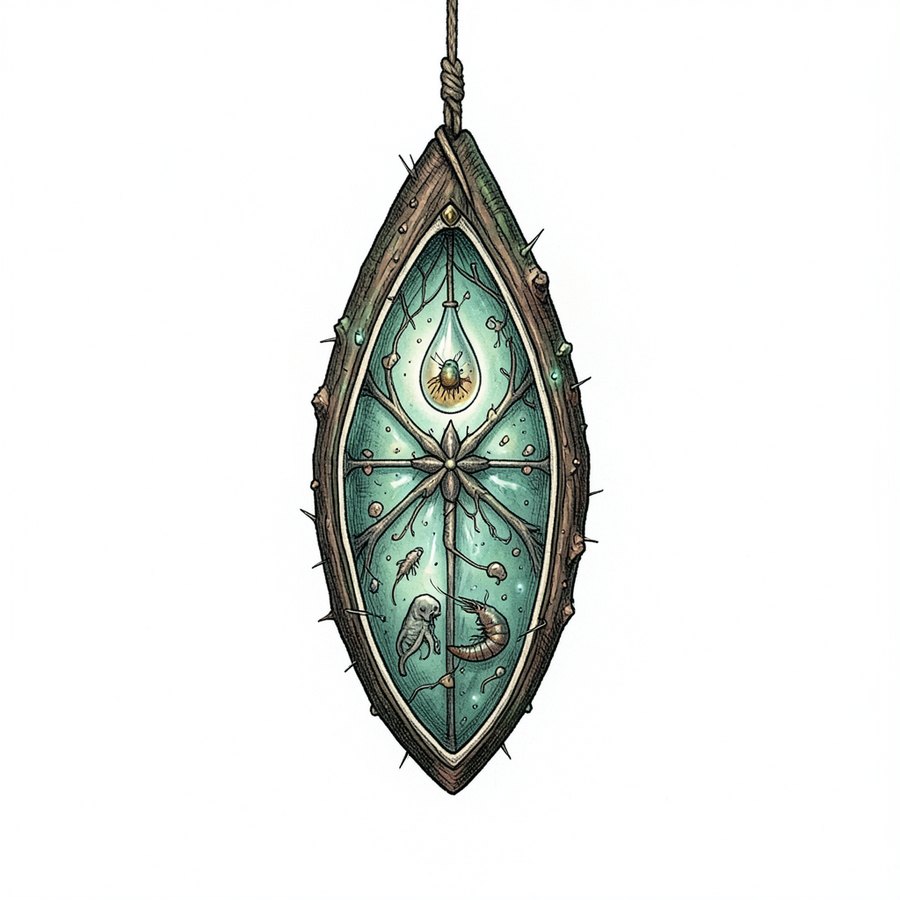
Amber is a tree's resin hardened over ages into a seal that keeps small moments of life intact long after the forest that made it is gone.
What is sealed early enough outlasts the tree that made it.
behavior It wells up slowly where a tree is hurt, closes over whatever touches it, and then waits in the dark for millions of years.
Which moment of yours would you seal away from the air, and who would find it?
I Dissection
Each organ answers one question about the idea. The framed one, its boundary, is the dominant organ: the being's class, the one the idea could not lose and stay itself.
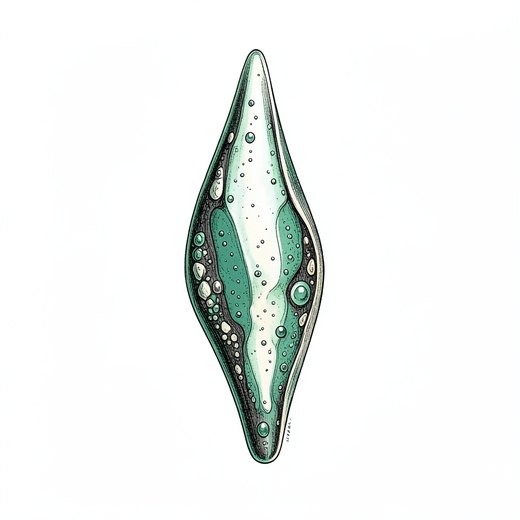
Fig. 1. Kernel
Fossil resin
Which premise, if it were false, would kill this idea?
Amber is tree resin hardened over millions of years, and what it seals inside keeps its shape while everything around it decays.1, 2
drawn as: fossil resin · view: magnified
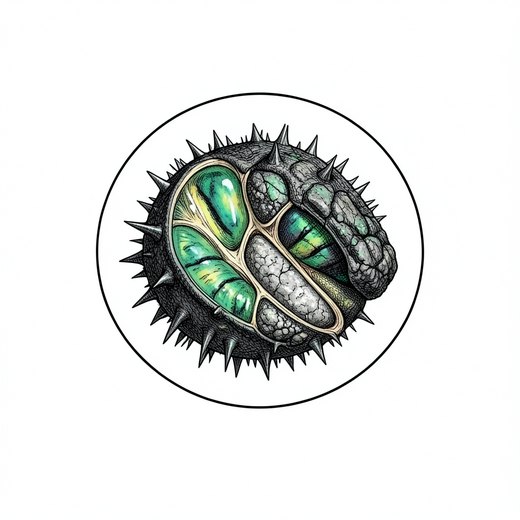
Fig. 2. Boundary
Weathering crust
❦ dominant organWhat sets it apart from what it is not, and how does it keep that distinction?
It seals what it holds away from air and water, and its own outer layer slowly oxidizes into a dark crust that shields the clear core.2
drawn as: weathering crust · view: microscope
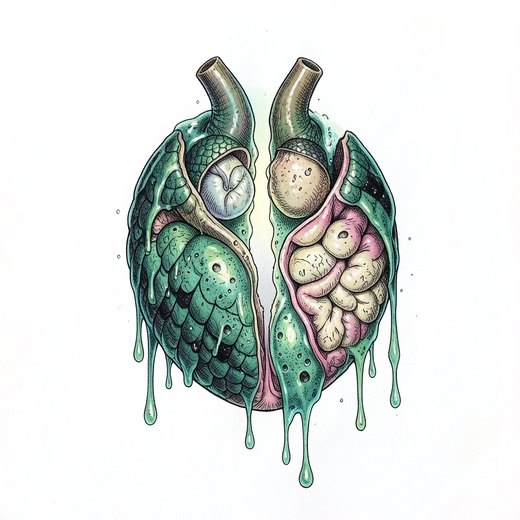
Fig. 3. Intake
Wound resin
What must it feed on to work? What has to be present, noticed or supplied?
It feeds on the resin a tree pours over its wounds, which flows over whatever touches it, insects, seeds, feathers and drops of water.3
drawn as: wound resin · view: pinned
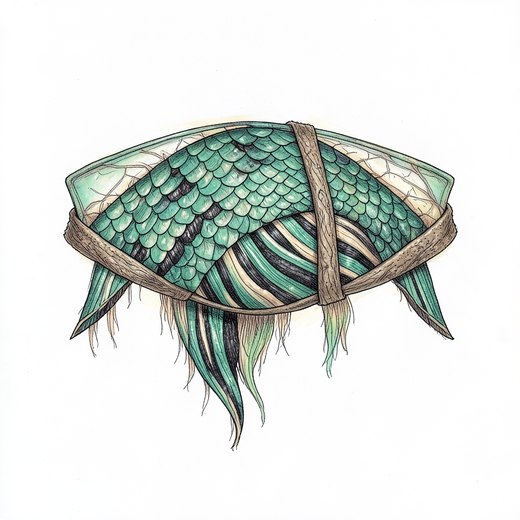
Fig. 4. Mechanism
Cross-linking
How does it turn what it takes in into what it gives out?
Buried in sediment, the resin loses its volatile oils and its molecules link into long chains, turning soft copal into hard amber over millions of years.2
drawn as: cross-linking · view: transparent
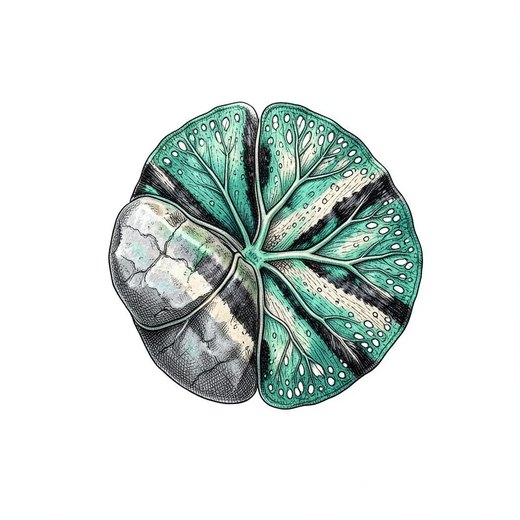
Fig. 5. Output
Inclusion
What does it make possible, visible or knowable?
It keeps moments of ancient life whole, an insect caught mid-step, a feather, a flower, so forests a hundred million years old can be seen in detail.3, 2
drawn as: inclusion · view: series
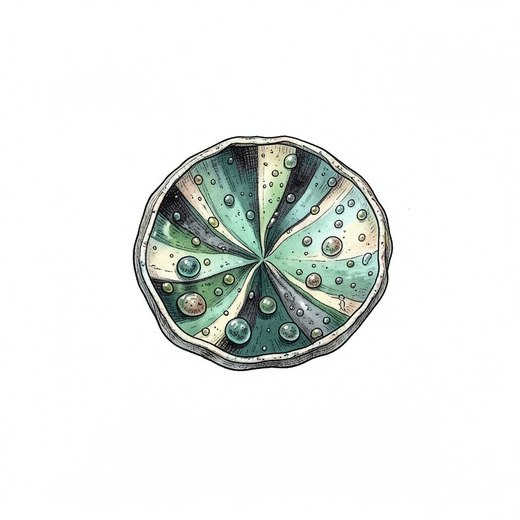
Fig. 6. Dispersal
Blue earth
What part of it travels into other minds, ideas and fields, and by what vector?
It lies scattered through buried strata and washes up on Baltic shores, and its Greek name, elektron, became the root of the word electricity.1, 4
drawn as: blue earth · view: detached
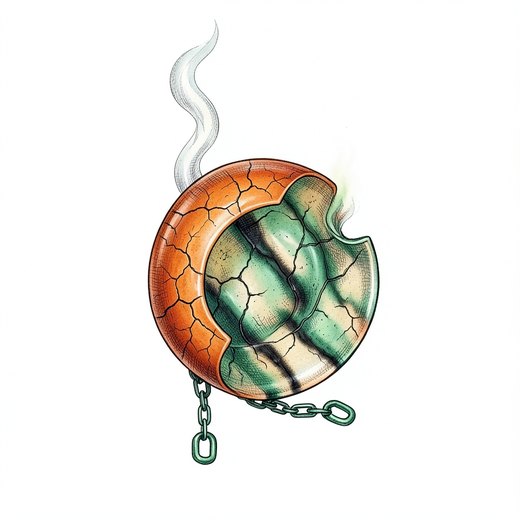
Fig. 7. Decay
Crazing
What can it not digest, where does it fail, and what does it leave behind for others?
In light and air it darkens, grows brittle and crazes with fine cracks until it crumbles. Burned, it gives off a sweet resinous smoke.2
drawn as: crazing · view: transparent
II Meaning associations
No relations recorded yet.
descent membership food web resemblance or friction
Lineage
A founder, dissected by hand.
Kin
same kind in Roget Breath, Chiaroscuro, Chimera, Entelechy, Iridescence, Music, Silence, Tinnitus, Vertigo, Shared Breath
same kind in Wilkins Ash, Clay, Diamond, Petrification, Salt, Sand
same kind in WordNet Ash, Clay, Diamond, Salt, Sand
same kind in Llull Archipelago, Ash, Clay, Cloud, Diamond, Emergence, Entanglement, Entropy, Erosion, Fire, Frost, Iridescence, Lake, Petrification, Rain, Reflection, Resonance, Resonance (second reading), River, Salt, Sand, Storm, Weightlessness, Wind, Winter, Self-Ending Order
same phylum Clay, Dream, Lake, Placebo, Possession, Solitude, Tinnitus, Winter, Knowing Trust, The Shared Cell
same dominant organ Aura, Cloud, Diamond, Equinox, Frost, Possession, Reflection, Solitude, Threshold, Tongue Horizon, The Shared Cell
Genome
III In the world
Echoes
- an insect caught in Baltic amber
- the Amber Road to Rome
- rubbed amber pulling at straw
- the tears of the Heliades turned to amber
IV Record
How it was drawn
its draw 5, a point in the morphospace (laws §8), drawn by flux-2-klein-4b.safetensors.
| axis | value | |
|---|---|---|
| book | semaphora | |
| symmetry | radial 5 | |
| organization | solitary | |
| silhouette | columnar | |
| scale | microscopic | |
| proportion | elongated latent | |
| growth | encrusted | |
| articulation | sutured | |
| openness | hollow | |
| skeleton | exoskeleton latent | |
| locomotion | sessile latent | |
| pattern | stripes latent | |
| coloration | cryptic latent | |
| substance | oil | |
| surface | crackled | |
| palette | malachite | |
| luminosity | points | |
| transparency | translucent latent | |
| gesture | dissolves | |
| unity | fragment latent | |
| modality | necessary latent | |
| causation | efficient latent | |
| determinacy | dissolving latent | |
| fusion | nested | |
| anomaly | tenant | |
| graft | stitches | |
| technique | hatching | |
| viewpoint | cutaway | |
| value | high key latent | |
| balance | unmarked latent | |
| density | sparse latent | |
| rhythm | unmarked latent | |
| saturation | muted | |
| appendages | cilia, hooks | |
| anchor (body) | a chrysalis, a jewelled sealed case hanging from a silk pad | |
| anchor (detail) | a drop of resin with a small creature caught inside |
Sources
- Pliny the Elder, Natural History (77 CE), book 37, on amber
- David A. Grimaldi, Amber: Window to the Past (1996)
- George O. Poinar Jr. and Roberta Poinar, The Quest for Life in Amber (1994)
- William Gilbert, De Magnete (1600)
❦