a founder of the codex
Chimera
Insitaria polyglotta·the Polyglot Graft
From Latin insitus, grafted, and Greek polyglottos, many-tongued, for a grafted creature that speaks in many tongues.
- Level
- Conceptorganism
- Phylum
- Part and wholeimage schema
- Class
- Mechanismits graft union
- Niche
- Symbionta partner
- Mode
- Fictionhow it keeps existing
- Stage
- Matureindividuated
- Status
- Living
- Habitat
- Dream
Its kinds · Roget, 1852: Organic Matter · Wilkins, 1668: Beast · WordNet, 1990: Animal · Llull, 1308: G · Sensitive
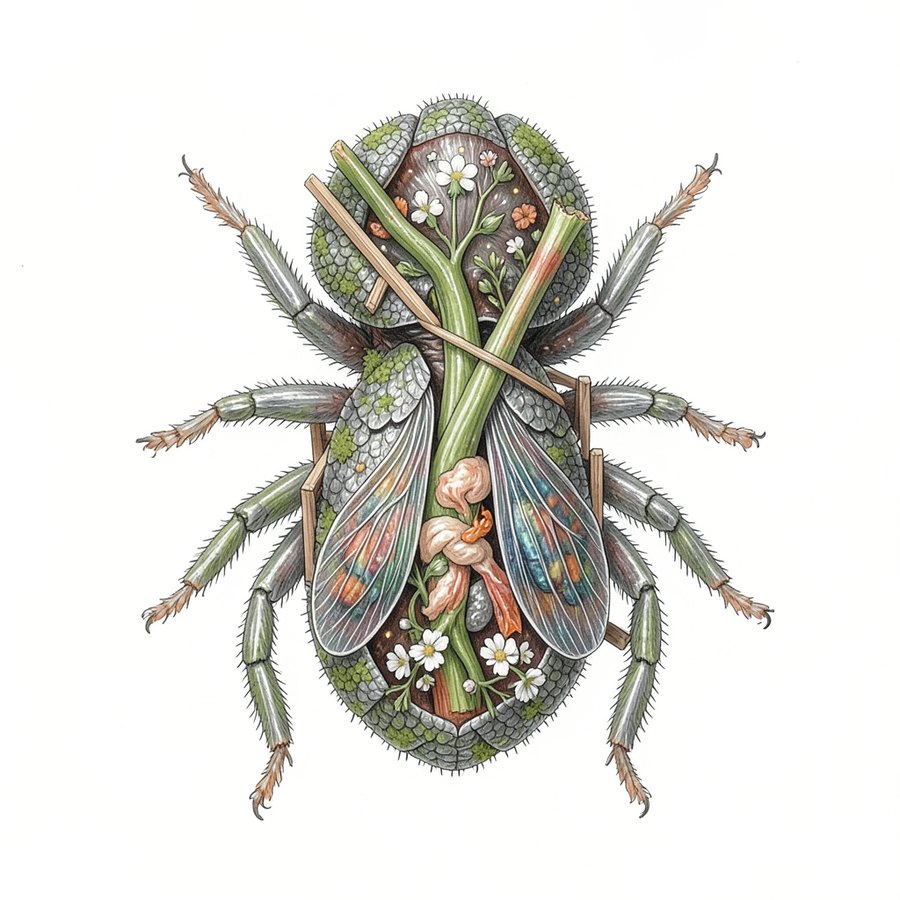
One body can be made of parts from different kinds and still live, and wherever kinds are meant to stay pure such a body is read as a monster or a marvel.
A body can be many kinds at once, so long as its parts can bear one another.
behavior Moves as several creatures that have agreed to share one body, and each part answers in its own voice.
Which part of you came from elsewhere and grew in so well that you call it your own?
I Dissection
Each organ answers one question about the idea. The framed one, its mechanism, is the dominant organ: the being's class, the one the idea could not lose and stay itself.
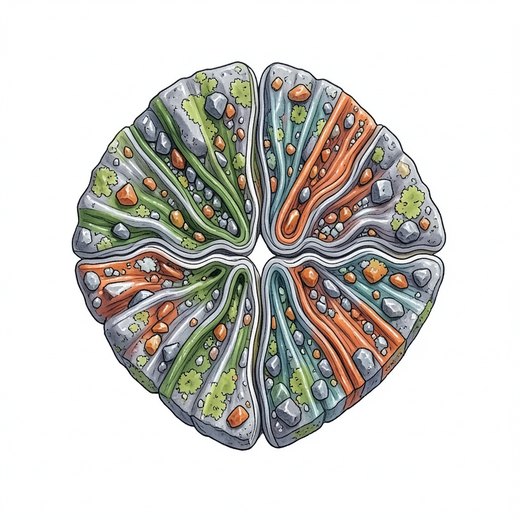
Fig. 1. Kernel
Composite beast
Which premise, if it were false, would kill this idea?
Its premise is that one living body can be built from parts of different kinds, each part keeping its own nature inside the whole.1, 3
drawn as: composite beast · view: cross section
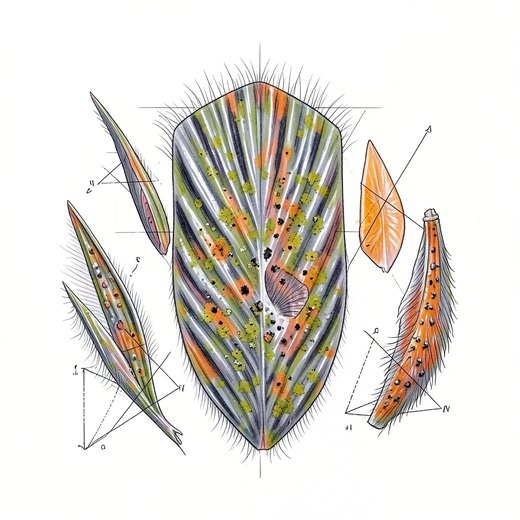
Fig. 2. Boundary
Species barrier
What sets it apart from what it is not, and how does it keep that distinction?
It is defined against pure kind, the order in which each creature belongs to one class. Where that order is kept, a body that mixes classes is read as a monster.2
drawn as: species barrier · view: pinned
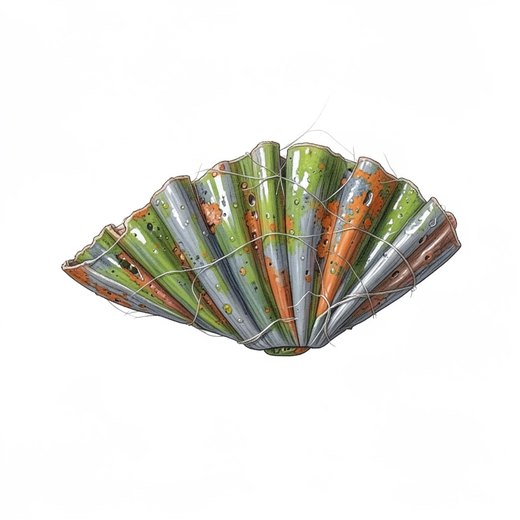
Fig. 3. Intake
Scion
What must it feed on to work? What has to be present, noticed or supplied?
It feeds on parts borrowed from other creatures, a lion's head, a goat's body, a serpent's tail, or the cells of a twin or a donor.1, 4
drawn as: scion · view: series
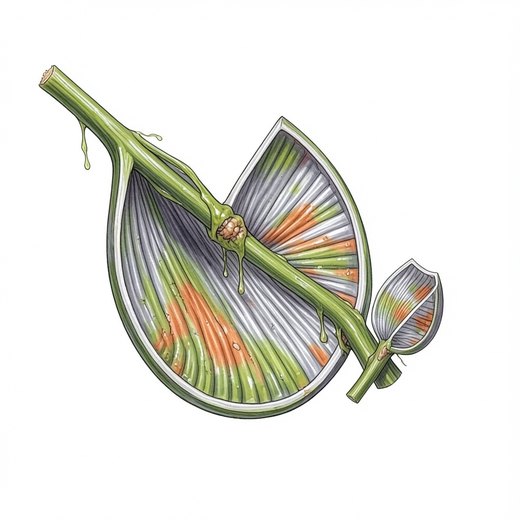
Fig. 4. Mechanism
Graft union
❦ dominant organHow does it turn what it takes in into what it gives out?
Grafting joins the parts, and a grafted shoot can grow layers that keep the cells of both stocks. In animals a graft takes where the host met the foreign cells early in life and accepts them as its own.3, 4
drawn as: graft union · view: cross section
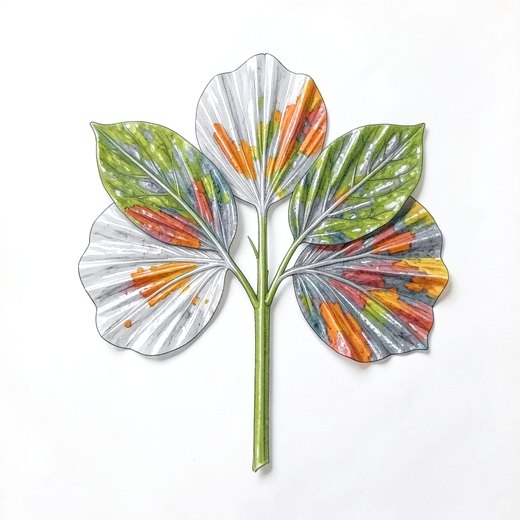
Fig. 5. Output
Monster
What does it make possible, visible or knowable?
It makes visible a creature that belongs to no kind, and the word chimera came to name any impossible fancy.1, 5
drawn as: monster · view: transparent
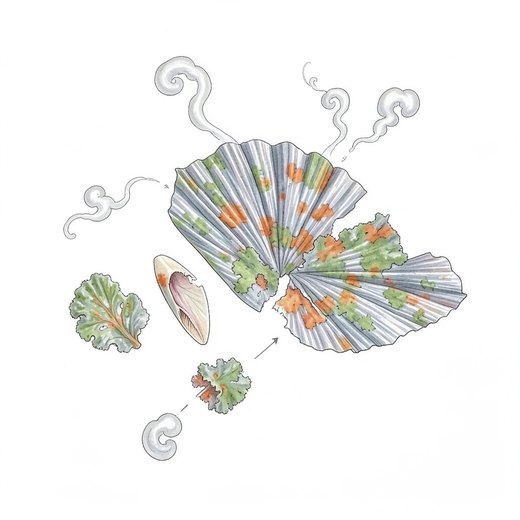
Fig. 6. Dispersal
Grotesque
What part of it travels into other minds, ideas and fields, and by what vector?
It travels as myth and image, from the fire-breathing beast of the Iliad to the composite animals of bestiaries, carvings and dreams.1, 5
drawn as: grotesque · view: exploded
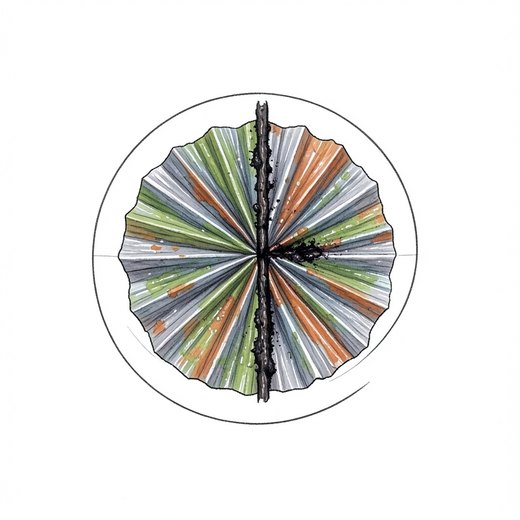
Fig. 7. Decay
Rejection
What can it not digest, where does it fail, and what does it leave behind for others?
It fails where the body attacks the parts it reads as foreign, and a graft the host refuses dies at the seam. It leaves behind the study of how a body tells self from other.4
drawn as: rejection · view: microscope
II Meaning associations
No relations recorded yet.
descent membership food web resemblance or friction
Lineage
A founder, dissected by hand.
Kin
same kind in Roget Amber, Breath, Chiaroscuro, Entelechy, Iridescence, Music, Silence, Tinnitus, Vertigo, Shared Breath
same kind in Llull Aura, Awakening, Fear, Qualia, Silence, Tinnitus, Vertigo, Babelhum, Shared Breath, The Swing Door
same phylum Emergence, Petrification, Pointillism, Syllable, Babelhum, Subtractive Phenomenology
same dominant organ Dream, Fire, Love, Lullaby, Metamorphosis, Music, Presence, Resonance, Ritual, Storm, Symbol, Winter, Rushmaker, Shared Breath, Self-Ending Order, Gazeroot (second reading), Commemorative Revision, The Swing Door, Foresilence, Simultaneous Remembering, Poetry, Subtractive Phenomenology
Genome
- hybrid
- graft
- composite
- monster
- tolerance
III In the world
Echoes
- the Chimera of Arezzo, an Etruscan bronze
- an apple tree grafted to bear several varieties
- a mother carrying cells of her child years after the birth
- the composite beasts of medieval bestiaries
IV Record
How it was drawn
its draw 1, a point in the morphospace (laws §8), drawn by flux-2-klein-4b.safetensors.
| axis | value | |
|---|---|---|
| book | pathemata | |
| symmetry | radial 5 | |
| organization | solitary | |
| silhouette | quadruped | |
| scale | immense | |
| proportion | graded | |
| growth | moulting | |
| articulation | imbricate latent | |
| openness | hollow latent | |
| skeleton | unmarked latent | |
| locomotion | burrowing latent | |
| pattern | labyrinth latent | |
| coloration | countershaded latent | |
| substance | gill tissue | |
| surface | scaled | |
| palette | lichen | |
| luminosity | points | |
| transparency | transparent latent | |
| gesture | rises | |
| unity | composite | |
| modality | necessary latent | |
| causation | formal latent | |
| determinacy | crisp | |
| fusion | nested | |
| anomaly | wound bloom | |
| graft | scaffold | |
| technique | gouache | |
| viewpoint | above | |
| value | unmarked latent | |
| balance | top heavy latent | |
| density | intricate latent | |
| rhythm | regular latent | |
| saturation | accent latent | |
| appendages | valves, frills | |
| anchor (body) | a foraminifer, a spiral of chambers each larger than the last | |
| anchor (detail) | beetle wing cases, hard, iridescent and finely ridged |
Sources
- Homer, Iliad, book 6, lines 179 to 182 (c. 8th century BCE)
- Mary Douglas, Purity and Danger (1966)
- Hans Winkler, Über Pfropfbastarde und pflanzliche Chimären (Berichte der Deutschen Botanischen Gesellschaft, 1907)
- Rupert E. Billingham, Leslie Brent and Peter B. Medawar, Actively Acquired Tolerance of Foreign Cells (Nature, 1953)
- Jorge Luis Borges with Margarita Guerrero, The Book of Imaginary Beings (1967)
❦