a founder of the codex
Metamorphosis
Histolysa reformans·the Rebuilding Chrysalis
From Greek histos, tissue, and lysis, loosening, and Latin reformare, to shape again, the tissue that loosens itself and is shaped again.
- Level
- Conceptorganism
- Phylum
- Cycleimage schema
- Class
- Mechanismits imaginal discs
- Niche
- Decomposerwhat is dead
- Mode
- Metamorphosishow it keeps existing
- Stage
- Matureindividuated
- Status
- Living
- Habitat
- Forest
Its kinds · Roget, 1852: Change · Wilkins, 1668: Transcendental Relation of Action · WordNet, 1990: Process · Llull, 1308: H · Vegetative
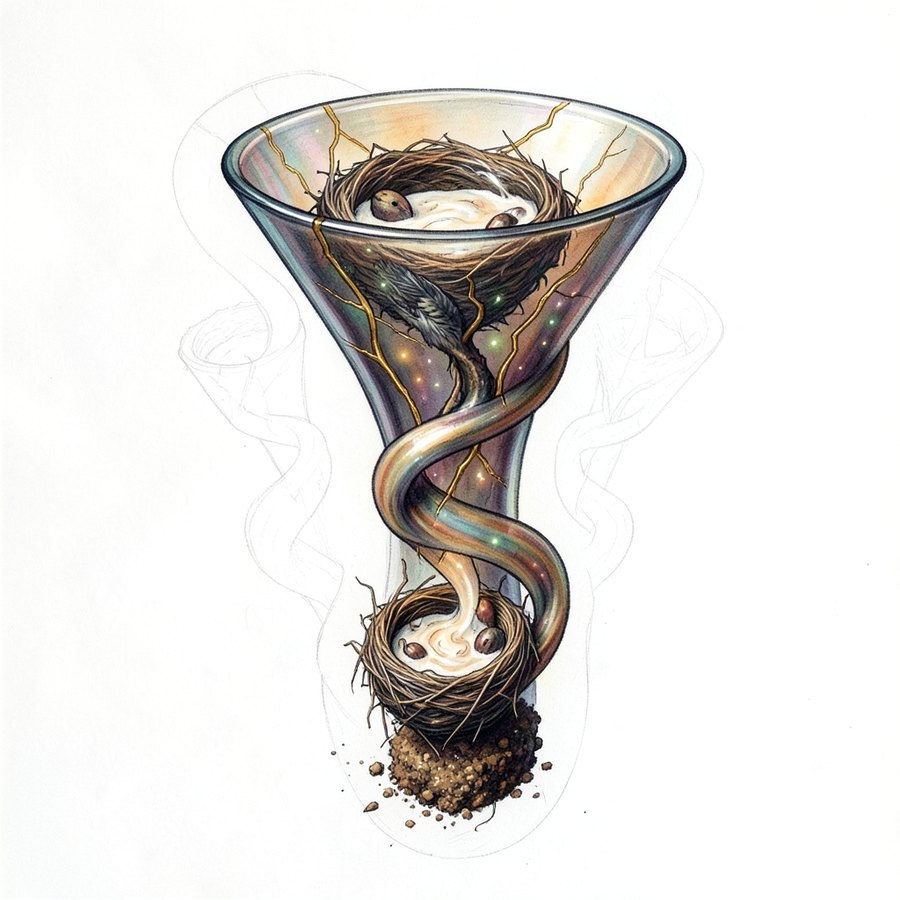
One life can pass through bodies of wholly different form by dissolving the old one and building the next from its matter, so a being stays itself through a complete change of shape.
A life keeps itself by giving up its body and building another.
behavior Hangs still and sealed for weeks while it melts and rebuilds inside, then splits open and leaves its case behind.
Which of your old forms did you have to digest to become what you are now?
I Dissection
Each organ answers one question about the idea. The framed one, its mechanism, is the dominant organ: the being's class, the one the idea could not lose and stay itself.
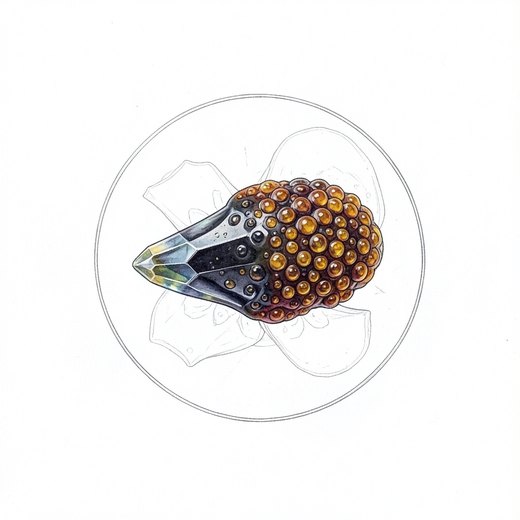
Fig. 1. Kernel
Psyche
Which premise, if it were false, would kill this idea?
One life can pass through bodies of wholly different form and stay the same life, as a caterpillar becomes a moth.2
drawn as: psyche · view: microscope
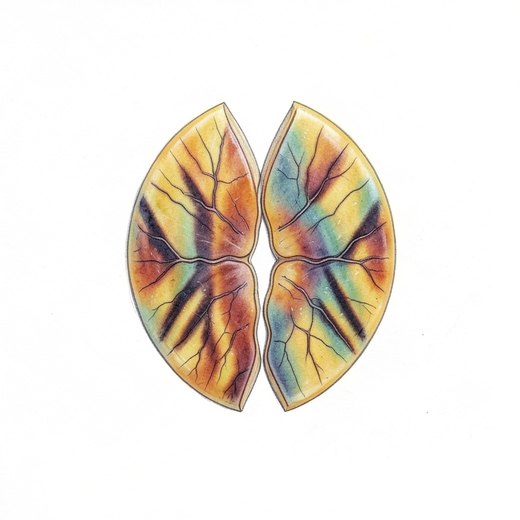
Fig. 2. Boundary
Cocoon
What sets it apart from what it is not, and how does it keep that distinction?
It stands against fixed identity, the view that a thing is its present shape, and keeps that difference by carrying one life unbroken from each form into the next.1
drawn as: cocoon · view: pressed
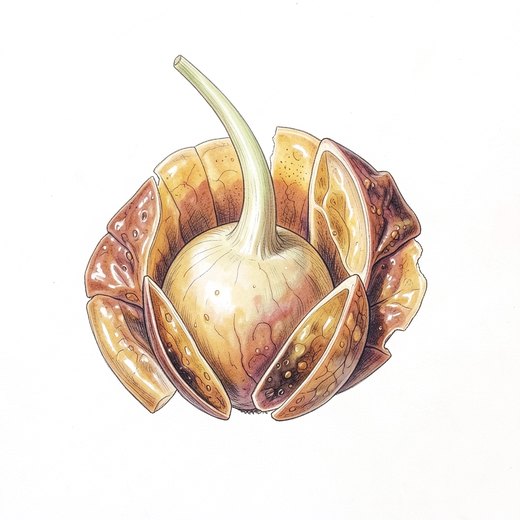
Fig. 3. Intake
Pupal soup
What must it feed on to work? What has to be present, noticed or supplied?
It feeds on the old body itself. Inside the pupa many larval tissues are broken down, and their matter feeds the organs of the adult.5
drawn as: pupal soup · view: pinned
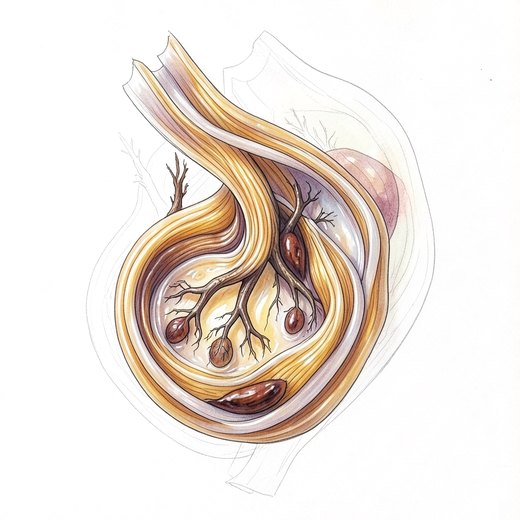
Fig. 4. Mechanism
Imaginal discs
❦ dominant organHow does it turn what it takes in into what it gives out?
A pulse of hormone starts the change. Larval tissues dissolve while small clusters of cells, set aside since the embryo, grow into wings, legs and eyes.5
drawn as: imaginal discs · view: transparent
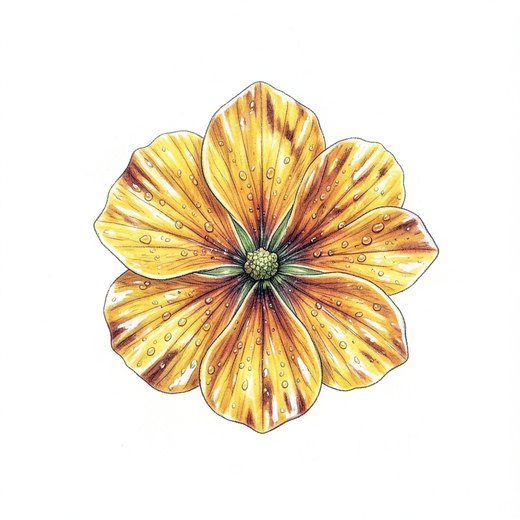
Fig. 5. Output
Imago
What does it make possible, visible or knowable?
It yields a new form with new powers, a winged adult that flies and mates where the larva crawled and fed, a petal grown from what began as a leaf.2, 3
drawn as: imago · view: detached
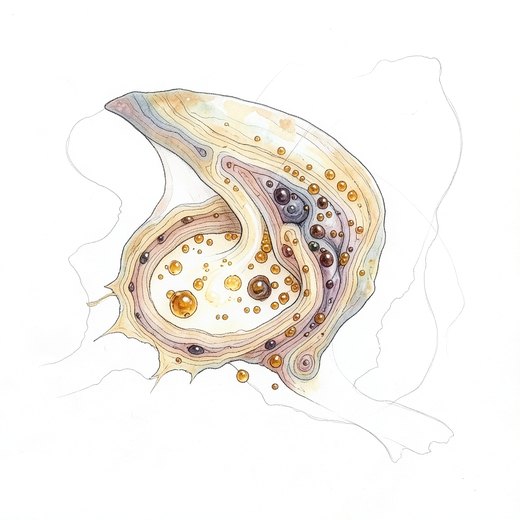
Fig. 6. Dispersal
Exuviae
What part of it travels into other minds, ideas and fields, and by what vector?
Its shed cases are its most visible trace, and it travels as tales of bodies changed into new forms, from Ovid's fifteen books to Kafka's story of a man who wakes as an insect.1, 4
drawn as: exuviae · view: series
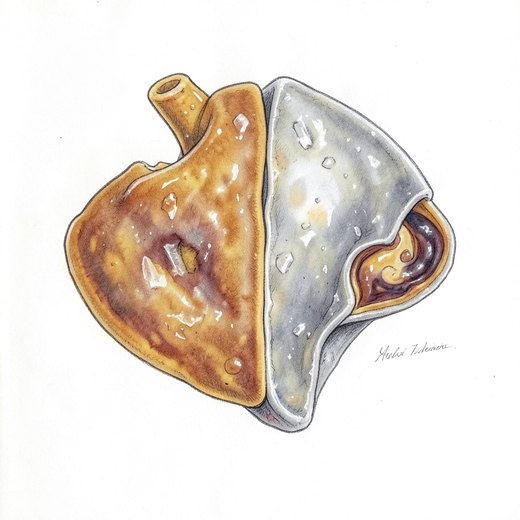
Fig. 7. Decay
Failed eclosion
What can it not digest, where does it fail, and what does it leave behind for others?
It fails when the change halts midway, a pupa that dies half larva and half adult, or a body held for good in its new form, as in Kafka's story.5, 4
drawn as: failed eclosion · view: pressed
II Meaning associations
No relations recorded yet.
descent membership food web resemblance or friction
Lineage
A founder, dissected by hand.
Kin
same kind in Roget Awakening, Entropy, Petrification, Threshold, Tongue Horizon
same kind in Wilkins Threshold
same kind in WordNet Awakening, Breath, Entelechy, Entropy, Erosion, Fire, Petrification, Rushmaker, Shared Breath, Self-Ending Order, Tongue Horizon, Witnessed Relief, Gazeroot (second reading), Commemorative Revision, The Swing Door
same kind in Llull Breath, Entelechy, Spring
same phylum Ash, Breath, Echolalia, Lullaby, Resonance, Commemorative Revision, The Swing Door, Tide of Days, Simultaneous Remembering, Poetry
same dominant organ Chimera, Dream, Fire, Love, Lullaby, Music, Presence, Resonance, Ritual, Storm, Symbol, Winter, Rushmaker, Shared Breath, Self-Ending Order, Gazeroot (second reading), Commemorative Revision, The Swing Door, Foresilence, Simultaneous Remembering, Poetry, Subtractive Phenomenology
Genome
- change
- dissolution
- rebuilding
- continuity
- form also in Commemorative Revision, Entelechy, Petrification, Poetry, Ritual
III In the world
Echoes
- a butterfly drying its wings beside its empty chrysalis
- a tadpole growing legs and losing its tail
- Ovid's Metamorphoses
- Goethe's leaf that becomes a petal
IV Record
How it was drawn
its draw 1, a point in the morphospace (laws §8), drawn by flux-2-klein-4b.safetensors.
| axis | value | |
|---|---|---|
| book | flora | |
| symmetry | radial 8 | |
| organization | nested | |
| silhouette | ribbon | |
| scale | microscopic | |
| proportion | tapering latent | |
| growth | encrusted | |
| articulation | seamless latent | |
| openness | sheet latent | |
| skeleton | exoskeleton latent | |
| locomotion | jetting latent | |
| pattern | stripes | |
| coloration | plain latent | |
| substance | aura | |
| surface | iridescent | |
| palette | amber | |
| luminosity | points | |
| transparency | translucent | |
| gesture | coils | |
| unity | composite latent | |
| modality | unmarked latent | |
| causation | efficient latent | |
| determinacy | doubled latent | |
| fusion | nested | |
| anomaly | echoes | |
| graft | kintsugi | |
| technique | silverpoint | |
| viewpoint | above | |
| value | low key | |
| balance | unmarked latent | |
| density | sparse latent | |
| rhythm | regular latent | |
| saturation | muted latent | |
| appendages | sails | |
| anchor (body) | a waterspout, a slender twisting funnel | |
| anchor (detail) | a cave swiftlet's nest, a cup of hardened saliva fixed to rock |
Sources
- Ovid, Metamorphoses (8 CE)
- Maria Sibylla Merian, Metamorphosis insectorum Surinamensium (1705)
- Johann Wolfgang von Goethe, The Metamorphosis of Plants (1790)
- Franz Kafka, The Metamorphosis (1915)
- James W. Truman and Lynn M. Riddiford, The Origins of Insect Metamorphosis (Nature, 1999)
❦