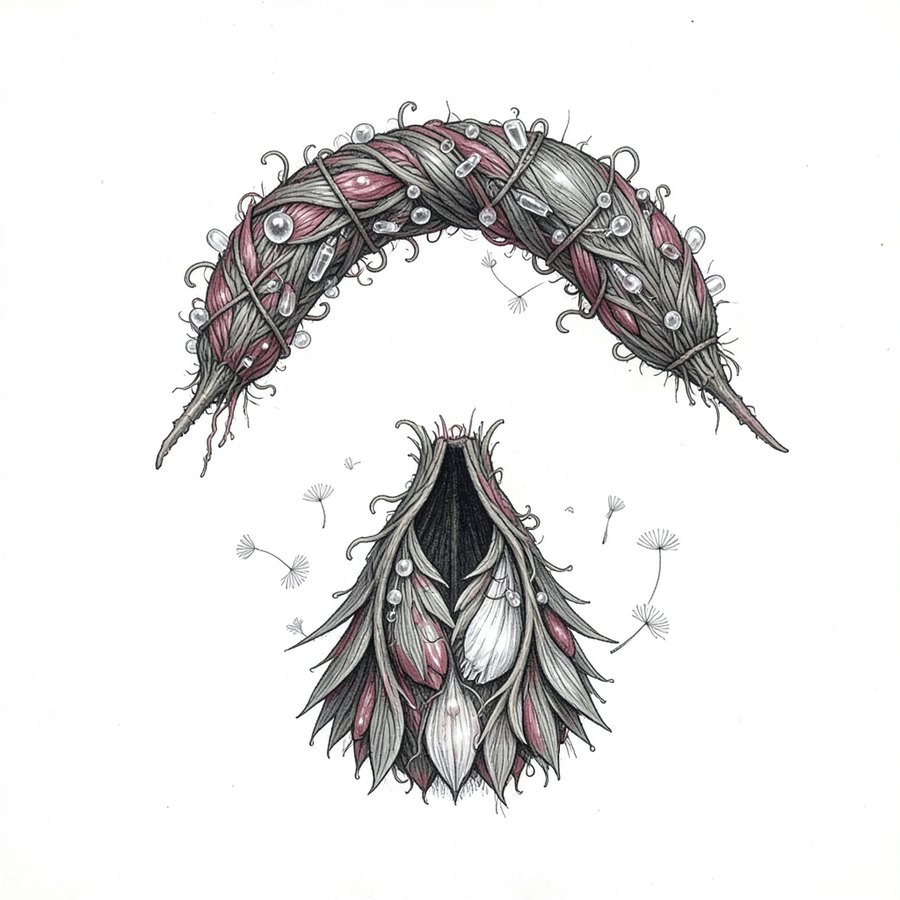
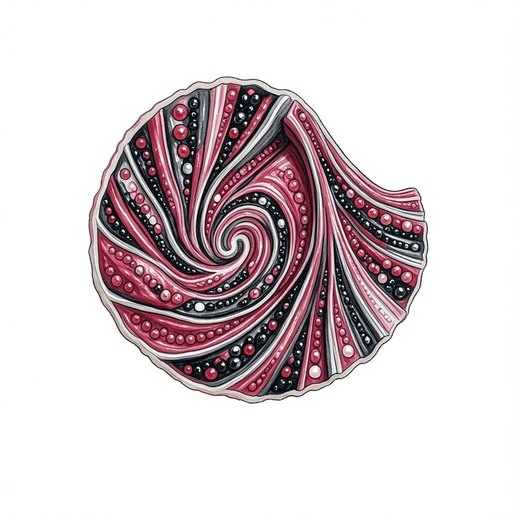
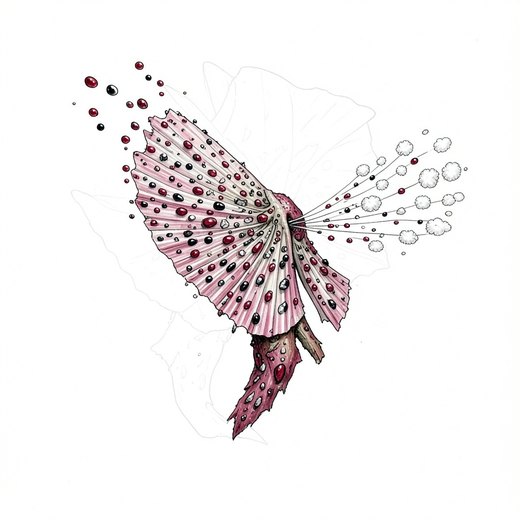
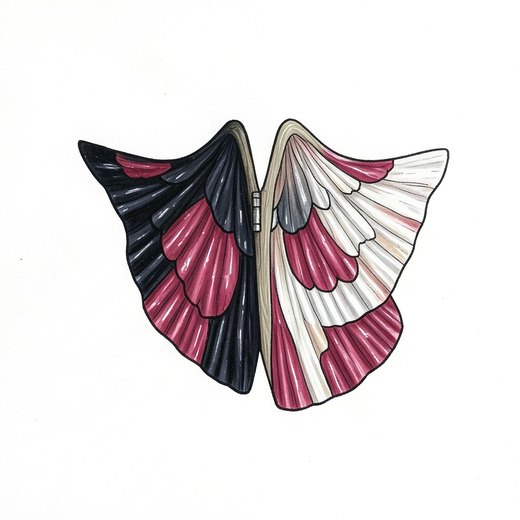
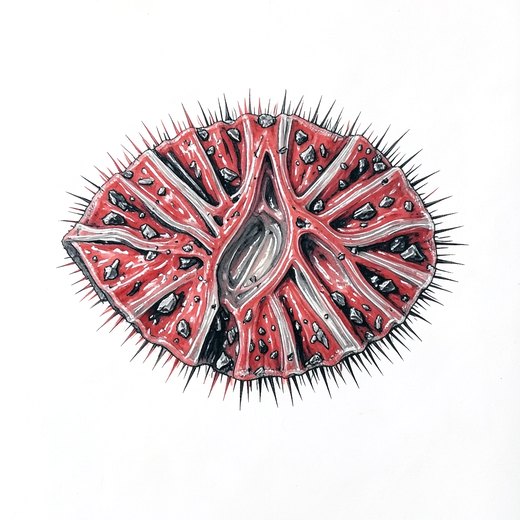
Plate LXXXI. Phobopnoe reciproca, the whole specimen.
Fear quickens the breath, and the breath can quicken or quiet fear in return, so the two make a loop that can be entered from either side.
Fear can be entered or left by the breath.
behavior Two forms that pulse together, one bristling as the other quickens, both settling when either slows.
provocation
Which way is your breathing pushing you right now?
Each draw is the being derived afresh by the current laws at another seed (laws §11); the chosen one leads (where they sit in the morphospace).
I Dissection
Each organ answers one question about the idea. The framed one, its mechanism, is
the dominant organ: the being's class, the one the idea could not lose and stay itself.
Fig. 1. Kernel
Body loop
Which premise, if it were false, would kill this idea?
Fear and breath answer each other; fear speeds and shallows the breath, and a fast shallow breath is itself read as danger, while a slow one is read as safety.1, 3
drawn as: body loop · view: cross section
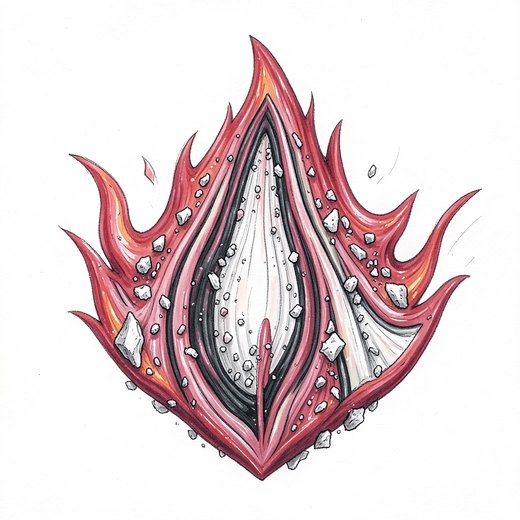
Fig. 2. Boundary
Diaphragm
What sets it apart from what it is not, and how does it keep that distinction?
It is set apart from fear alone by running both ways, and from breathing alone by carrying alarm; it lives only where the two meet.2
drawn as: diaphragm · view: pressed
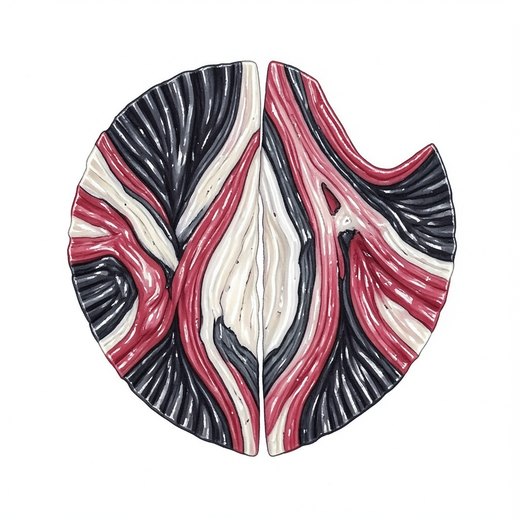
Fig. 3. Intake
Nasal airflow
What must it feed on to work? What has to be present, noticed or supplied?
It feeds on threat from one side and on the rhythm of breathing from the other, which the brain reads as a sign of the body's state.2
drawn as: nasal airflow · view: magnified
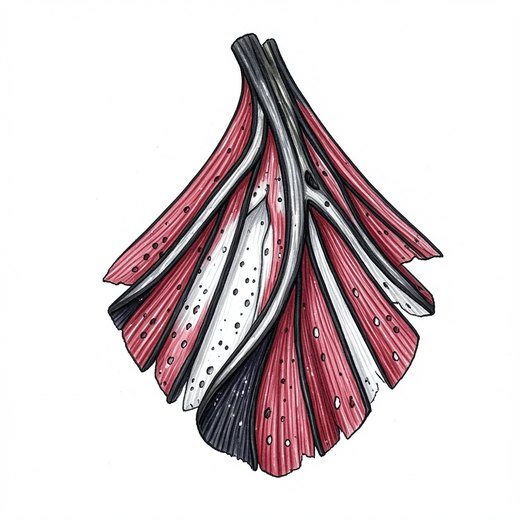
Fig. 4. Mechanism
Vagal brake
❦ dominant organ
How does it turn what it takes in into what it gives out?
Breathing paces the brain's fear circuits, so a fearful face is judged faster on an in-breath, and a slow out-breath damps the alarm.2, 3
drawn as: vagal brake · view: cast
Fig. 5. Output
Panic spiral
What does it make possible, visible or knowable?
It gives panic its spiral and the steadying breath its power, the slow counts a soldier or a singer uses to stay calm.3
drawn as: panic spiral · view: series
Fig. 6. Dispersal
Collective gasp
What part of it travels into other minds, ideas and fields, and by what vector?
It travels in breathing drills, in the advice to take a deep breath, and in the gasp a frightened crowd shares.3
drawn as: collective gasp · view: in situ
Fig. 7. Decay
False suffocation alarm
What can it not digest, where does it fail, and what does it leave behind for others?
It cannot be broken from the breath when the threat is real and present, and a mind trained to fear its own breathlessness can panic with no threat at all.1
What does each partner give the other, and in which direction does the claim run?
Fear gives breath its alarm, and breath gives fear a way in and a way out; the claim runs both ways, so the loop can be entered from either side.2, 3
drawn as: bond · view: transparent
Fig. 10. Condition
Open airway
Under what conditions does the bond hold, and when does it break?
The bond holds while breathing is free to change; it breaks when the breath is forced, by a mask, an illness or a held dive, and then the alarm comes from the breath alone.1
drawn as: condition · view: series
II Meaning associations
descent membership food web resemblance or friction
Fearful faces are recognized faster when they appear during an in-breath through the nose than during an out-breath.
Slowing the breath to about six a minute lowers reported fear and physiological arousal more than counting at the same pace without changing the breath.
People with panic disorder react more strongly than others to air with extra carbon dioxide, a breath-borne alarm with no outside threat.
Fruits
practice
The answering count
A breathing practice taught for moments of fear, an exhale longer than the inhale at about six breaths a minute, with a short account of why it works, so that people use it as a way into the loop rather than as a superstition.3
Which way is your breathing pushing you right now?
study
The in-breath of alarm
In people with high anxiety, test whether fearful faces are judged faster on a nasal in-breath than on an out-breath, as in healthy volunteers, and whether some weeks of slow-breathing practice weaken the difference.2, 3
Can fear be entered or left by the breath?
interface
The breath mirror
A small wearable that shows its wearer's breathing as a colour slowly changing on the wrist, quickening toward red as the breath quickens, so that the loop can be seen before it is felt and answered by a longer out-breath.3
Which way is your breathing pushing you right now?
bridge Both are the body acting before the mind, breath without being told and fear before it knows.
friction Breath can be taken over by will at any moment; fear cannot be willed away.
tension If breath can be steered and fear cannot, can fear be steered through the breath?
questions neither parent could ask
Why does a slow breath calm and a fast one alarm?
Can a panic start from the breath alone, with no threat?
Is the held breath of fear a freeze or a readiness?
symbiosis: What claim joins breath and fear, and which way does it run?
candidate
emergence
depth
ground
distance
total
breath-of-fear
3
3
3
2
11
The bond runs both ways. Nasal breathing paces the limbic system, with fearful faces judged faster on an in-breath; slow breathing damps arousal; false suffocation alarms raise panic from the breath alone. Breathing exercises are widely known, hence 2 on distance.
suffocation-alarm
2
2
3
2
9
One direction of the loop; it becomes its decay.
steadying-count
2
2
2
1
7
The other direction, as a technique; it becomes its echo and its fruit.
held-dive
2
2
2
2
8
A setting of the loop under a forced breath; it marks the loop's condition.
Record 2026-10-25-breath-x-fear in lab/.
How it was drawn
its draw 4, a point in the morphospace (laws §8), drawn by flux-2-klein-4b.safetensors.
axis
value
from
book
meteora
Fear
symmetry
helical
Fear
organization
paired
level
silhouette
bell
Fear
scale
microscopic
Breath
proportion
elongated latent
Breath
growth
apical
Breath
articulation
telescoping latent
Breath
openness
solid latent
Breath
skeleton
spicules latent
Fear
locomotion
walking latent
Breath
pattern
reticulate latent
Breath
coloration
cryptic latent
mutation
substance
gill tissue
Breath
surface
mottled
Breath
palette
vermilion
mutation
luminosity
none
Breath
transparency
opaque latent
Fear
gesture
quivers
Fear
unity
unmarked latent
Fear
modality
necessary latent
Breath
causation
efficient
Fear
determinacy
crisp latent
mutation
fusion
graft
Fear
anomaly
unfinished
Breath
graft
vials
Fear
technique
gouache
Breath
viewpoint
above
mutation
value
high key latent
mutation
balance
cantilevered latent
Breath
density
intricate
Breath
rhythm
unmarked latent
Fear
saturation
muted
Breath
appendages
tendrils, beaded filaments
Breath
anchor (body)
a weaver bird's nest, a woven hanging pouch with a narrow entrance tube
Breath
anchor (detail)
a dandelion clock, a sphere of parachuted seeds ready to drift
Fear
Sources
Donald F. Klein, False Suffocation Alarms, Spontaneous Panics, and Related Conditions (Archives of General Psychiatry, 1993)
Christina Zelano and others, Nasal Respiration Entrains Human Limbic Oscillations and Modulates Cognitive Function (Journal of Neuroscience, 2016)
Andrea Zaccaro and others, How Breath-Control Can Change Your Life: A Systematic Review on Psycho-Physiological Correlates of Slow Breathing (Frontiers in Human Neuroscience, 2018)