a founder of the codex
Poetry
Versicaelum condensans·the Condensing Sky
From Latin versus, a turning or a line of verse, caelum, sky, and condensare, to press together; a sky of verse that presses speech into rain.
- Level
- Disciplinebiome
- Phylum
- Cycleimage schema
- Class
- Mechanismits stanza
- Niche
- Consumerother ideas
- Mode
- Fictionhow it keeps existing
- Stage
- Matureindividuated
- Status
- Living
- Habitat
- Ritual
Its kinds · Roget, 1852: Communication of Ideas · Wilkins, 1668: Discourse · WordNet, 1990: Communication · Llull, 1308: F · Imaginative
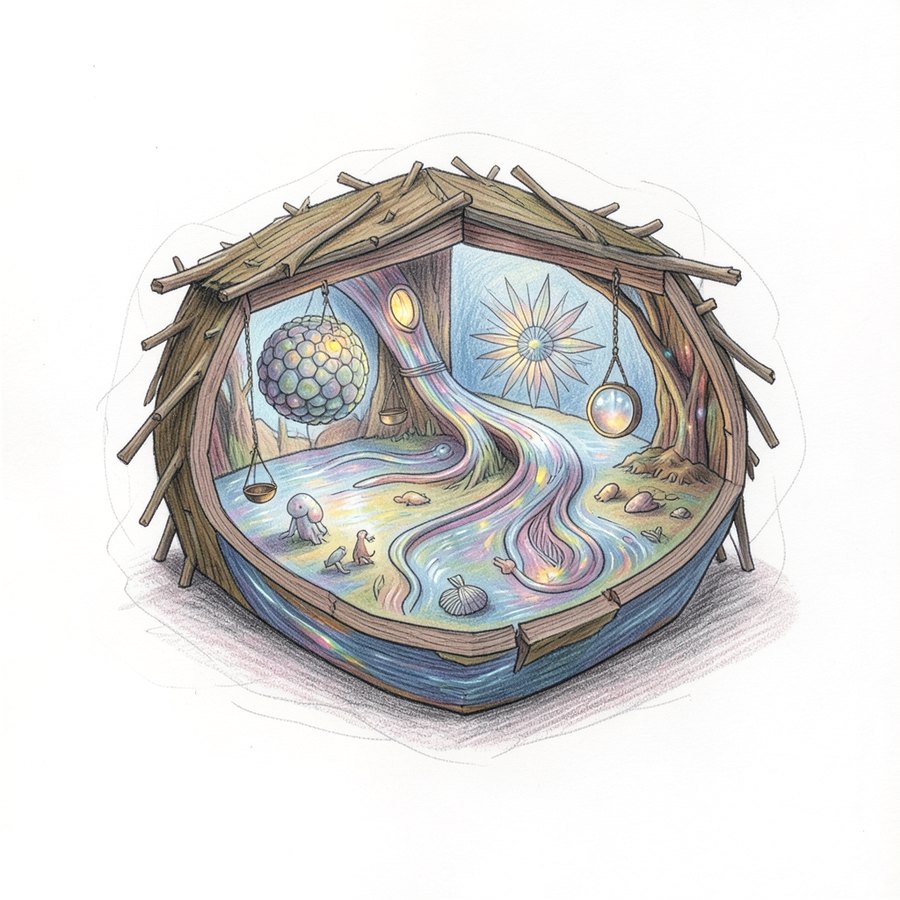
Language under the pressure of form says more than its words, and is remembered because of that pressure.
What is said in a shape is said twice.
behavior Grows in layers over centuries, each new pattern laid over the old, and wakes only when it is read aloud.
What would a law, a recipe or a scientific paper become if it had to be learned by heart?
I Dissection
Each organ answers one question about the idea. The framed one, its mechanism, is the dominant organ: the being's class, the one the idea could not lose and stay itself.
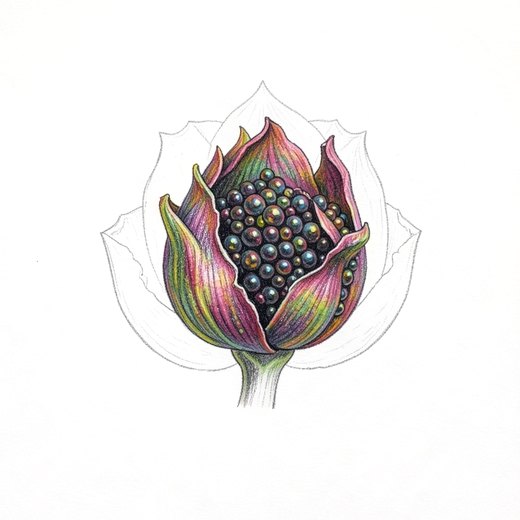
Fig. 1. Kernel
Verbal icon
Which premise, if it were false, would kill this idea?
Language can mean more than it states when its sound, rhythm and shape are made to carry meaning alongside its words.2
drawn as: verbal icon · view: cast
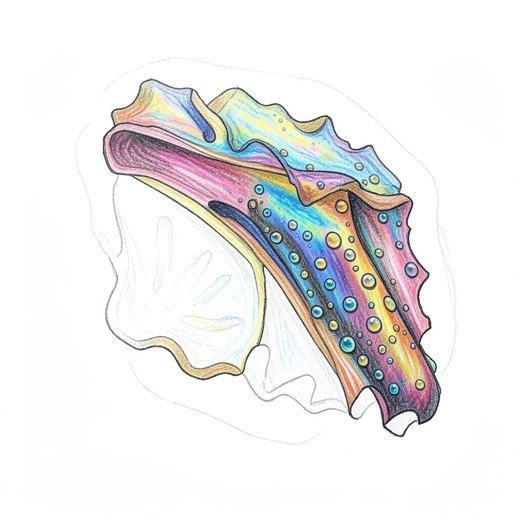
Fig. 2. Boundary
Line break
What sets it apart from what it is not, and how does it keep that distinction?
It is set apart from prose by the line; where language is cut by sound and shape as well as by sense, poetry begins.2
drawn as: line break · view: cast
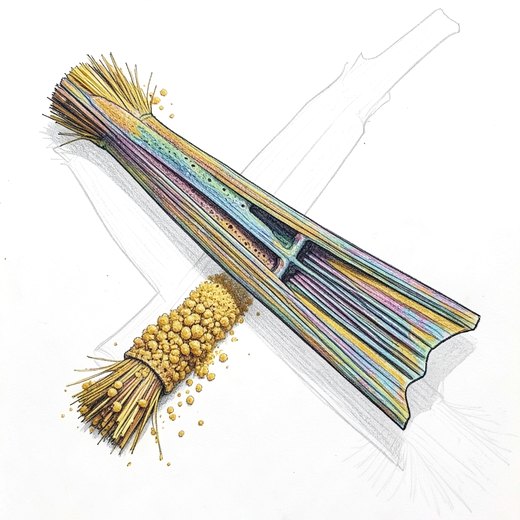
Fig. 3. Intake
Word-hoard
What must it feed on to work? What has to be present, noticed or supplied?
It feeds on ordinary speech, on experience too sharp or too vague for plain statement, and on an ear trained by other poems.4
drawn as: word-hoard · view: transparent
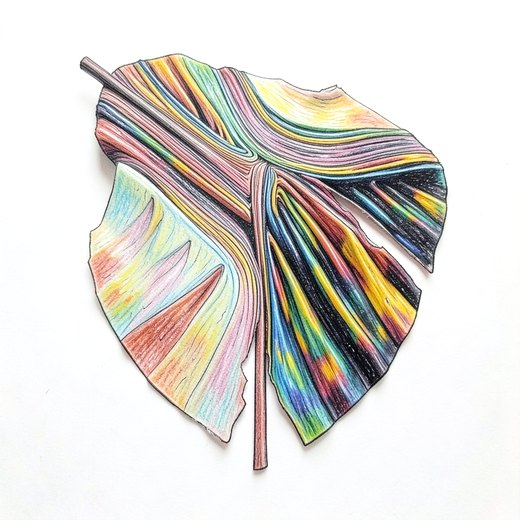
Fig. 4. Mechanism
Stanza
❦ dominant organHow does it turn what it takes in into what it gives out?
It compresses language under constraint, line, meter, rhyme and image, so that every word bears more than one load.1, 2
drawn as: stanza · view: pressed
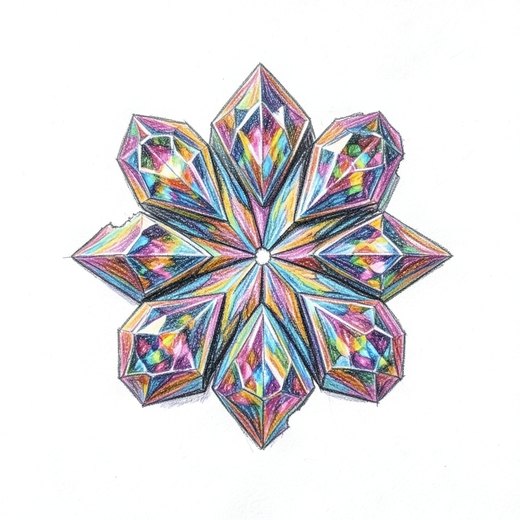
Fig. 5. Output
Touchstones
What does it make possible, visible or knowable?
It gives speech that is remembered word for word and meanings that cannot be paraphrased without loss.3
drawn as: touchstones · view: magnified
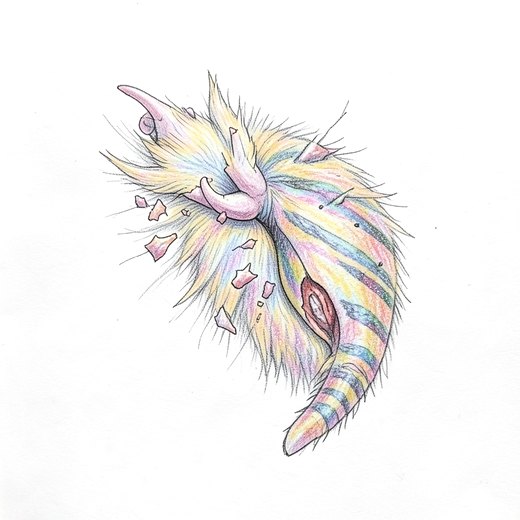
Fig. 6. Dispersal
By heart
What part of it travels into other minds, ideas and fields, and by what vector?
It travels by recitation, memorization, quotation and translation, its lines lodged in people who never read the whole poem.4
drawn as: by heart · view: at work
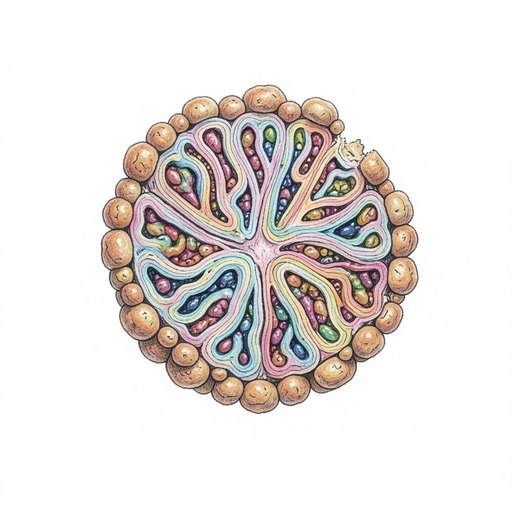
Fig. 7. Decay
Cliché
What can it not digest, where does it fail, and what does it leave behind for others?
It hardens into cliché when its forms are repeated without pressure, and into private code when its compression no longer opens to anyone else.1
drawn as: cliché · view: cross section
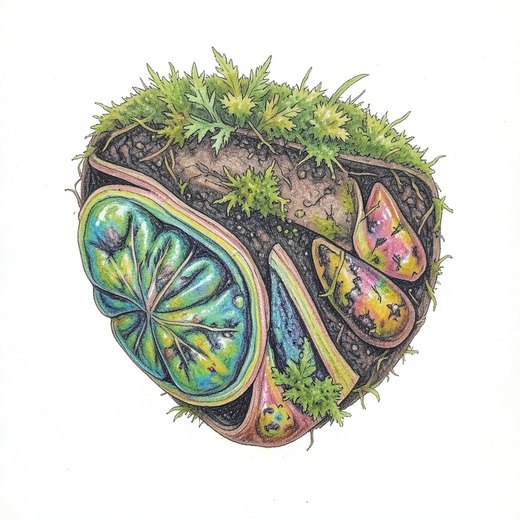
Fig. 8. Substrate
Mother tongue
What territory of phenomena does it live on?
Its ground is language itself, in every tongue, spoken long before it was written.4
drawn as: substrate · view: pressed
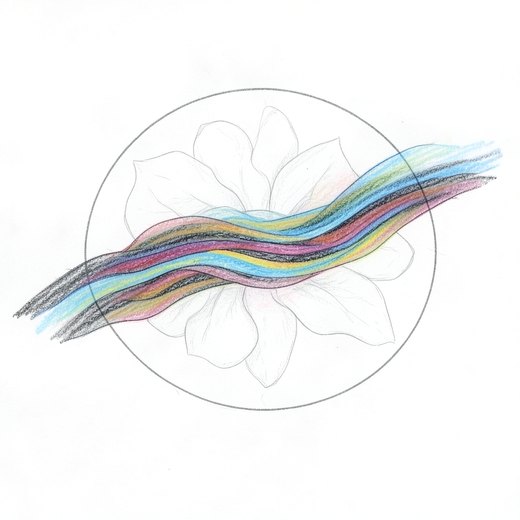
Fig. 9. Climate
Laurels
What counts as evidence and as a good result here?
Nothing is proved here; a poem is judged by whether it holds attention and comes back when remembered, by readers and by other poets.3
drawn as: climate · view: microscope
 SyllablePulse Blossom, Sonopetala articulata
 MimesisReturning Moth, Similimorpha reddens
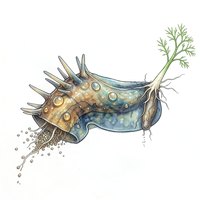 MemoryRecollecting Fungus, Mnemomyces reconstruens
Fig. 10. Keystones
Three Muses
Which beings, if removed, would make it collapse?
Its keystones are the syllable that carries its beat, mimesis that lets it show a world, and memory that keeps it.
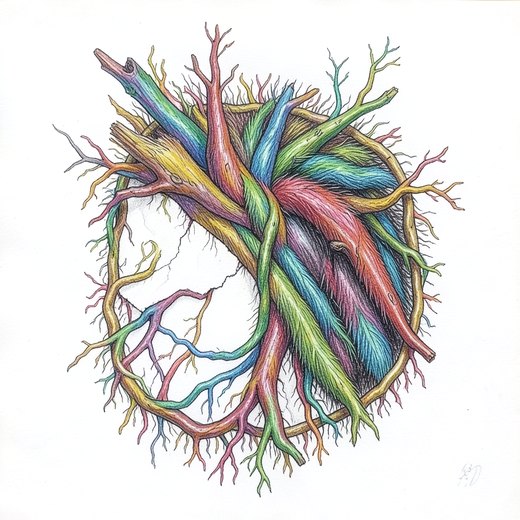
Fig. 11. Ecotones
Psalm
Where does it border other fields, and what grows at those borders?
It borders song, prayer, philosophy and advertising, and at each border hybrids grow, hymns, aphorisms and slogans.
drawn as: ecotones · view: in situ
Fig. 12. Succession
Print culture
What stage is it in, pioneer, maturing, climax or disturbed?
An ancient field long at its climax, disturbed once by print and now by screens and machine-written verse.
II Meaning associations
descent membership food web resemblance or friction
Lineage
A founder, dissected by hand.
Kin
same kind in Roget Echolalia, Glossolalia, Pointillism, Syllable, Symbol, Babelhum
same kind in Wilkins Echolalia, Glossolalia, Prophecy, Syllable, Symbol, Babelhum, Tongue Horizon
same kind in WordNet Chiaroscuro, Echolalia, Glossolalia, Lullaby, Music, Prophecy, Syllable, Symbol, Babelhum
same kind in Llull Apophenia, Dream, Mimesis, Symmetry, Afterlistening
same phylum Ash, Breath, Echolalia, Lullaby, Metamorphosis, Resonance, Commemorative Revision, The Swing Door, Tide of Days, Simultaneous Remembering
same dominant organ Chimera, Dream, Fire, Love, Lullaby, Metamorphosis, Music, Presence, Resonance, Ritual, Storm, Symbol, Winter, Rushmaker, Shared Breath, Self-Ending Order, Gazeroot (second reading), Commemorative Revision, The Swing Door, Foresilence, Simultaneous Remembering, Subtractive Phenomenology
Genome
- form also in Commemorative Revision, Entelechy, Metamorphosis, Petrification, Ritual
- compression
- rhythm also in Breath, The Swing Door, Music, Shared Breath, Syllable, Trance
- image
- voice also in Breath, Echolalia, Lullaby, Possession, Shared Breath
III In the world
Echoes
- nursery rhymes known by people who cannot read
- the Homeric epics, kept by singers before they were written down
- proverbs
- a line of verse read at a funeral
IV Record
How it was drawn
its draw 3, a point in the morphospace (laws §8), drawn by flux-2-klein-4b.safetensors.
| axis | value | |
|---|---|---|
| book | humores | |
| symmetry | radial many | |
| organization | stratified | |
| silhouette | filiform | |
| scale | immense | |
| proportion | elongated latent | |
| growth | budding | |
| articulation | tethered latent | |
| openness | solid latent | |
| skeleton | unmarked latent | |
| locomotion | unmarked latent | |
| pattern | labyrinth latent | |
| coloration | disruptive latent | |
| substance | paper | |
| surface | veined | |
| palette | oilslick | |
| luminosity | none | |
| transparency | translucent latent | |
| gesture | pulses | |
| unity | fragment | |
| modality | necessary | |
| causation | final | |
| determinacy | crisp latent | |
| fusion | nested | |
| anomaly | echoes | |
| graft | scales pans | |
| technique | crayon | |
| viewpoint | cutaway | |
| value | flat latent | |
| balance | unmarked latent | |
| density | intricate latent | |
| rhythm | alternating latent | |
| saturation | muted latent | |
| appendages | lanterns, comb rows | |
| anchor (body) | a beaver lodge of sticks and mud rising from water | |
| anchor (detail) | a coccolithophore, a sphere armoured with overlapping disc plates |
Sources
- Ezra Pound, ABC of Reading (1934): Dichten = condensare
- Roman Jakobson, Linguistics and Poetics (1960)
- Cleanth Brooks, The Well Wrought Urn (1947), The Heresy of Paraphrase
- Albert Lord, The Singer of Tales (1960), after Milman Parry's oral-formulaic theory
❦