a founder of the codex
Ash
Favillaria nutriens·the Fertile Remnant
From Latin favilla, glowing ash, and nutriens, nourishing, the ash that feeds what grows after the fire.
- Level
- Conceptorganism
- Phylum
- Cycleimage schema
- Class
- Dispersalits dust veil
- Niche
- Decomposerwhat is dead
- Mode
- Religionhow it keeps existing
- Stage
- Matureindividuated
- Status
- Living
- Habitat
- Ruin
Its kinds · Roget, 1852: Inorganic Matter · Wilkins, 1668: Stone · WordNet, 1990: Substance · Llull, 1308: I · Elementative
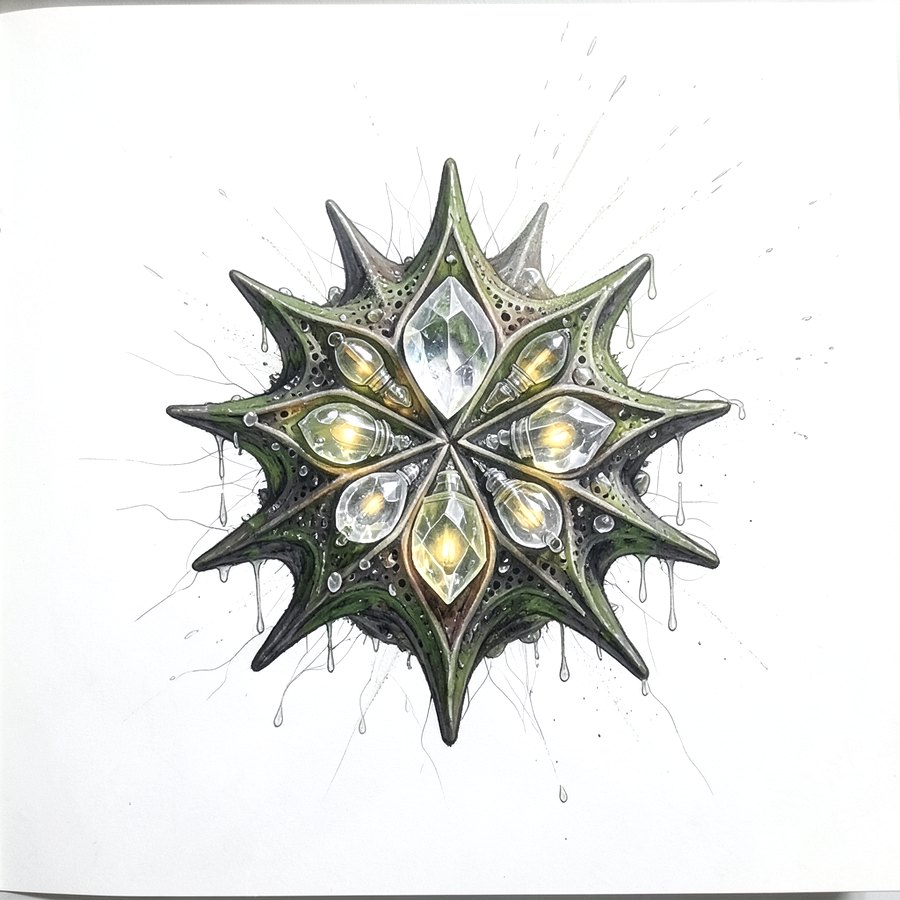
Ash is the mineral remainder of a burnt body, and it returns to the soil as food for the next growth or rides the wind far from the fire that made it.
What fire leaves behind becomes the food of what grows next.
behavior It settles soft and grey where the fire has passed, lifts on the first wind, and sinks into the soil with the first rain.
Which of your burnt thoughts has left ground where something new now grows?
I Dissection
Each organ answers one question about the idea. The framed one, its dispersal, is the dominant organ: the being's class, the one the idea could not lose and stay itself.
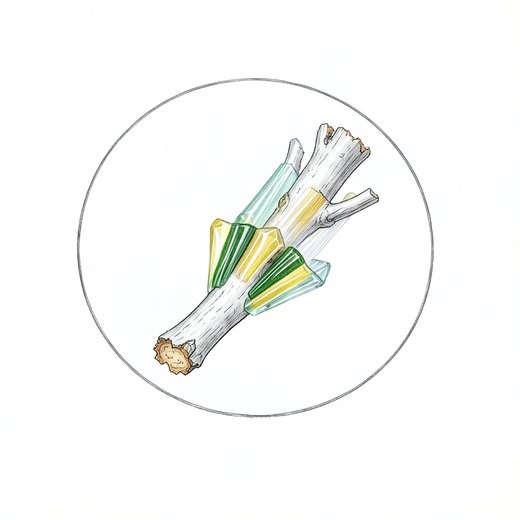
Fig. 1. Kernel
Calcination
Which premise, if it were false, would kill this idea?
Ash is the part of a burnt body that stays behind when fire sends its carbon into the air, the calcium, potassium and phosphorus a plant drew from the soil while it lived.1
drawn as: calcination · view: microscope
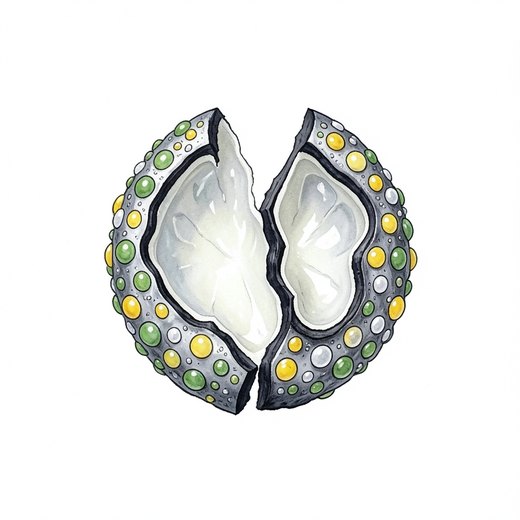
Fig. 2. Boundary
Char
What sets it apart from what it is not, and how does it keep that distinction?
It is defined against char, the black half-burnt matter that still holds carbon and can burn again, and fire ecologists read white ash as the mark of a complete burn.2
drawn as: char · view: cast
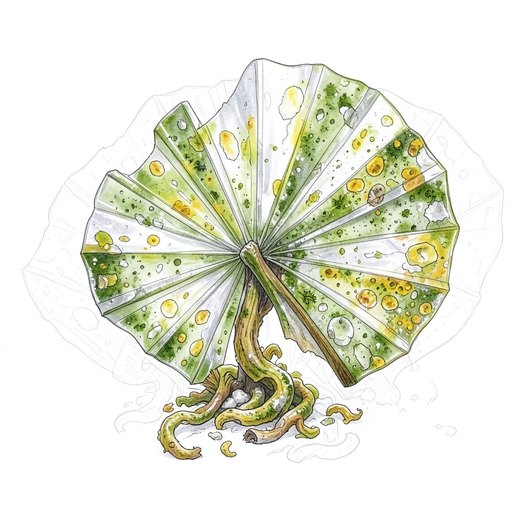
Fig. 3. Intake
Leaf litter
What must it feed on to work? What has to be present, noticed or supplied?
It feeds on the fuel a fire burns through, the dead wood and leaf litter of a forest floor, and the more fuel burns, the more ash is left.2
drawn as: leaf litter · view: magnified
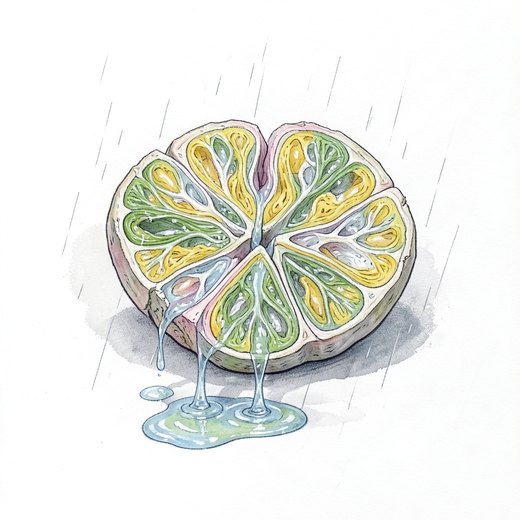
Fig. 4. Mechanism
Lye
How does it turn what it takes in into what it gives out?
Rain dissolves its potassium and calcium into an alkaline lye that sinks into the soil, sweetening sour ground and feeding roots.1
drawn as: lye · view: in situ
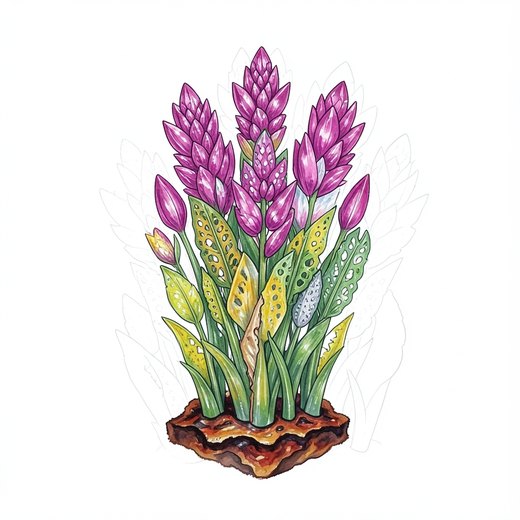
Fig. 5. Output
Swidden
What does it make possible, visible or knowable?
It feeds the next growth, so swidden farmers sow in the ash of a burnt clearing, and fireweed spreads over burnt ground in the summers after a fire.2
drawn as: swidden · view: cast
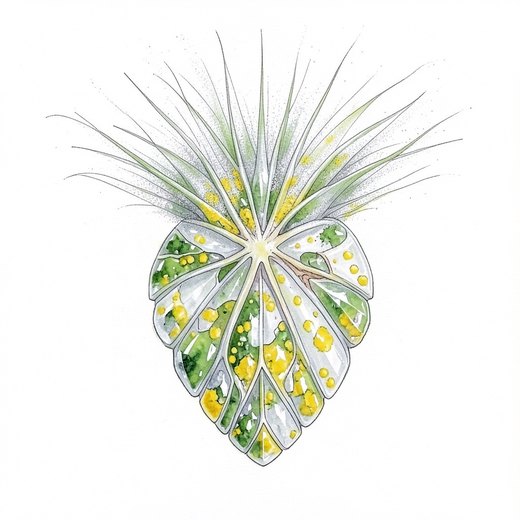
Fig. 6. Dispersal
Dust veil
❦ dominant organWhat part of it travels into other minds, ideas and fields, and by what vector?
Eruptions hurl it high enough to circle the earth as a veil that dims the sun, and it travels in rites of mourning and penance, ashes strewn on the head or scattered on the wind.3, 5
drawn as: dust veil · view: series
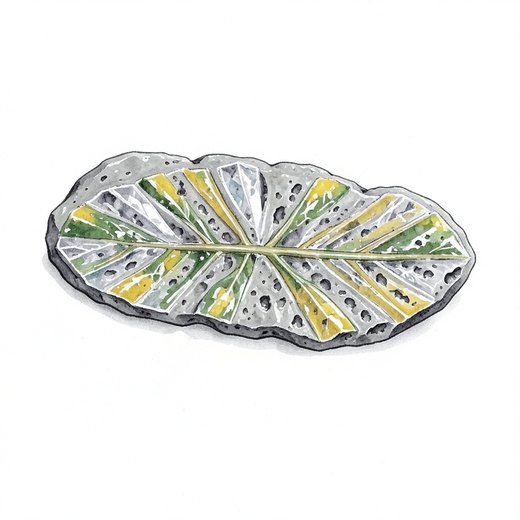
Fig. 7. Decay
Tuff
What can it not digest, where does it fail, and what does it leave behind for others?
Fallen too thick it smothers what it should feed, as when Vesuvius buried the towns and fields around it in 79 CE, and in time the buried ash sets into tuff.4
drawn as: tuff · view: pressed
II Meaning associations
No relations recorded yet.
descent membership food web resemblance or friction
Lineage
A founder, dissected by hand.
Kin
same kind in Roget Archipelago, Clay, Cloud, Diamond, Erosion, Fire, Frost, Lake, Rain, River, Salt, Sand, Storm, Wind
same kind in Wilkins Amber, Clay, Diamond, Petrification, Salt, Sand
same kind in WordNet Amber, Clay, Diamond, Salt, Sand
same kind in Llull Amber, Archipelago, Clay, Cloud, Diamond, Emergence, Entanglement, Entropy, Erosion, Fire, Frost, Iridescence, Lake, Petrification, Rain, Reflection, Resonance, Resonance (second reading), River, Salt, Sand, Storm, Weightlessness, Wind, Winter, Self-Ending Order
same phylum Breath, Echolalia, Lullaby, Metamorphosis, Resonance, Commemorative Revision, The Swing Door, Tide of Days, Simultaneous Remembering, Poetry
same dominant organ Breath, Miracle, Pointillism, River, Sand, Wind, Witnessed Relief
Genome
- residue also in Dream, Subtractive Phenomenology
- mineral
- renewal also in Fire, Oblivion, Spring
- mourning
- wind
III In the world
Echoes
- ashes on the brow on Ash Wednesday
- fireweed on a burnt hillside
- Pompeii under the ash of Vesuvius
- the phoenix rising from its own ashes
IV Record
How it was drawn
its draw 1, a point in the morphospace (laws §8), drawn by flux-2-klein-4b.safetensors.
| axis | value | |
|---|---|---|
| book | minerals | |
| symmetry | radial 8 | |
| organization | solitary | |
| silhouette | cluster | |
| scale | microscopic | |
| proportion | compressed | |
| growth | encrusted | |
| articulation | jointed latent | |
| openness | solid latent | |
| skeleton | endoskeleton latent | |
| locomotion | rolling | |
| pattern | speckled latent | |
| coloration | plain latent | |
| substance | crystal | |
| surface | perforated | |
| palette | meadow | |
| luminosity | inner glow | |
| transparency | clouded latent | |
| gesture | gathers | |
| unity | aggregate latent | |
| modality | contingent latent | |
| causation | efficient latent | |
| determinacy | fraying latent | |
| fusion | replaced | |
| anomaly | echoes | |
| graft | wax | |
| technique | gouache | |
| viewpoint | motion | |
| value | low key | |
| balance | leaning latent | |
| density | unmarked latent | |
| rhythm | unmarked latent | |
| saturation | accent latent | |
| appendages | lanterns, beaded filaments | |
| anchor (body) | an earthstar, a spore sac sitting on a star of split outer skin | |
| anchor (detail) | a hailstone cut in half, concentric layers of clear and cloudy ice |
Sources
- Justus von Liebig, Die organische Chemie in ihrer Anwendung auf Agricultur und Physiologie (1840)
- Stephen J. Pyne, Fire: A Brief History (2001)
- H. H. Lamb, Volcanic Dust in the Atmosphere, with a Chronology and Assessment of Its Meteorological Significance (Philosophical Transactions of the Royal Society A, 1970)
- Pliny the Younger, Letters, book 6, letters 16 and 20, on the eruption of Vesuvius in 79 CE
- Job 42:6
❦