a founder of the codex
Oblivion
Lethomyces purgans·the Clearing Current
From Greek lethe, oblivion, and mykes, fungus, and Latin purgans, clearing, a fungus that clears the ground by breaking the past down.
- Level
- Conceptorganism
- Phylum
- Forceimage schema
- Class
- Decayits damnatio memoriae
- Niche
- Decomposerwhat is dead
- Mode
- Politicshow it keeps existing
- Stage
- Matureindividuated
- Status
- Living
- Habitat
- Ruin
Its kinds · Roget, 1852: Formation of Ideas · Wilkins, 1668: Natural Power · WordNet, 1990: Cognition · Llull, 1308: E · Man
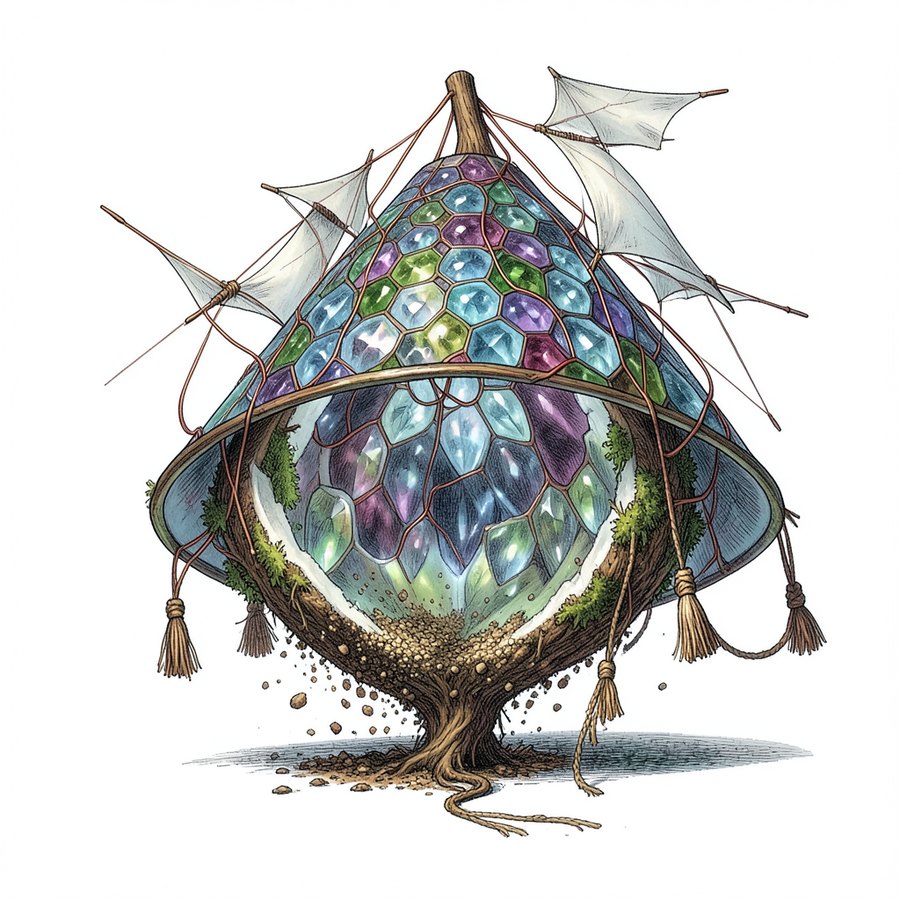
Forgetting clears what is unused so that a mind can learn and act and a divided city can live together again, and the same force, pressed too far, erases what should be kept.
To keep living, a mind and a city must let most of the past go.
behavior It moves through what has been left untouched, softens it to loam, and leaves standing only the paths that are still walked.
What would you have to forget in order to begin again?
I Dissection
Each organ answers one question about the idea. The framed one, its decay, is the dominant organ: the being's class, the one the idea could not lose and stay itself.
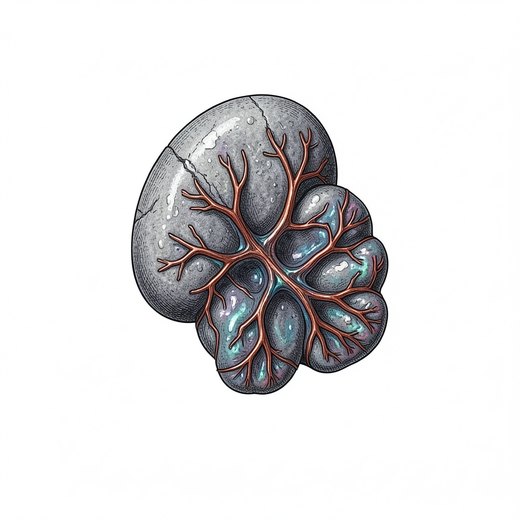
Fig. 1. Kernel
Clean slate
Which premise, if it were false, would kill this idea?
A mind that kept every trace would drown in them, so letting most of them go is part of how it works and stays open to what comes next.1, 5
drawn as: clean slate · view: cast
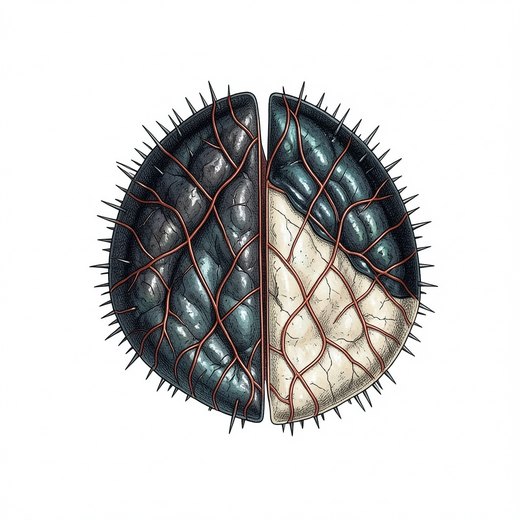
Fig. 2. Boundary
Doorkeeper
What sets it apart from what it is not, and how does it keep that distinction?
It is set apart from the damage of amnesia by its use. It lets through what matters and shuts out the rest, a doorkeeper of the mind's quiet.1
drawn as: doorkeeper · view: pressed
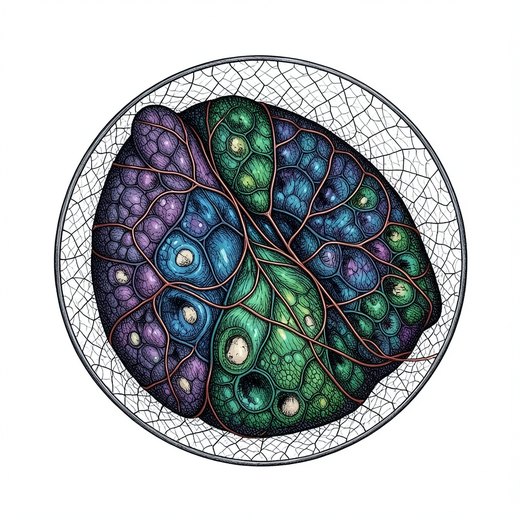
Fig. 3. Intake
River of unmindfulness
What must it feed on to work? What has to be present, noticed or supplied?
It feeds on all that is taken in and left unused, unrepeated or unwanted. In Plato's myth the souls drink it from the river of unmindfulness before they are born again.2, 5
drawn as: river of unmindfulness · view: microscope
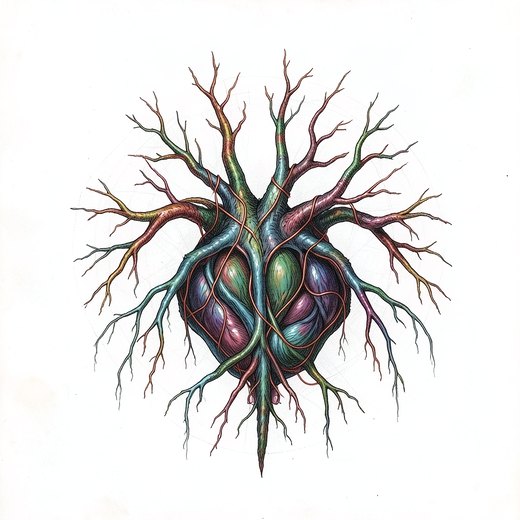
Fig. 4. Mechanism
Synaptic pruning
How does it turn what it takes in into what it gives out?
The brain weakens unused synapses, new neurons overwrite old traces, and recalling one memory suppresses its rivals, so most of what is learned fades unless it is used.5
drawn as: synaptic pruning · view: at work
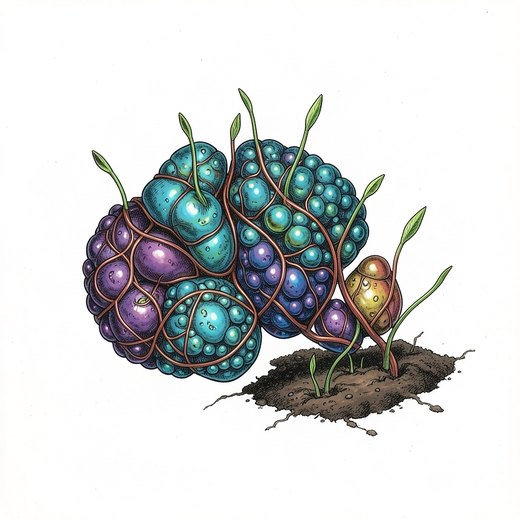
Fig. 5. Output
Fallow ground
What does it make possible, visible or knowable?
It frees room for new learning, lets the mind keep the gist over the detail, and makes peace possible where every wrong kept alive would breed another.5, 1
drawn as: fallow ground · view: exploded
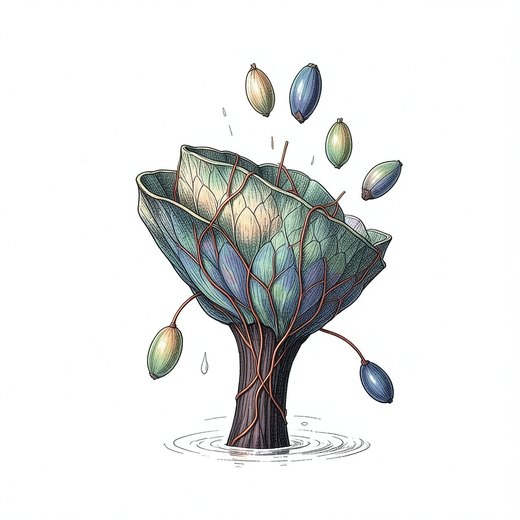
Fig. 6. Dispersal
Lotus fruit
What part of it travels into other minds, ideas and fields, and by what vector?
It travels in tales of forgetting fruits and waters, such as the lotus of the Odyssey, and in amnesties, as when Athens swore after its civil war to leave past wrongs unrecalled.3, 4
drawn as: lotus fruit · view: detached
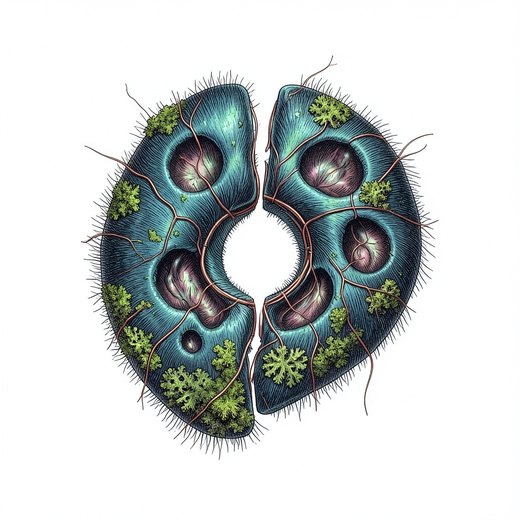
Fig. 7. Decay
Damnatio memoriae
❦ dominant organWhat can it not digest, where does it fail, and what does it leave behind for others?
Forced on a people it erases, chiselling names from monuments and denying crimes, and what was buried returns. In illness it takes the self along with the clutter.4
drawn as: damnatio memoriae · view: series
II Meaning associations
No relations recorded yet.
descent membership food web resemblance or friction
Lineage
A founder, dissected by hand.
Kin
same kind in Roget Apophenia, Dream, Faith, Memory, Placebo, Presence, Prophecy, Knowing Trust, Afterlistening, Commemorative Revision, Simultaneous Remembering, Hesychology, Subtractive Phenomenology
same kind in Wilkins Apophenia, Dream, Memory, Presence, Trance, Afterlistening, Simultaneous Remembering
same kind in WordNet Apophenia, Dream, Faith, Memory, Qualia, Silence, Volition, Afterlistening, Simultaneous Remembering, Hesychology, Subtractive Phenomenology
same kind in Llull Echolalia, Glossolalia, Love, Memory, Nostalgia, Placebo, Possession, Presence, Prophecy, Solitude, Threshold, Trance, Volition, Knowing Trust, Rushmaker, Tongue Horizon, Witnessed Relief, Gazeroot (second reading), Commemorative Revision, The Shared Cell, Simultaneous Remembering, Hesychology
same phylum Diamond, Fear, Fire, Glossolalia, Spring, Storm, Volition, Rushmaker, Self-Ending Order
same dominant organ Entropy, Innocence, Memory, Petrification
Genome
- erasure
- release also in Glossolalia, Spring, Storm, Weightlessness
- pruning
- renewal also in Ash, Fire, Spring
- peace
III In the world
Echoes
- the river Lethe of the dead
- the lotus-eaters of the Odyssey
- the Athenian amnesty of 403 BCE
- a name chiselled from a Roman monument
IV Record
How it was drawn
its draw 5, a point in the morphospace (laws §8), drawn by flux-2-klein-4b.safetensors.
| axis | value | |
|---|---|---|
| book | flora | |
| symmetry | asymmetric | |
| organization | solitary | |
| silhouette | bell | |
| scale | hand | |
| proportion | elongated latent | |
| growth | gnomonic | |
| articulation | tethered latent | |
| openness | hollow latent | |
| skeleton | woody | |
| locomotion | gliding latent | |
| pattern | spots latent | |
| coloration | nuptial | |
| substance | wire tissue | |
| surface | frosted | |
| palette | oilslick | |
| luminosity | inner glow | |
| transparency | layered | |
| gesture | gathers | |
| unity | aggregate latent | |
| modality | contingent latent | |
| causation | efficient latent | |
| determinacy | doubled latent | |
| fusion | carried | |
| anomaly | one break | |
| graft | quipu | |
| technique | engraving | |
| viewpoint | below | |
| value | high key latent | |
| balance | unmarked latent | |
| density | sparse latent | |
| rhythm | unmarked latent | |
| saturation | muted latent | |
| appendages | sails | |
| anchor (body) | a geode cut open, its cavity lined with crystal points | |
| anchor (detail) | a mosaic of photoreceptor cells packed in a hexagonal pattern |
Sources
- Friedrich Nietzsche, Zur Genealogie der Moral (1887), second essay
- Plato, Republic (c. 375 BCE), book 10, the myth of Er
- Homer, Odyssey, book 9
- Nicole Loraux, La cité divisée: l'oubli dans la mémoire d'Athènes (1997)
- Blake A. Richards and Paul W. Frankland, The Persistence and Transience of Memory (Neuron, 2017)
❦