a founder of the codex
Nostalgia
Nostodynia praesentis·the Homeward Ache
From Greek nostos, homecoming, and odyne, pain, and Latin praesens, present, for an ache of return felt even for the present.
- Level
- Conceptorganism
- Phylum
- Pathimage schema
- Class
- Outputits bittersweet
- Niche
- Decomposerwhat is dead
- Mode
- Attachmenthow it keeps existing
- Stage
- Matureindividuated
- Status
- Living
- Habitat
- Ruin
Its kinds · Roget, 1852: Personal Affections · Wilkins, 1668: Spiritual Action · WordNet, 1990: Feeling · Llull, 1308: E · Man
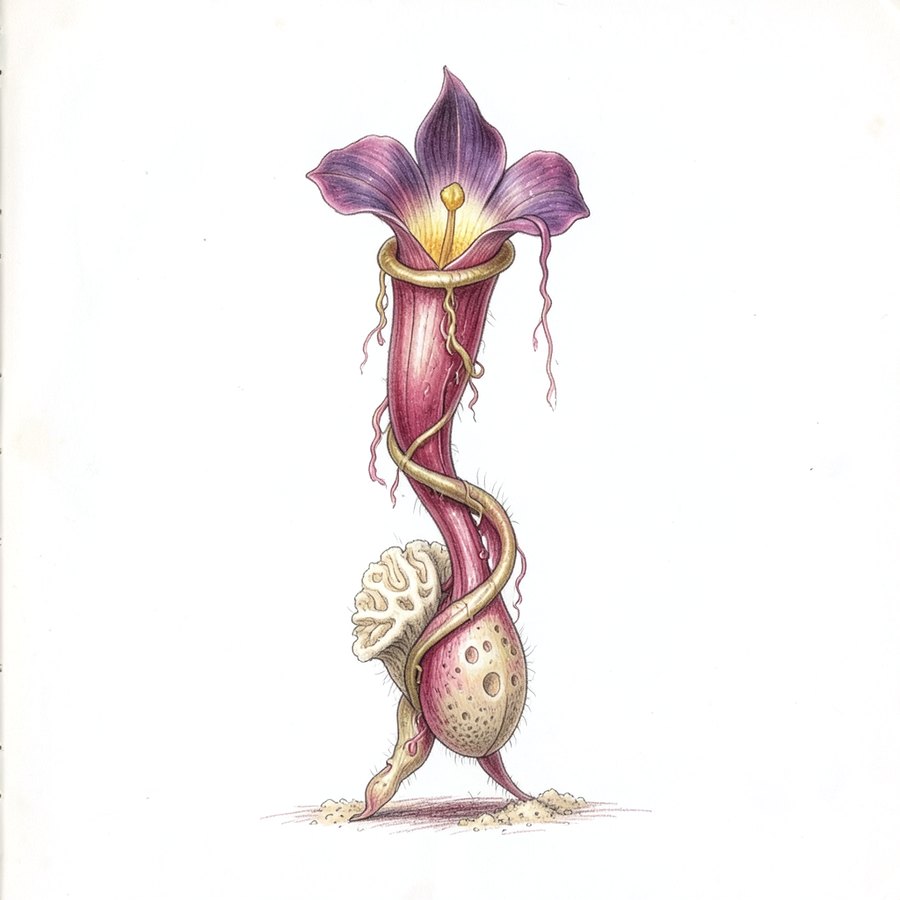
Longing to return to a home or a time that is gone smooths the past into a place worth going back to, and the ache can turn even on the present as it slips away.
The past pulls hardest once it has been softened into a home.
behavior Walks forward with its head turned back, and slows wherever the ground looks like somewhere it has been.
Which moment of this week will you one day miss, and what will you have left out of it?
I Dissection
Each organ answers one question about the idea. The framed one, its output, is the dominant organ: the being's class, the one the idea could not lose and stay itself.
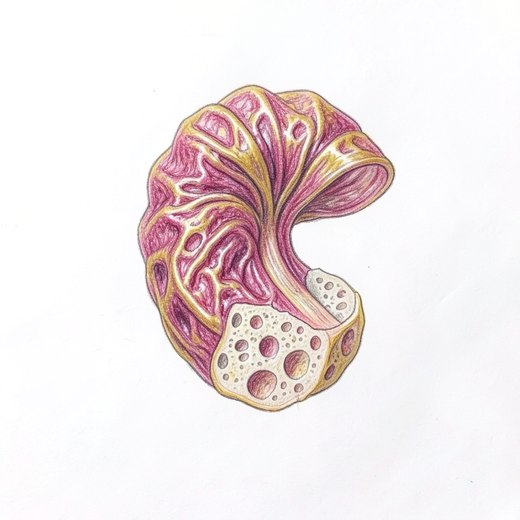
Fig. 1. Kernel
Ithaca
Which premise, if it were false, would kill this idea?
Its premise is that a place or time once lived can be longed for as a home, with a pain that wants only to go back.2, 1
drawn as: Ithaca · view: detached
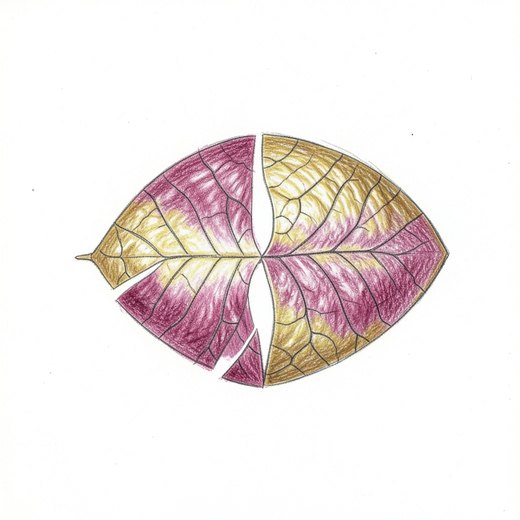
Fig. 2. Boundary
Rear-view mirror
What sets it apart from what it is not, and how does it keep that distinction?
It is set apart from hope by its direction. Hope leans toward what has yet to come, and nostalgia leans toward what has been, even a home that never quite was.4
drawn as: rear-view mirror · view: detached
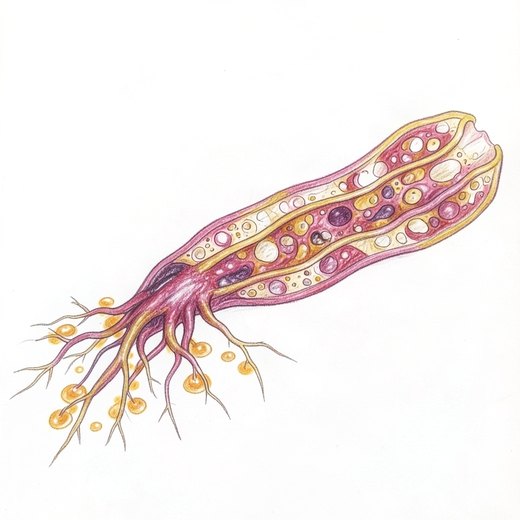
Fig. 3. Intake
Madeleine
What must it feed on to work? What has to be present, noticed or supplied?
It feeds on memories, most often of moments shared with close others, and it wakes in loneliness and low mood, or at a smell or a song.5
drawn as: madeleine · view: transparent
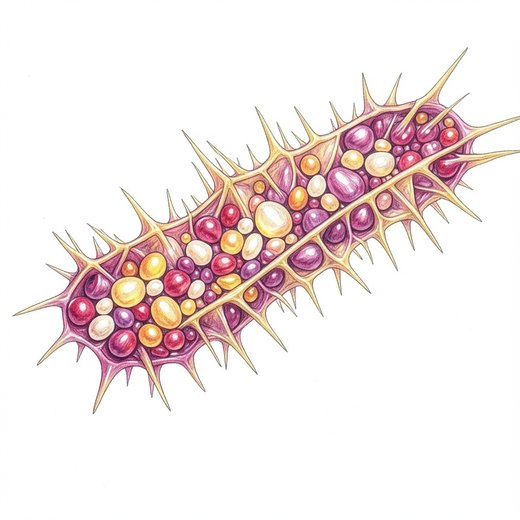
Fig. 4. Mechanism
Rosy retrospection
How does it turn what it takes in into what it gives out?
It smooths the past as it recalls it, keeping the warmth and letting the strain fall away, so the lost time looks whole and worth rebuilding.4, 5
drawn as: rosy retrospection · view: magnified
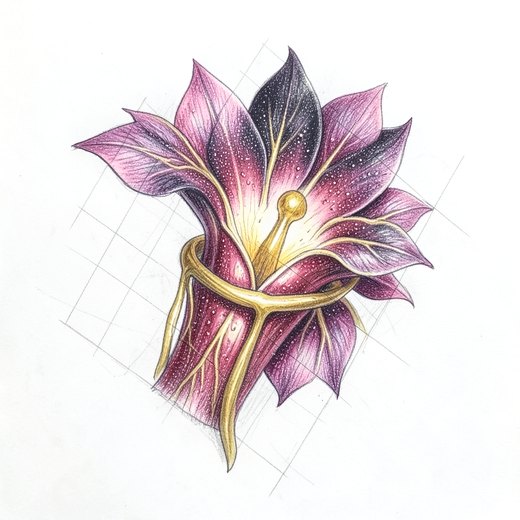
Fig. 5. Output
Bittersweet
❦ dominant organWhat does it make possible, visible or knowable?
It gives a bittersweet feeling, sad for the loss and warm with the memory, and it lifts self-regard and the sense of being loved.5
drawn as: bittersweet · view: at work
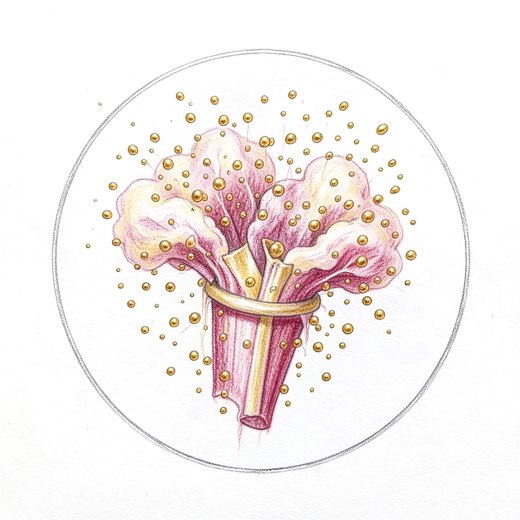
Fig. 6. Dispersal
Reminiscence bump
What part of it travels into other minds, ideas and fields, and by what vector?
It travels through what a generation shared, its songs, styles and objects, so that a whole cohort longs for the same years.3
drawn as: reminiscence bump · view: microscope
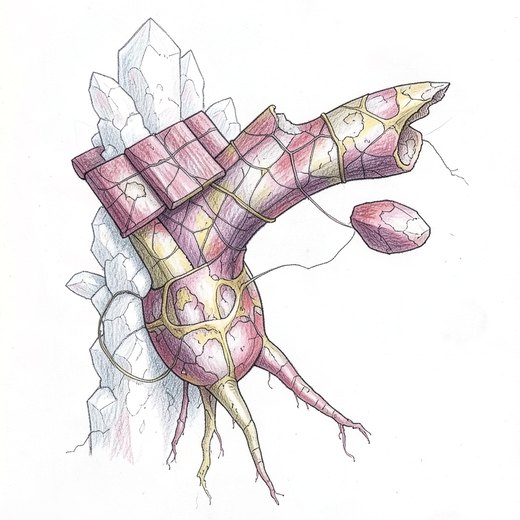
Fig. 7. Decay
Pillar of salt
What can it not digest, where does it fail, and what does it leave behind for others?
It fails when the backward look stops a life in the present, as Hofer's homesick patients wasted far from home. Hardened, it becomes a wish to rebuild a past that never existed.2, 4
drawn as: pillar of salt · view: magnified
II Meaning associations
No relations recorded yet.
descent membership food web resemblance or friction
Lineage
A founder, dissected by hand.
Kin
same kind in Roget Fear, The Swing Door
same kind in Wilkins Faith, Fear, Love, Reflection, Silence, Volition, Knowing Trust, Witnessed Relief, Gazeroot (second reading), The Swing Door
same kind in WordNet Fear, Love, Vertigo
same kind in Llull Echolalia, Glossolalia, Love, Memory, Oblivion, Placebo, Possession, Presence, Prophecy, Solitude, Threshold, Trance, Volition, Knowing Trust, Rushmaker, Tongue Horizon, Witnessed Relief, Gazeroot (second reading), Commemorative Revision, The Shared Cell, Simultaneous Remembering, Hesychology
same phylum Entelechy, Memory, Music, Prophecy, Ritual, River, Threshold, Wind, Tongue Horizon, Afterlistening
same dominant organ Apophenia, Awakening, Chiaroscuro, Echolalia, Emergence, Erosion, Glossolalia, Iridescence, Mimesis, Placebo, Rain, Spring, Babelhum, Afterlistening, Tide of Days
Genome
- return also in Commemorative Revision, Equinox, Eternity, Tide of Days, Rain, Reflection
- longing
- idealization also in Love
- home
- loss also in Tinnitus
III In the world
Echoes
- Odysseus weeping on Calypso's shore
- the Portuguese saudade
- a photograph filtered to look old on the day it is taken
- a song from the year one turned sixteen
IV Record
How it was drawn
its draw 4, a point in the morphospace (laws §8), drawn by flux-2-klein-4b.safetensors.
| axis | value | |
|---|---|---|
| book | minerals | |
| symmetry | helical | |
| organization | chained | |
| silhouette | spire | |
| scale | microscopic | |
| proportion | compressed latent | |
| growth | moulting | |
| articulation | jointed latent | |
| openness | spongy | |
| skeleton | exoskeleton latent | |
| locomotion | walking latent | |
| pattern | plain latent | |
| coloration | disruptive latent | |
| substance | tincture | |
| surface | veined | |
| palette | gilt | |
| luminosity | inner glow | |
| transparency | translucent | |
| gesture | quivers | |
| unity | fragment latent | |
| modality | necessary latent | |
| causation | material | |
| determinacy | unmarked latent | |
| fusion | replaced | |
| anomaly | budding | |
| graft | none | |
| technique | crayon | |
| viewpoint | profile | |
| value | unmarked latent | |
| balance | unmarked latent | |
| density | graded detail latent | |
| rhythm | clustered latent | |
| saturation | vivid latent | |
| appendages | valves, tentacles | |
| anchor (body) | a pitcher plant, a hooded tubular leaf holding a pool inside | |
| anchor (detail) | a brain coral, a dome covered in meandering ridges |
Sources
- Homer, Odyssey, book 5 (c. 8th century BCE)
- Johannes Hofer, Dissertatio medica de nostalgia, oder Heimwehe (1688)
- Fred Davis, Yearning for Yesterday: A Sociology of Nostalgia (1979)
- Svetlana Boym, The Future of Nostalgia (2001)
- Tim Wildschut, Constantine Sedikides, Jamie Arndt and Clay Routledge, Nostalgia: Content, Triggers, Functions (Journal of Personality and Social Psychology, 2006)
❦