a founder of the codex
Awakening
Egersia matutina·the Dawning Eye
From Greek egersis, a rousing, and Latin matutinus, of the morning, a rousing that comes with the morning.
- Level
- Conceptorganism
- Phylum
- Verticalityimage schema
- Class
- Outputits cave mouth
- Niche
- Producerraw experience
- Mode
- Metamorphosishow it keeps existing
- Stage
- Matureindividuated
- Status
- Living
- Habitat
- Dream
Its kinds · Roget, 1852: Change · Wilkins, 1668: Corporeal Action · WordNet, 1990: Process · Llull, 1308: G · Sensitive
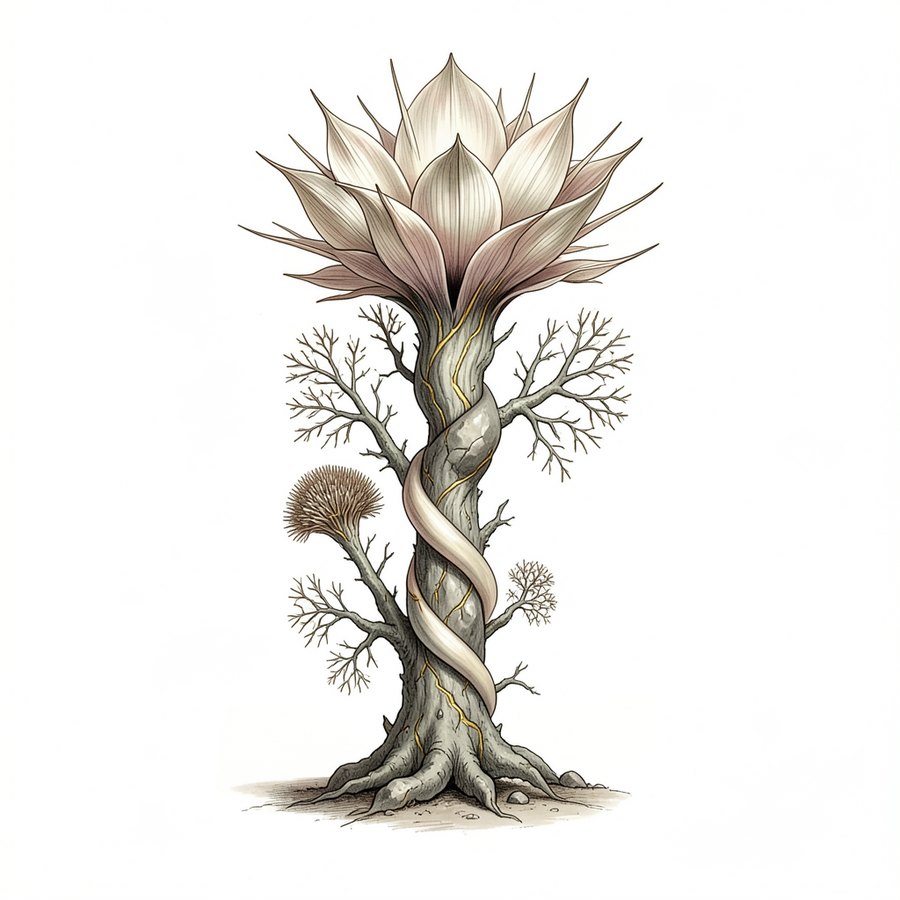
Each morning the brain switches from sleep to waking and the senses open to the world, and the same passage names the wider change from a closed view into an open one.
Every waking is a passage from a closed world into a wider one.
behavior It stirs at the first light or sound, unfolds upward all at once, and blinks for a while in its own brightness.
What were you asleep to yesterday that you see this morning?
I Dissection
Each organ answers one question about the idea. The framed one, its output, is the dominant organ: the being's class, the one the idea could not lose and stay itself.
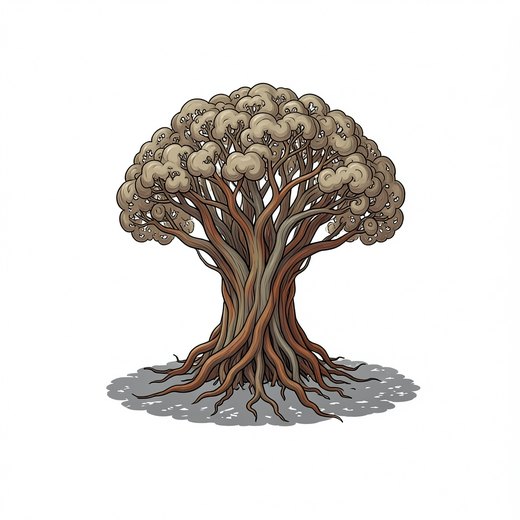
Fig. 1. Kernel
Reticular formation
Which premise, if it were false, would kill this idea?
Waking is held up by a network of cells rising from the brainstem to the cortex, and when that network is cut, sleep or coma follows.1
drawn as: reticular formation · view: exploded
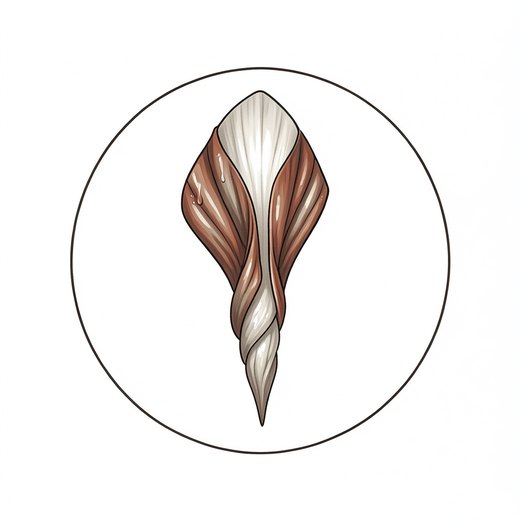
Fig. 2. Boundary
Dazzle
What sets it apart from what it is not, and how does it keep that distinction?
It is set apart from sleep by the senses opening outward, and its first moments are dazed, as the eyes of the prisoner freed from the cave are dazzled before they see.3
drawn as: dazzle · view: microscope
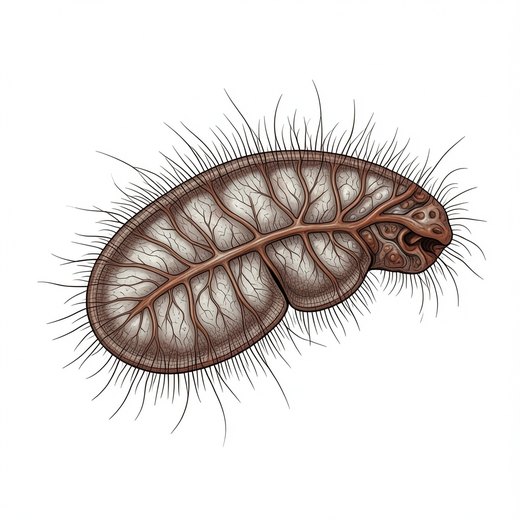
Fig. 3. Intake
Dawn chorus
What must it feed on to work? What has to be present, noticed or supplied?
It needs a cue, morning light reaching the eyes, a sound, the body's daily clock, or enough sleep to pay off the debt of the day.2
drawn as: dawn chorus · view: transparent
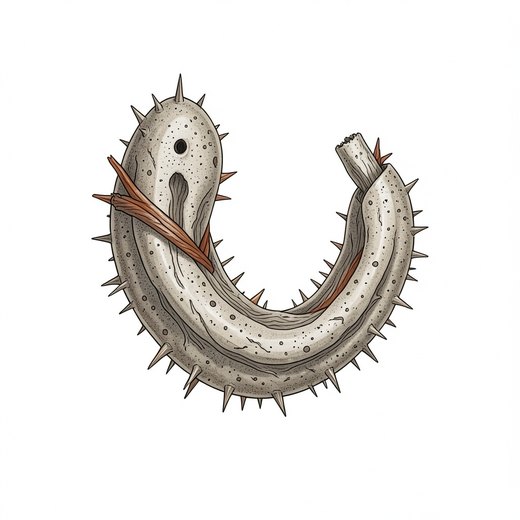
Fig. 4. Mechanism
Flip-flop switch
How does it turn what it takes in into what it gives out?
Cells that promote waking and cells that promote sleep inhibit one another, so the brain switches between the two states quickly and rests in few states between.2, 1
drawn as: flip-flop switch · view: detached
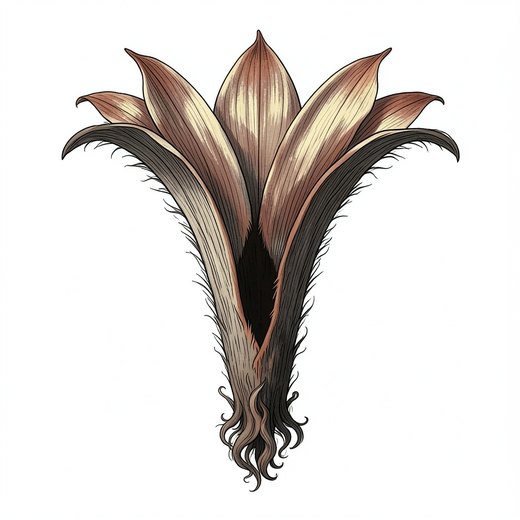
Fig. 5. Output
Cave mouth
❦ dominant organWhat does it make possible, visible or knowable?
It returns the senses and the will to the world, and in its wider sense it opens a view that was closed, as the prisoner climbs out of the cave into daylight.3
drawn as: cave mouth · view: series
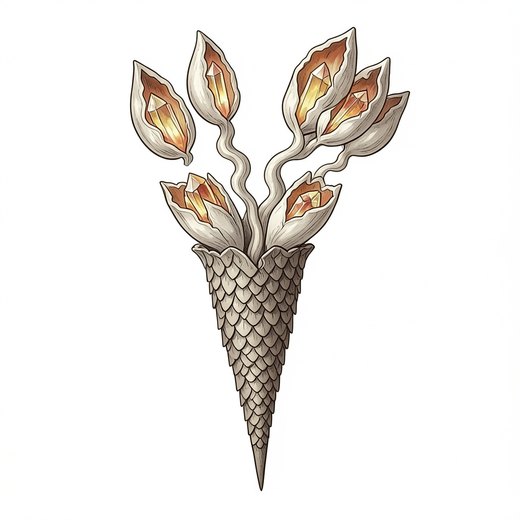
Fig. 6. Dispersal
Eye-opener
What part of it travels into other minds, ideas and fields, and by what vector?
It travels as the figure of insight, in the Buddhist word bodhi, in religious revivals named great awakenings, and in every eye-opener that shows a larger world.4, 3
drawn as: eye-opener · view: magnified
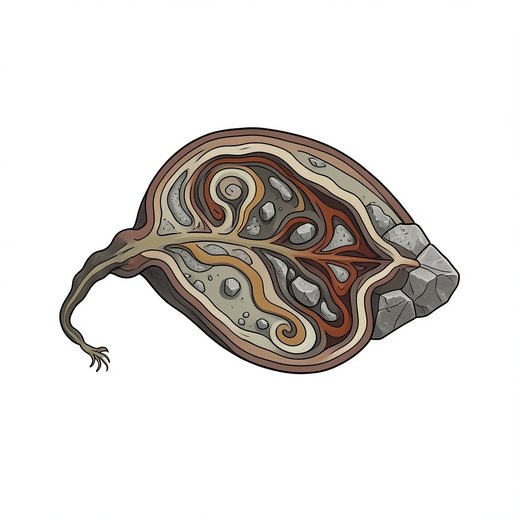
Fig. 7. Decay
Sleep paralysis
What can it not digest, where does it fail, and what does it leave behind for others?
Waking can stall halfway, the mind awake in a body that sleep still holds limp, often sensing a weight or a presence close by.5
drawn as: sleep paralysis · view: cross section
II Meaning associations
No relations recorded yet.
descent membership food web resemblance or friction
Lineage
A founder, dissected by hand.
Kin
same kind in Roget Entropy, Metamorphosis, Petrification, Threshold, Tongue Horizon
same kind in Wilkins Breath, Shared Breath
same kind in WordNet Breath, Entelechy, Entropy, Erosion, Fire, Metamorphosis, Petrification, Rushmaker, Shared Breath, Self-Ending Order, Tongue Horizon, Witnessed Relief, Gazeroot (second reading), Commemorative Revision, The Swing Door
same kind in Llull Aura, Chimera, Fear, Qualia, Silence, Tinnitus, Vertigo, Babelhum, Shared Breath, The Swing Door
same phylum Cloud, Erosion, Faith, Innocence, Miracle, Rain, Vertigo, Weightlessness
same dominant organ Apophenia, Chiaroscuro, Echolalia, Emergence, Erosion, Glossolalia, Iridescence, Mimesis, Nostalgia, Placebo, Rain, Spring, Babelhum, Afterlistening, Tide of Days
Genome
- arousal
- light also in Chiaroscuro, Equinox, Reflection
- clarity
- passage also in River, Threshold
- insight
III In the world
Echoes
- the dawn chorus of birds
- the freed prisoner leaving Plato's cave
- the Buddha under the bodhi tree
- an alarm clock at six
IV Record
How it was drawn
its draw 1, a point in the morphospace (laws §8), drawn by flux-2-klein-4b.safetensors.
| axis | value | |
|---|---|---|
| book | automata | |
| symmetry | helical | |
| organization | nested | |
| silhouette | sac | |
| scale | microscopic | |
| proportion | graded | |
| growth | intercalary | |
| articulation | telescoping latent | |
| openness | lattice latent | |
| skeleton | exoskeleton latent | |
| locomotion | jetting latent | |
| pattern | reticulate latent | |
| coloration | plain latent | |
| substance | smoke | |
| surface | iridescent | |
| palette | sepia | |
| luminosity | inner glow | |
| transparency | translucent latent | |
| gesture | turns | |
| unity | integral latent | |
| modality | contingent latent | |
| causation | final | |
| determinacy | crisp latent | |
| fusion | sprouting | |
| anomaly | petrified | |
| graft | kintsugi | |
| technique | chromolith | |
| viewpoint | profile | |
| value | unmarked latent | |
| balance | grounded latent | |
| density | graded detail | |
| rhythm | regular latent | |
| saturation | unmarked latent | |
| appendages | spines | |
| anchor (body) | a fruticose lichen, branching grey-green stalks tipped with small cups | |
| anchor (detail) | a diffusion-limited aggregate, a feathery fractal cluster |
Sources
- Giuseppe Moruzzi and H. W. Magoun, Brain Stem Reticular Formation and Activation of the EEG (Electroencephalography and Clinical Neurophysiology, 1949)
- Clifford B. Saper, Thomas C. Chou and Thomas E. Scammell, The Sleep Switch: Hypothalamic Control of Sleep and Wakefulness (Trends in Neurosciences, 2001)
- Plato, Republic (c. 375 BCE), book 7, the allegory of the cave
- Dhammacakkappavattana Sutta, Samyutta Nikaya 56.11
- J. Allan Cheyne, Steve D. Rueffer and Ian R. Newby-Clark, Hypnagogic and Hypnopompic Hallucinations during Sleep Paralysis (Consciousness and Cognition, 1999)
❦