a founder of the codex
Reflection
Anaclasia revertens·the Returned Light
From Greek anaklasis, a bending back, the old word for reflected light, and Latin revertens, turning back, light and thought sent back the way they came.
- Level
- Conceptorganism
- Phylum
- Balanceimage schema
- Class
- Boundaryits optical flat
- Niche
- Producerraw experience
- Mode
- Moralityhow it keeps existing
- Stage
- Matureindividuated
- Status
- Living
- Habitat
- Classroom
Its kinds · Roget, 1852: Relation · Wilkins, 1668: Spiritual Action · WordNet, 1990: Phenomenon · Llull, 1308: I · Elementative
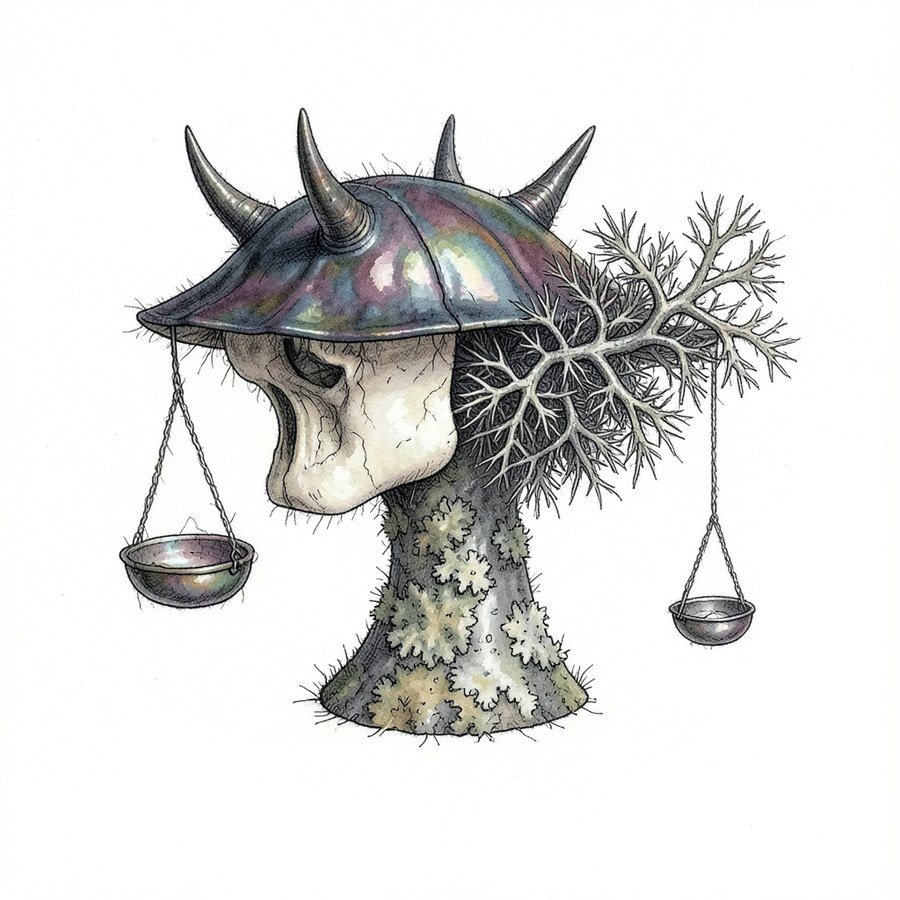
A smooth surface sends light back at the angle it came, giving an image of the world, and a mind can turn back the same way on its own thinking.
What comes back shows the thing that was sent and the surface that returned it.
behavior It lies flat and bright, shines only with borrowed light, and shows every creature that leans over it a second, reversed world.
When you last thought about your own thinking, what did the second look show that the first missed?
I Dissection
Each organ answers one question about the idea. The framed one, its boundary, is the dominant organ: the being's class, the one the idea could not lose and stay itself.
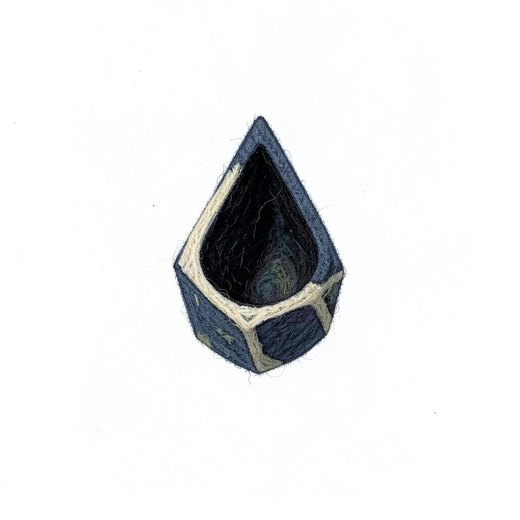
Fig. 1. Kernel
Equal angles
Which premise, if it were false, would kill this idea?
A surface sends light back at the angle it arrived, the outgoing ray mirroring the incoming one, and Hero of Alexandria showed that this is the shortest path.1
drawn as: equal angles · view: cast
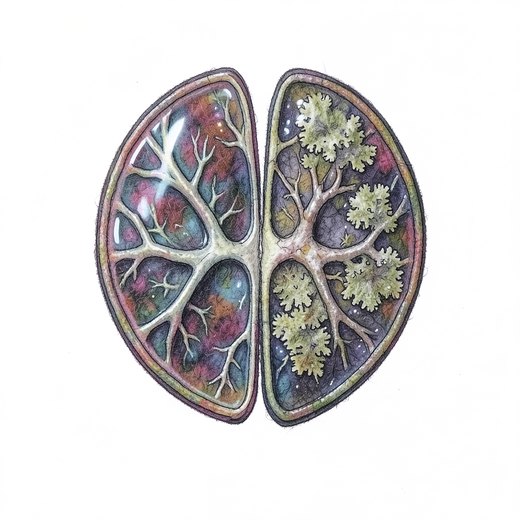
Fig. 2. Boundary
Optical flat
❦ dominant organWhat sets it apart from what it is not, and how does it keep that distinction?
It lives on a surface, the line between one medium and the next, and a surface polished smoother than light's own waves returns a clear image while a rough one scatters a dull glow.1, 2
drawn as: optical flat · view: transparent
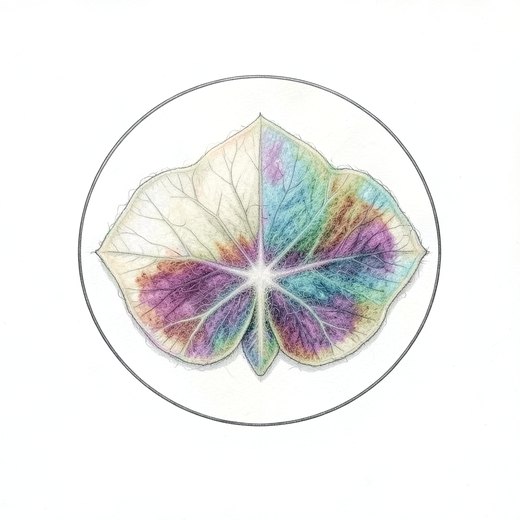
Fig. 3. Intake
Incident ray
What must it feed on to work? What has to be present, noticed or supplied?
It feeds on light that arrives from elsewhere, for a mirror shines only with what falls on it.1
drawn as: incident ray · view: microscope
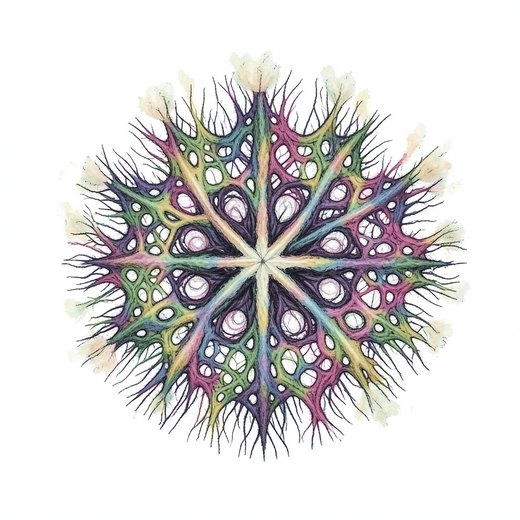
Fig. 4. Mechanism
Secondary wavelets
How does it turn what it takes in into what it gives out?
Each point the arriving wave strikes sends out a small wavelet, and the wavelets join into one front travelling back at the matching angle.2
drawn as: secondary wavelets · view: exploded
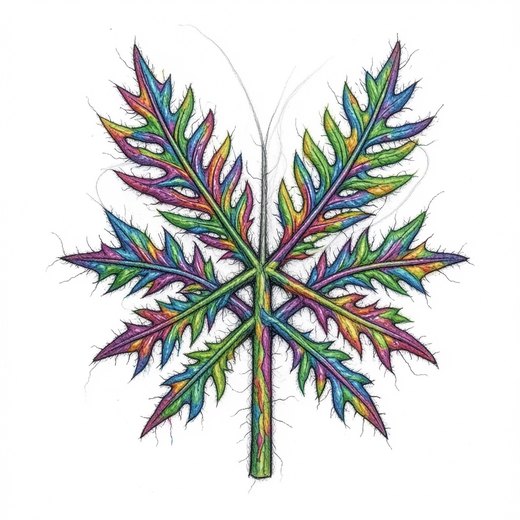
Fig. 5. Output
Mirror image
What does it make possible, visible or knowable?
It gives an image of the world reversed left to right, and turned on the mind it gives a view of one's own thinking, which Locke counted as a source of ideas beside the senses.3
drawn as: mirror image · view: at work
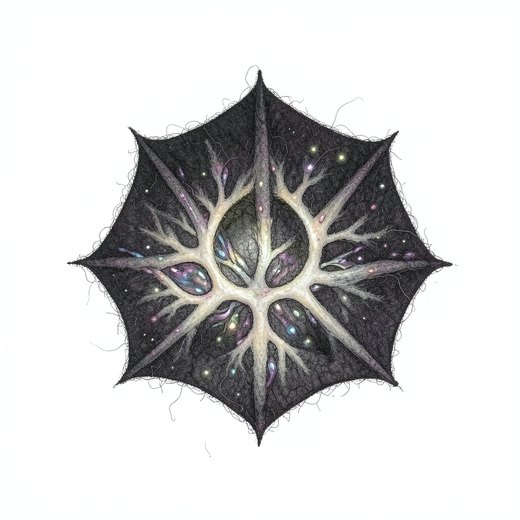
Fig. 6. Dispersal
Earthshine
What part of it travels into other minds, ideas and fields, and by what vector?
Reflected light travels on and lights what its source never reached, as sunlight sent back from the earth lights the dark part of the young moon.4
drawn as: earthshine · view: cast
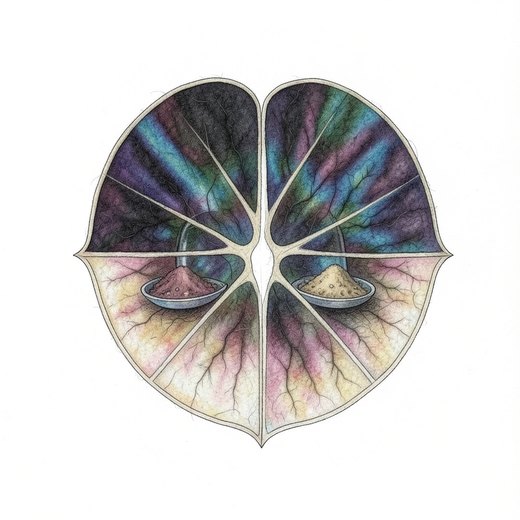
Fig. 7. Decay
Hall of mirrors
What can it not digest, where does it fail, and what does it leave behind for others?
Two surfaces set face to face pass an image back and forth until it dwindles into the dark, and a mind turned only on itself is caught the same way, like the youth in Ovid who wasted away gazing into a pool.5
drawn as: hall of mirrors · view: pressed
II Meaning associations
No relations recorded yet.
descent membership food web resemblance or friction
Lineage
A founder, dissected by hand.
Kin
same kind in Roget Entanglement, Mimesis
same kind in Wilkins Faith, Fear, Love, Nostalgia, Silence, Volition, Knowing Trust, Witnessed Relief, Gazeroot (second reading), The Swing Door
same kind in WordNet Emergence, Frost, Iridescence, Placebo, Rain, Resonance, Resonance (second reading), Storm, Wind
same kind in Llull Amber, Archipelago, Ash, Clay, Cloud, Diamond, Emergence, Entanglement, Entropy, Erosion, Fire, Frost, Iridescence, Lake, Petrification, Rain, Resonance, Resonance (second reading), River, Salt, Sand, Storm, Weightlessness, Wind, Winter, Self-Ending Order
same phylum Chiaroscuro, Equinox, Salt, Symmetry, Foresilence
same dominant organ Amber, Aura, Cloud, Diamond, Equinox, Frost, Possession, Solitude, Threshold, Tongue Horizon, The Shared Cell
Genome
- return also in Commemorative Revision, Equinox, Eternity, Tide of Days, Nostalgia, Rain
- symmetry
- surface
- self
- light also in Awakening, Chiaroscuro, Equinox
III In the world
Echoes
- a mountain doubled in a still lake
- earthshine on the dark of a crescent moon
- the ray diagram with its two equal angles
- a journal kept to look back on the day
IV Record
How it was drawn
its draw 4, a point in the morphospace (laws §8), drawn by flux-2-klein-4b.safetensors.
| axis | value | |
|---|---|---|
| book | semaphora | |
| symmetry | helical | |
| organization | solitary | |
| silhouette | bell | |
| scale | microscopic | |
| proportion | elongated latent | |
| growth | swelling | |
| articulation | sutured | |
| openness | solid latent | |
| skeleton | test latent | |
| locomotion | burrowing latent | |
| pattern | speckled latent | |
| coloration | countershaded | |
| substance | hyphal felt | |
| surface | filamentous | |
| palette | oilslick | |
| luminosity | none | |
| transparency | transparent latent | |
| gesture | pulses | |
| unity | aggregate latent | |
| modality | contingent latent | |
| causation | final latent | |
| determinacy | fraying latent | |
| fusion | seam | |
| anomaly | one break | |
| graft | scales pans | |
| technique | stipple | |
| viewpoint | three quarter | |
| value | low key latent | |
| balance | cantilevered | |
| density | graded detail latent | |
| rhythm | unmarked latent | |
| saturation | muted latent | |
| appendages | horns | |
| anchor (body) | a cloud of ink blooming slowly in still water | |
| anchor (detail) | a diffusion-limited aggregate, a feathery fractal cluster |
Sources
- Hero of Alexandria, Catoptrica (1st century)
- Christiaan Huygens, Traité de la lumière (1690)
- John Locke, An Essay Concerning Human Understanding (1690), Book II, on ideas of reflection
- Leonardo da Vinci, Codex Leicester (c. 1510), on the ashen light of the moon
- Ovid, Metamorphoses (8 CE), Book III
❦