a morph of Resonance, the same idea read a second time
Resonance (second reading)
Auscultor consonans·the Listening Bell
From Latin auscultare, to listen closely, and consonare, to sound together; it hears only what sounds with it.
- Level
- Conceptorganism
- Phylum
- Linkimage schema
- Class
- Intakeits hair cells
- Niche
- Consumerother ideas
- Mode
- Techniquehow it keeps existing
- Stage
- Matureindividuated
- Status
- Living
- Habitat
- Ocean
Its kinds · Roget, 1852: Motion · Wilkins, 1668: Motion · WordNet, 1990: Phenomenon · Llull, 1308: I · Elementative
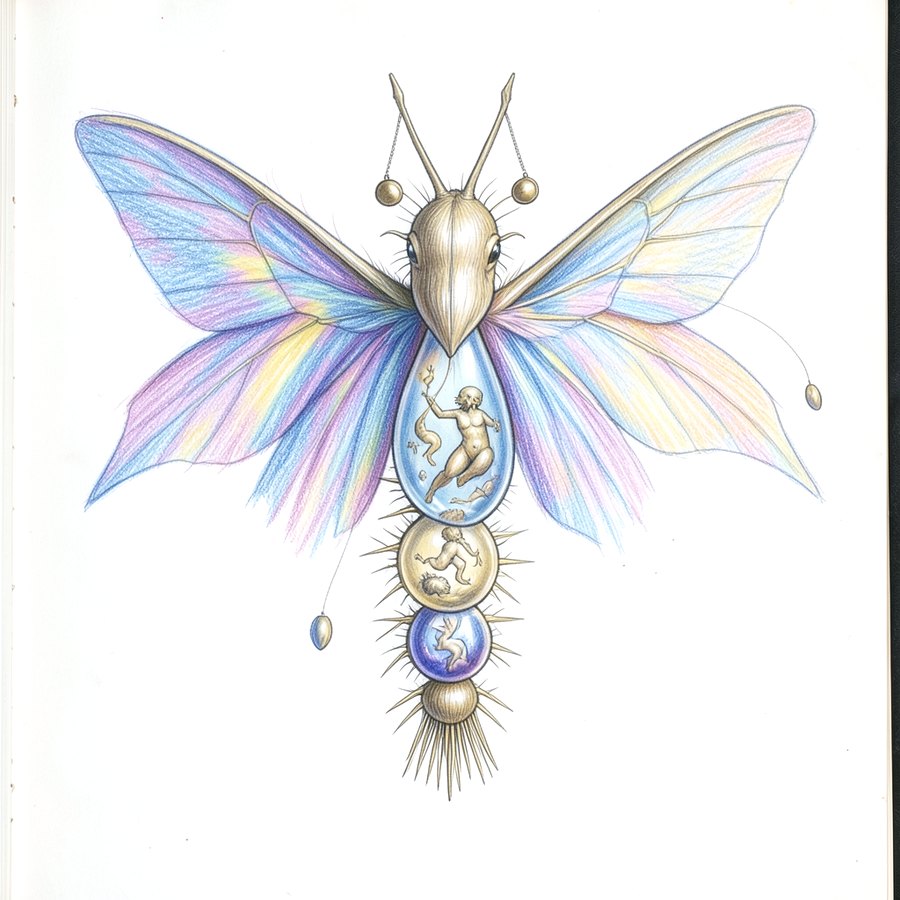
Being tuned decides what can be heard at all, so attunement is a kind of perception before it is a kind of harmony.
We sense only what we are tuned to.
behavior Hangs listening in still water, its receptors swaying, and lights up when a rhythm matches its own.
What are you tuned so well to hear that you can no longer hear anything else?
I Dissection
Each organ answers one question about the idea. The framed one, its intake, is the dominant organ: the being's class, the one the idea could not lose and stay itself.
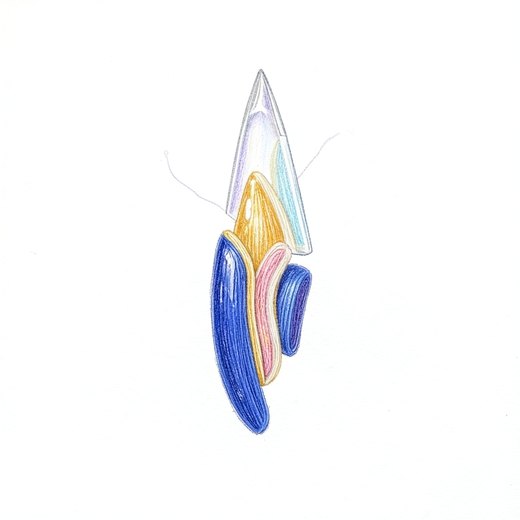
Fig. 1. Kernel
Basilar membrane
Which premise, if it were false, would kill this idea?
A receiver tuned to one frequency picks that frequency out above all others, so what it can sense is set by what it is tuned to.1
drawn as: basilar membrane · view: exploded
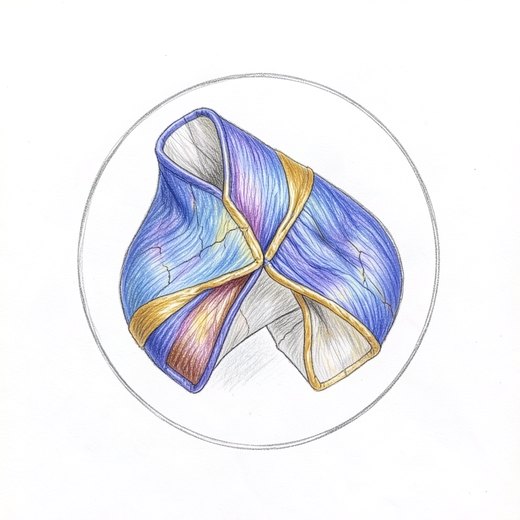
Fig. 2. Boundary
Absorption line
What sets it apart from what it is not, and how does it keep that distinction?
It is set apart by what it is deaf to; everything off its pitch passes through it as if it were not there.3
drawn as: absorption line · view: microscope
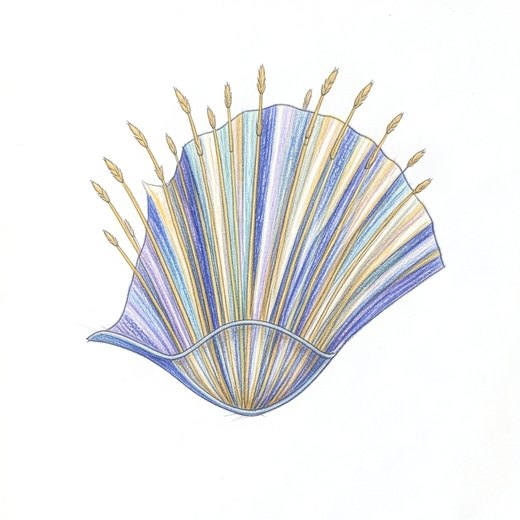
Fig. 3. Intake
Hair cells
❦ dominant organWhat must it feed on to work? What has to be present, noticed or supplied?
It listens for periodic signals around it, a voice, a pulse, a rhythm, and lets everything else pass through.3
drawn as: hair cells · view: transparent
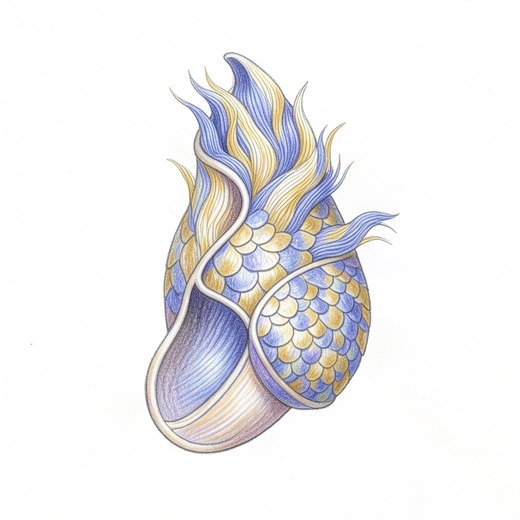
Fig. 4. Mechanism
Phase locking
How does it turn what it takes in into what it gives out?
Its sensing parts sway with what arrives; signals in step with that sway build up over many cycles while the others cancel out.1
drawn as: phase locking · view: cast
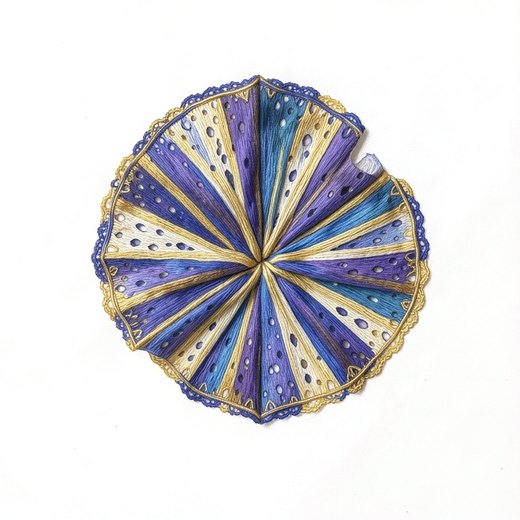
Fig. 5. Output
Tuning curve
What does it make possible, visible or knowable?
It answers selectively, moving, glowing or sounding only when something matches its tuning, and its answer can tune others in turn.2
drawn as: tuning curve · view: pressed
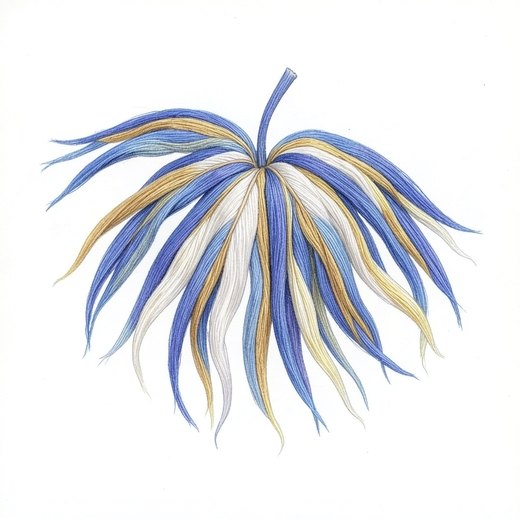
Fig. 6. Dispersal
Sympathetic strings
What part of it travels into other minds, ideas and fields, and by what vector?
It spreads by entrainment, as what it answers begins to answer back at the same pitch, like sympathetic strings or a crowd falling into step.2
drawn as: sympathetic strings · view: series
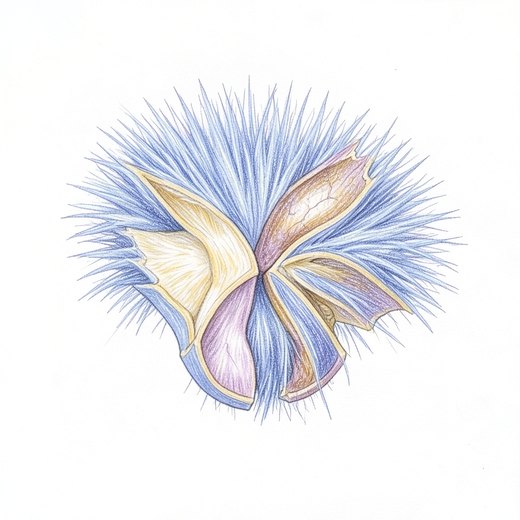
Fig. 7. Decay
Fused stereocilia
What can it not digest, where does it fail, and what does it leave behind for others?
It is deaf to whatever is off its pitch; tuned too tightly it hears only itself, and tuned too loosely it hears only noise.3
drawn as: fused stereocilia · view: cross section
II Meaning associations
descent membership food web resemblance or friction
Lineage
A founder, dissected by hand.
Kin
same kind in Roget Resonance
same kind in Wilkins Resonance, Weightlessness
same kind in WordNet Emergence, Frost, Iridescence, Placebo, Rain, Reflection, Resonance, Storm, Wind
same kind in Llull Amber, Archipelago, Ash, Clay, Cloud, Diamond, Emergence, Entanglement, Entropy, Erosion, Fire, Frost, Iridescence, Lake, Petrification, Rain, Reflection, Resonance, River, Salt, Sand, Storm, Weightlessness, Wind, Winter, Self-Ending Order
same phylum Apophenia, Archipelago, Entanglement, Love, Mimesis, Symbol, Shared Breath, Witnessed Relief, Gazeroot (second reading)
same dominant organ Clay, Faith, Fear, Lake, Patience, Prophecy, Silence, Tinnitus, Trance
Genome
- frequency also in Resonance
- attunement also in Resonance
- selectivity
- entrainment also in Music, Shared Breath
- listening also in Silence
III In the world
Echoes
- a radio picking one station out of the air
- the pendulum clocks Huygens saw fall into step on one beam
- the sympathetic strings of a sitar
- the cochlea, where each place along the membrane answers one pitch
IV Record
How it was drawn
its draw 5, a point in the morphospace (laws §8), drawn by flux-2-klein-4b.safetensors.
| axis | value | |
|---|---|---|
| book | automata | |
| symmetry | helical | |
| organization | chained | |
| silhouette | winged | |
| scale | hand | |
| proportion | even latent | |
| growth | swelling | |
| articulation | jointed | |
| openness | solid latent | |
| skeleton | unmarked latent | |
| locomotion | undulating latent | |
| pattern | gradient latent | |
| coloration | countershaded latent | |
| substance | silk | |
| surface | spined | |
| palette | lapis | |
| luminosity | sheen | |
| transparency | opaque latent | |
| gesture | pulses | |
| unity | aggregate latent | |
| modality | possible latent | |
| causation | efficient latent | |
| determinacy | doubled | |
| fusion | seam | |
| anomaly | orbiting | |
| graft | scales pans | |
| technique | crayon | |
| viewpoint | above | |
| value | low key latent | |
| balance | unmarked latent | |
| density | intricate latent | |
| rhythm | alternating | |
| saturation | accent latent | |
| appendages | cilia | |
| anchor (body) | an aurora, hanging curtains of coloured light | |
| anchor (detail) | standing waves on a vibrating liquid, a lattice of peaks |
Sources
- Feynman, Leighton and Sands, The Feynman Lectures on Physics, vol. I, ch. 23, Resonance (1963)
- Christiaan Huygens's observation of synchronized pendulum clocks (1665)
- Georg von Békésy, Experiments in Hearing (1960)
❦