a founder of the codex
Memory
Mnemomyces reconstruens·the Recollecting Fungus
From Greek mneme, memory, and mykes, fungus, and Latin reconstruere, to build again; a fungus that rebuilds what it remembers.
- Level
- Conceptorganism
- Phylum
- Pathimage schema
- Class
- Decayits Lethe
- Niche
- Decomposerwhat is dead
- Mode
- Habithow it keeps existing
- Stage
- Matureindividuated
- Status
- Living
- Habitat
- Archive
Its kinds · Roget, 1852: Formation of Ideas · Wilkins, 1668: Natural Power · WordNet, 1990: Cognition · Llull, 1308: E · Man
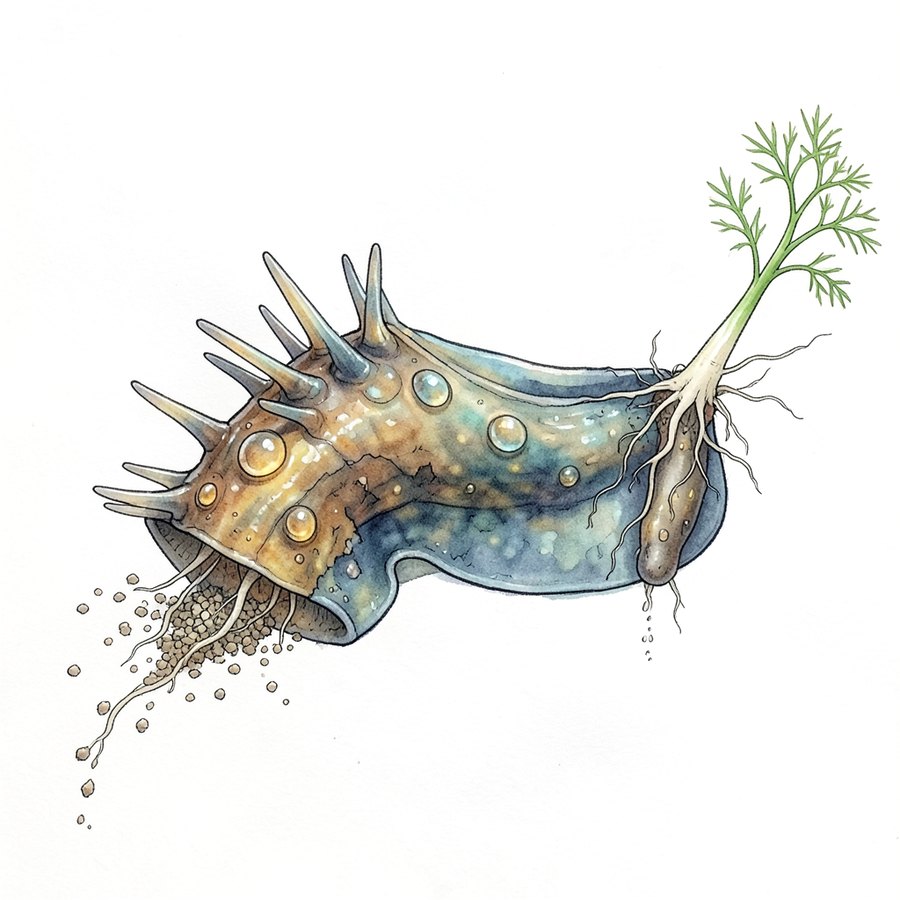
Remembering rebuilds the past each time, so forgetting is not memory's failure but the work that shapes what is kept.
To remember is to rebuild, and to rebuild is to forget a little.
behavior Grows back through whatever it has touched before, and its oldest threads dissolve to feed the newest.
Which of your memories has changed most from being told too often?
I Dissection
Each organ answers one question about the idea. The framed one, its decay, is the dominant organ: the being's class, the one the idea could not lose and stay itself.
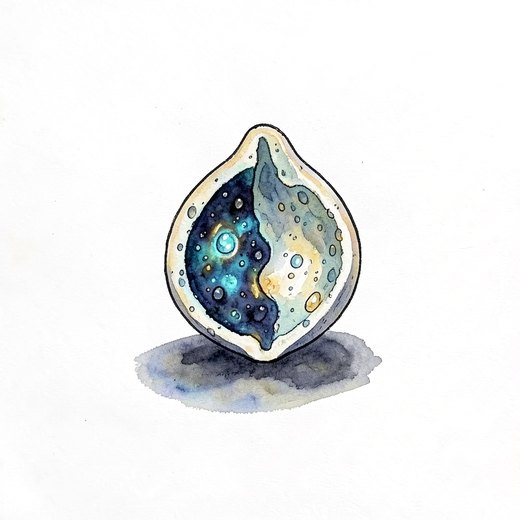
Fig. 1. Kernel
Engram
Which premise, if it were false, would kill this idea?
The past persists in the present as traces that are rebuilt each time they are recalled, not stored as copies.2, 3
drawn as: engram · view: cast
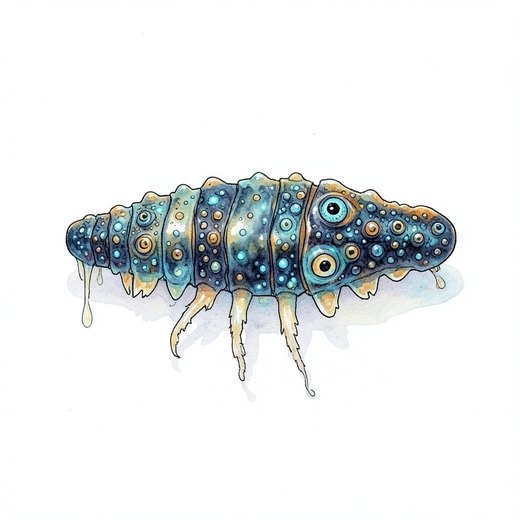
Fig. 2. Boundary
Palimpsest
What sets it apart from what it is not, and how does it keep that distinction?
It is set apart from a record by its changing; a trace that never altered would be an archive, not a memory.2
drawn as: palimpsest · view: at work
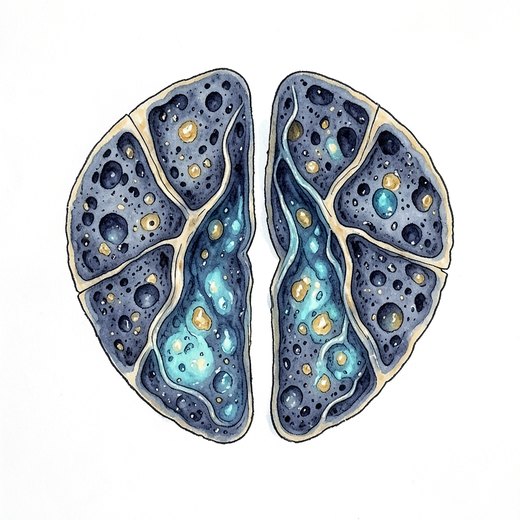
Fig. 3. Intake
Wax tablet
What must it feed on to work? What has to be present, noticed or supplied?
It feeds on experience, above all what is repeated, strongly felt or given meaning, and on sleep.1, 2
drawn as: wax tablet · view: pinned
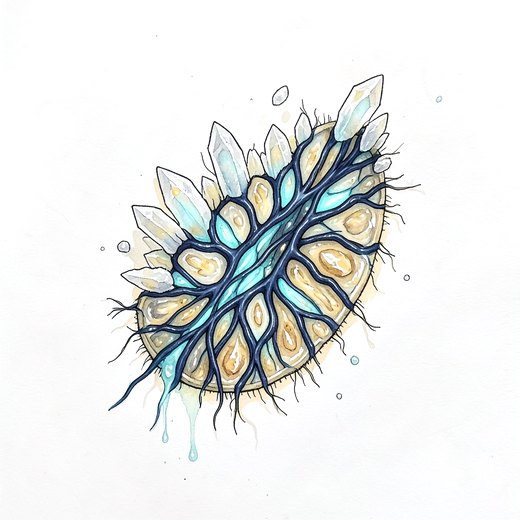
Fig. 4. Mechanism
Reconsolidation
How does it turn what it takes in into what it gives out?
Traces are consolidated, and each recall makes them changeable again, so remembering is also rewriting.3
drawn as: reconsolidation · view: at work
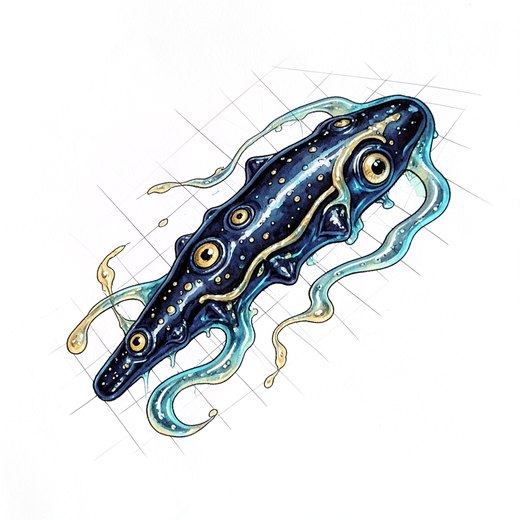
Fig. 5. Output
Narrative identity
What does it make possible, visible or knowable?
It gives recognition, skill, a continuous self and the stories a group tells about itself.4
drawn as: narrative identity · view: series
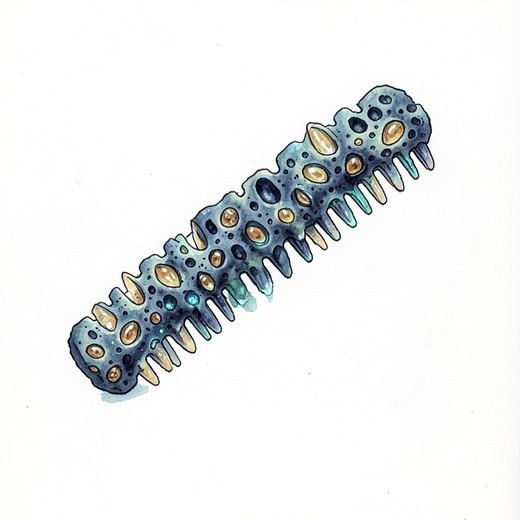
Fig. 6. Dispersal
Cairn
What part of it travels into other minds, ideas and fields, and by what vector?
It spreads into stories, archives, monuments and rites, which hold a group's memory outside any single head.4
drawn as: cairn · view: in situ
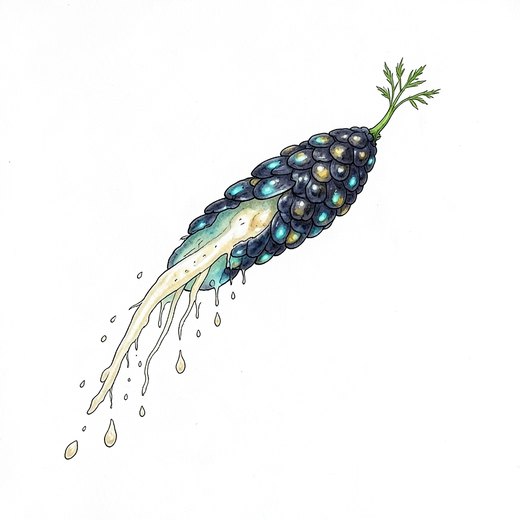
Fig. 7. Decay
Lethe
❦ dominant organWhat can it not digest, where does it fail, and what does it leave behind for others?
Forgetting is its other half; most traces fade, some are falsified, and a memory that forgot nothing would drown in detail.1, 5
drawn as: Lethe · view: detached
II Meaning associations
descent membership food web resemblance or friction
Lineage
A founder, dissected by hand.
Offspring
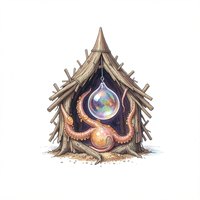
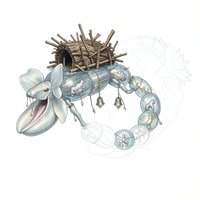
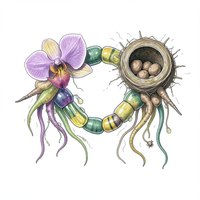
Food web
- feeds the output of Ritual → its intake
Ritual gives a time that comes back and passages marked in public; Memory feeds on what is repeated, strongly felt or given meaning. Ritual's product is Memory's best food. - pollinated its dispersal → the intake of Ritual
Memory spreads into stories, archives, monuments and rites, and Ritual needs the memory of what was done before. Memory has already pollinated Ritual. - homology its decay resembles the dispersal of Ritual
Ritual lives on in gestures whose reasons are forgotten; Memory's other half is forgetting. The form outlives what it remembered. - friction its boundary rubs against the kernel of Ritual
Ritual repeats actions in a fixed form; Memory says a trace that never altered would be an archive, not a memory. One lives by not changing, the other by changing. - feeds the output of Ritual → its intake
Ritual gives a time that comes back; Memory feeds on what is repeated and given meaning. Each return of the rite is a recall. - feeds its output → the intake of Equinox
Memory gives the stories a group tells about itself; Equinox feeds on someone watching the horizon, and only a group that remembers keeps watching.
Kin
same kind in Roget Apophenia, Dream, Faith, Oblivion, Placebo, Presence, Prophecy, Knowing Trust, Afterlistening, Commemorative Revision, Simultaneous Remembering, Hesychology, Subtractive Phenomenology
same kind in Wilkins Apophenia, Dream, Oblivion, Presence, Trance, Afterlistening, Simultaneous Remembering
same kind in WordNet Apophenia, Dream, Faith, Oblivion, Qualia, Silence, Volition, Afterlistening, Simultaneous Remembering, Hesychology, Subtractive Phenomenology
same kind in Llull Echolalia, Glossolalia, Love, Nostalgia, Oblivion, Placebo, Possession, Presence, Prophecy, Solitude, Threshold, Trance, Volition, Knowing Trust, Rushmaker, Tongue Horizon, Witnessed Relief, Gazeroot (second reading), Commemorative Revision, The Shared Cell, Simultaneous Remembering, Hesychology
same phylum Entelechy, Music, Nostalgia, Prophecy, Ritual, River, Threshold, Wind, Tongue Horizon, Afterlistening
same dominant organ Entropy, Innocence, Oblivion, Petrification
Genome
- trace
- recall also in Commemorative Revision, Simultaneous Remembering
- forgetting also in Dream
- reconstruction
- identity
III In the world
Echoes
- the forgetting curve
- a family story that changes each time it is told
- a war memorial
- a smell that brings back a childhood room
IV Record
How it was drawn
its draw 3, a point in the morphospace (laws §8), drawn by flux-2-klein-4b.safetensors.
| axis | value | |
|---|---|---|
| book | automata | |
| symmetry | amorphous | |
| organization | solitary | |
| silhouette | bell | |
| scale | hand | |
| proportion | compressed latent | |
| growth | sedimentary | |
| articulation | telescoping latent | |
| openness | sheet | |
| skeleton | unmarked latent | |
| locomotion | jetting latent | |
| pattern | gradient latent | |
| coloration | disruptive latent | |
| substance | amber | |
| surface | ribbed | |
| palette | abyss | |
| luminosity | inner glow | |
| transparency | translucent | |
| gesture | gathers | |
| unity | composite latent | |
| modality | unmarked latent | |
| causation | material latent | |
| determinacy | dissolving latent | |
| fusion | replaced | |
| anomaly | budding | |
| graft | lenses | |
| technique | watercolour | |
| viewpoint | profile | |
| value | unmarked latent | |
| balance | grounded latent | |
| density | sparse latent | |
| rhythm | clustered latent | |
| saturation | muted | |
| appendages | bladders | |
| anchor (body) | a nudibranch, a soft slug crowned with clusters of bright cerata | |
| anchor (detail) | fine fungal threads wrapped around root tips |
Sources
- Hermann Ebbinghaus, Memory: A Contribution to Experimental Psychology (1885)
- Frederic Bartlett, Remembering (1932)
- Karim Nader, Glenn Schafe and Joseph LeDoux, on memory reconsolidation (Nature, 2000)
- Maurice Halbwachs, Les cadres sociaux de la mémoire (1925)
- Jorge Luis Borges, Funes the Memorious (1942)
❦