a founder of the codex
Entelechy
Telocarpus intrinsecus·the Completing Seed
From Greek telos, end, and karpos, fruit, and Latin intrinsecus, from within, the fruit whose end lies within it.
- Level
- Conceptorganism
- Phylum
- Pathimage schema
- Class
- Kernelits acorn
- Niche
- Producerraw experience
- Mode
- Reproductionhow it keeps existing
- Stage
- Senescentdissolving
- Status
- Living
- Habitat
- Ocean
Its kinds · Roget, 1852: Organic Matter · Wilkins, 1668: Transcendental General · WordNet, 1990: Process · Llull, 1308: H · Vegetative
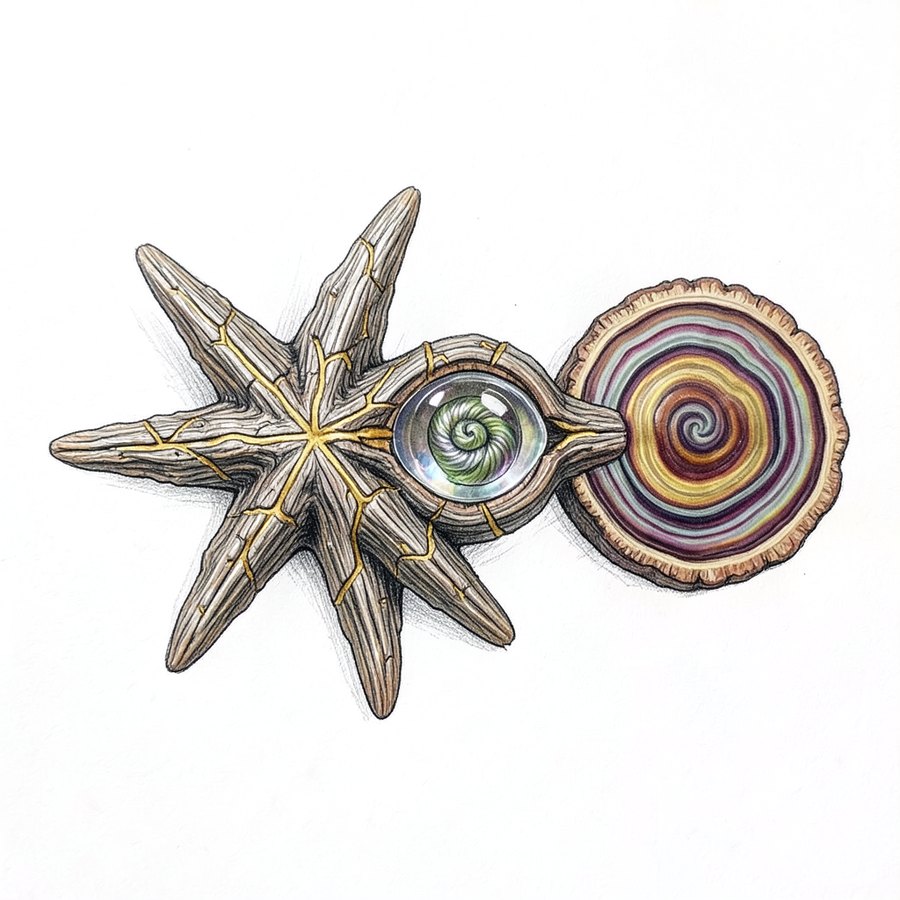
A living thing holds within it the form it grows toward, and entelechy is that inner completion at work, the seed already aimed at the plant.
Every living thing already holds the form it is growing into.
behavior Grows slowly toward one shape, and when it is cut in two each piece grows back toward the whole.
What form are you already growing toward, and what in you is its seed?
I Dissection
Each organ answers one question about the idea. The framed one, its kernel, is the dominant organ: the being's class, the one the idea could not lose and stay itself.
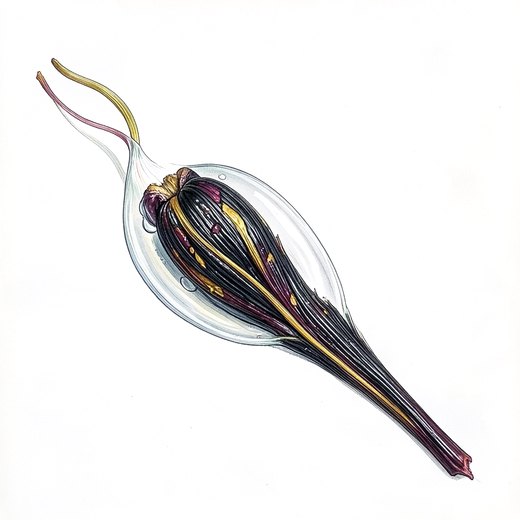
Fig. 1. Kernel
Acorn
❦ dominant organWhich premise, if it were false, would kill this idea?
Entelechy is the state of a thing that holds its end within it, so that it grows by itself toward the form that completes it.1
drawn as: acorn · view: detached
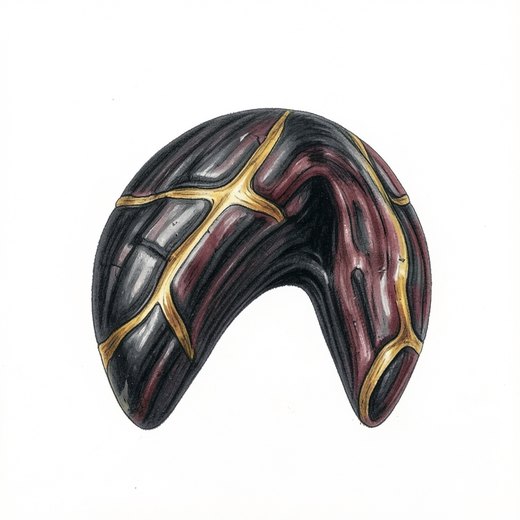
Fig. 2. Boundary
Crystal habit
What sets it apart from what it is not, and how does it keep that distinction?
It is set apart from mere potential, the wood that could be carved into any figure and moves toward none, by working toward one form from inside.1
drawn as: crystal habit · view: cast
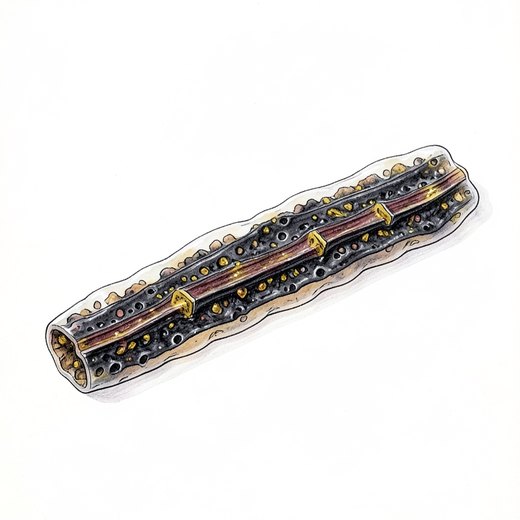
Fig. 3. Intake
Imbibition
What must it feed on to work? What has to be present, noticed or supplied?
It feeds on raw potential, matter able to take a form, as an embryo draws in water, salts and food and builds them into its own body.2
drawn as: imbibition · view: transparent
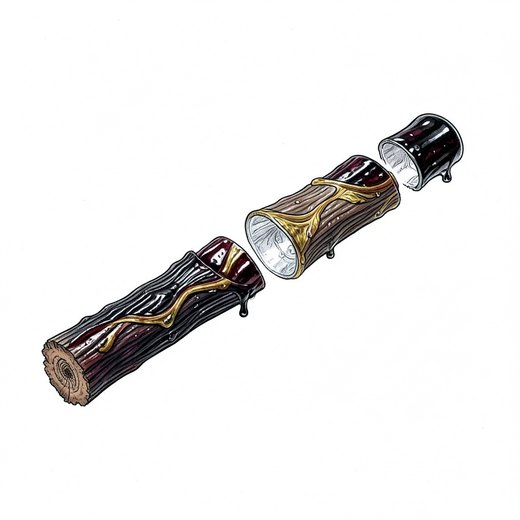
Fig. 4. Mechanism
Epigenetic landscape
How does it turn what it takes in into what it gives out?
The form unfolds stage by stage along channelled paths that return to their course when disturbed. Split at the two-cell stage, a sea urchin embryo builds a whole, smaller larva from each half.4, 5
drawn as: epigenetic landscape · view: exploded
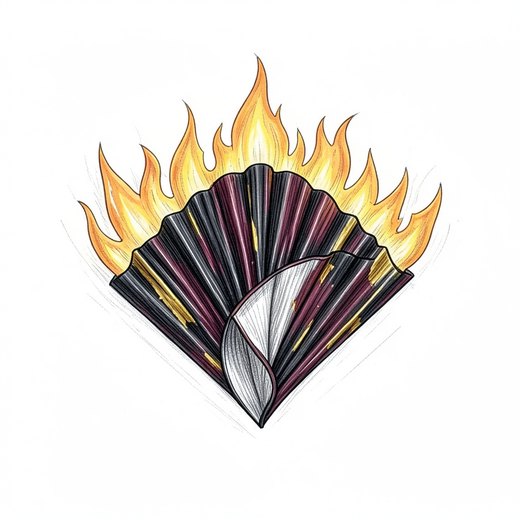
Fig. 5. Output
Full-grown oak
What does it make possible, visible or knowable?
It yields the realized form, the grown body at work as what it is, which Aristotle named the soul, the first entelechy of a living body.2
drawn as: full-grown oak · view: at work
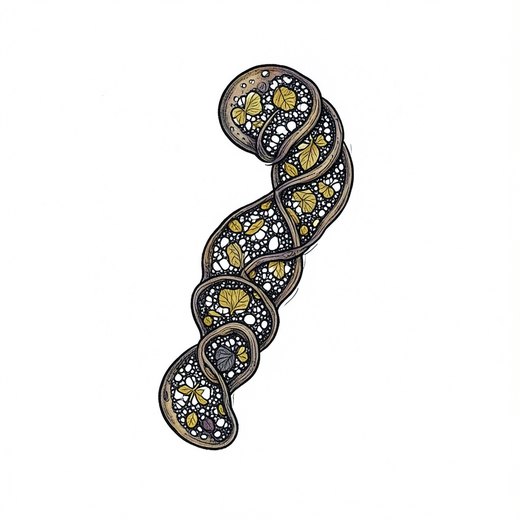
Fig. 6. Dispersal
Samara
What part of it travels into other minds, ideas and fields, and by what vector?
It travels in offspring, since the most natural act of a living thing is to make another like itself, and as a word Leibniz gave to every simple substance.2, 3
drawn as: samara · view: series
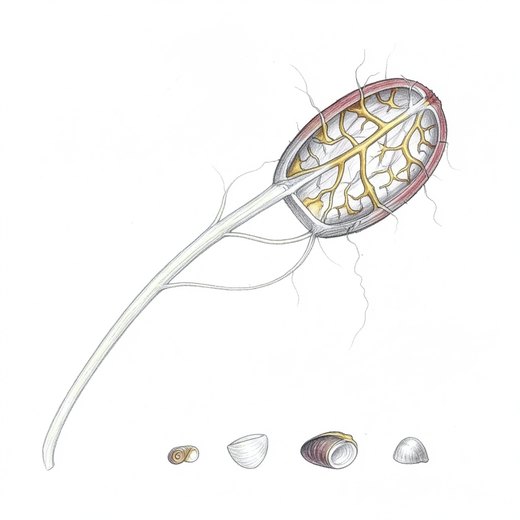
Fig. 7. Decay
Etiolation
What can it not digest, where does it fail, and what does it leave behind for others?
Stunted, it stops short of its form, as a seedling kept in the dark grows pale and spindly and dies before it fruits. Biology abandoned the vital agent Driesch named entelechy, and the word lives on in philosophy.4
drawn as: etiolation · view: cross section
II Meaning associations
No relations recorded yet.
descent membership food web resemblance or friction
Lineage
A founder, dissected by hand.
Kin
same kind in Roget Amber, Breath, Chiaroscuro, Chimera, Iridescence, Music, Silence, Tinnitus, Vertigo, Shared Breath
same kind in Wilkins Rushmaker
same kind in WordNet Awakening, Breath, Entropy, Erosion, Fire, Metamorphosis, Petrification, Rushmaker, Shared Breath, Self-Ending Order, Tongue Horizon, Witnessed Relief, Gazeroot (second reading), Commemorative Revision, The Swing Door
same kind in Llull Breath, Metamorphosis, Spring
same phylum Memory, Music, Nostalgia, Prophecy, Ritual, River, Threshold, Wind, Tongue Horizon, Afterlistening
same dominant organ Archipelago, Entanglement, Eternity, Geomancy, Qualia, Salt, Syllable, Symmetry, Vertigo, Volition, Weightlessness, Knowing Trust, Hesychology
Genome
- actuality
- potential
- purpose
- growth also in Spring
- form also in Commemorative Revision, Metamorphosis, Petrification, Poetry, Ritual
III In the world
Echoes
- an acorn growing into an oak
- Hans Driesch's divided sea urchin embryos
- Leibniz's monads, which he called entelechies
- self-actualization in humanistic psychology
IV Record
How it was drawn
its draw 1, a point in the morphospace (laws §8), drawn by flux-2-klein-4b.safetensors.
| axis | value | |
|---|---|---|
| book | mycelia | |
| symmetry | fractal | |
| organization | nested | |
| silhouette | star | |
| scale | immense | |
| proportion | elongated | |
| growth | grafted | |
| articulation | jointed latent | |
| openness | hollow latent | |
| skeleton | endoskeleton latent | |
| locomotion | burrowing latent | |
| pattern | gradient latent | |
| coloration | nuptial latent | |
| substance | bark | |
| surface | pleated | |
| palette | obsidian | |
| luminosity | none | |
| transparency | clouded latent | |
| gesture | turns | |
| unity | fragment latent | |
| modality | possible latent | |
| causation | final | |
| determinacy | doubled | |
| fusion | becoming | |
| anomaly | unfinished | |
| graft | kintsugi | |
| technique | silverpoint | |
| viewpoint | below | |
| value | chiaroscuro latent | |
| balance | unmarked latent | |
| density | graded detail latent | |
| rhythm | clustered latent | |
| saturation | unmarked latent | |
| appendages | comb rows | |
| anchor (body) | a basket star, a disc whose arms branch again and again into a coiling crown | |
| anchor (detail) | an agate slice, concentric bands of colour |
Sources
- Aristotle, Metaphysics, Book IX (Theta), on potentiality and actuality (4th century BCE)
- Aristotle, On the Soul, Book II (4th century BCE)
- Gottfried Wilhelm Leibniz, Monadology (1714), section 18
- Hans Driesch, The Science and Philosophy of the Organism (1908)
- C. H. Waddington, The Strategy of the Genes (1957)
❦