a founder of the codex
River
Potamorpha manens·the Passing Form
From Greek potamos, river, and morphe, form, and Latin manens, remaining, a form that stays while its water passes.
- Level
- Conceptorganism
- Phylum
- Pathimage schema
- Class
- Dispersalits stream of consciousness
- Niche
- Symbionta partner
- Mode
- Referencehow it keeps existing
- Stage
- Matureindividuated
- Status
- Living
- Habitat
- City
Its kinds · Roget, 1852: Inorganic Matter · Wilkins, 1668: Element · WordNet, 1990: Object · Llull, 1308: I · Elementative
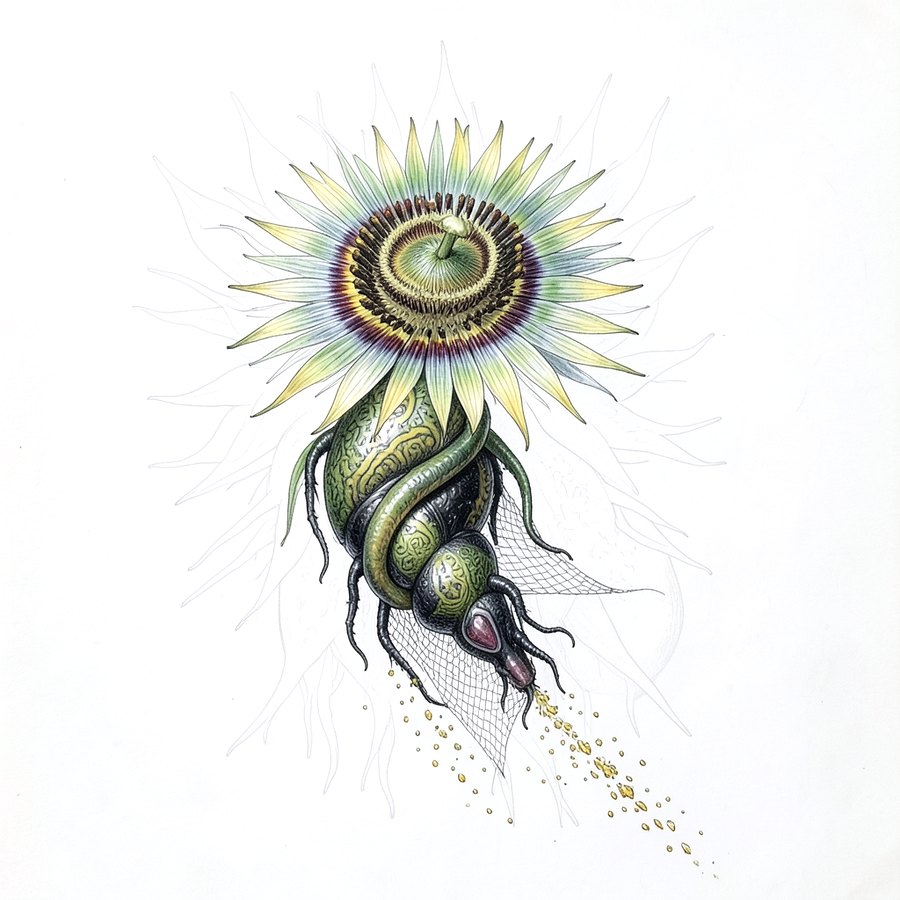
A river is a form that lasts while every drop in it moves on, so it stays the same river through water that is always new.
A shape can last while everything it is made of passes through it.
behavior It keeps its course for centuries while it shifts its bends, swallows its tributaries and carries everything loose down to the sea.
What in you has kept its shape while everything it is made of has been replaced?
I Dissection
Each organ answers one question about the idea. The framed one, its dispersal, is the dominant organ: the being's class, the one the idea could not lose and stay itself.
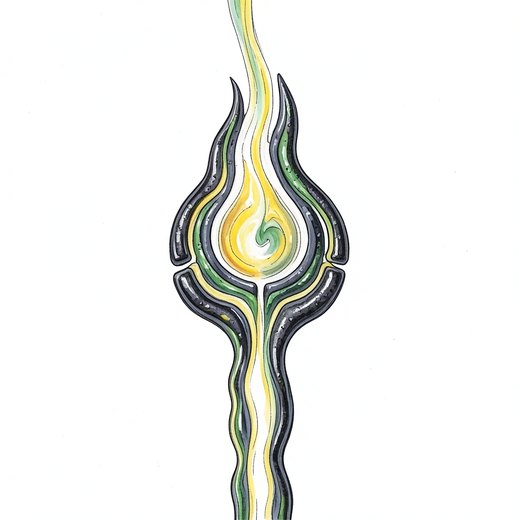
Fig. 1. Kernel
Standing wave
Which premise, if it were false, would kill this idea?
A river is a shape that holds while all its water moves on, so, as Heraclitus said, those who step into the same river meet other and other waters.1
drawn as: standing wave · view: detached
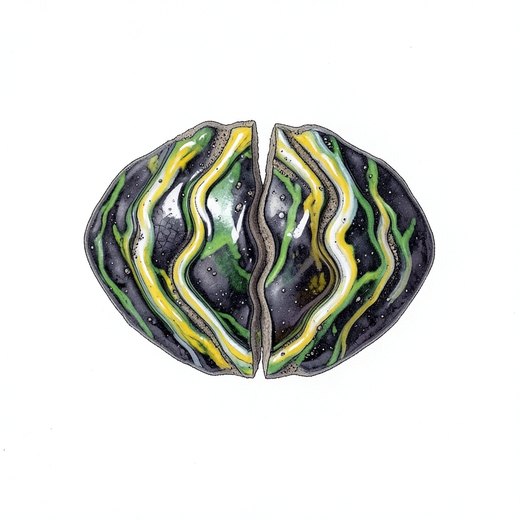
Fig. 2. Boundary
Natural levee
What sets it apart from what it is not, and how does it keep that distinction?
Its banks hold it apart from the land, and each flood that spills over them drops its heaviest silt at the edge, raising natural levees above the plain behind.2
drawn as: natural levee · view: cast
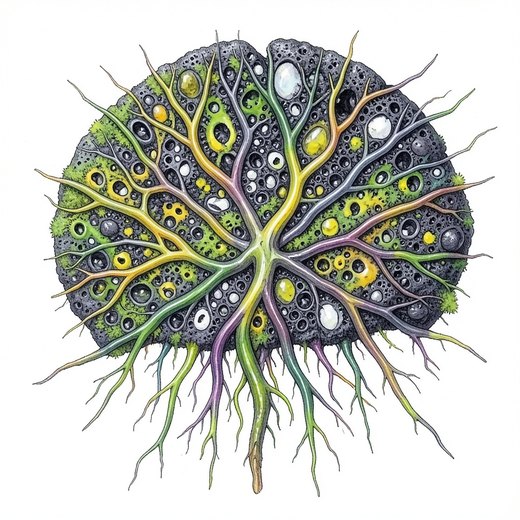
Fig. 3. Intake
Headwaters
What must it feed on to work? What has to be present, noticed or supplied?
It feeds on rain, snowmelt and springs gathered from every slope of its basin, small streams joining larger ones as twigs join a bough.3
drawn as: headwaters · view: magnified
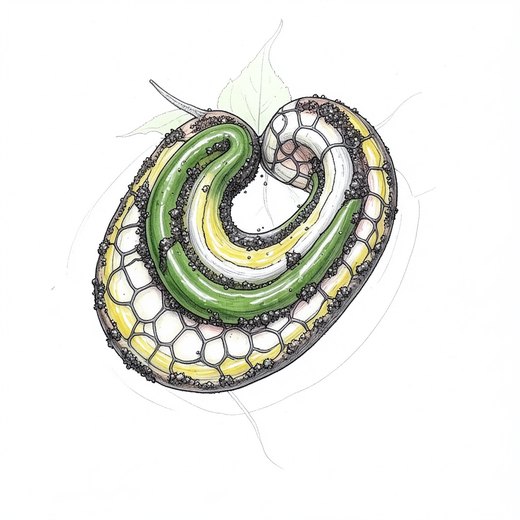
Fig. 4. Mechanism
Meander
How does it turn what it takes in into what it gives out?
Water runs downhill under its own weight, wearing the channel where it flows fast and dropping silt where it slows, so the river swings into bends that wander across its plain.2
drawn as: meander · view: at work
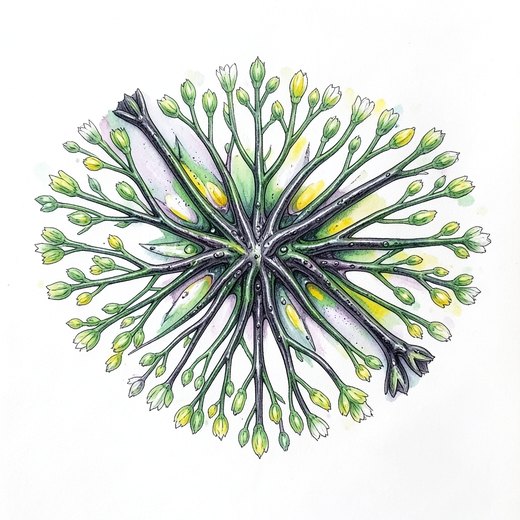
Fig. 5. Output
Delta
What does it make possible, visible or knowable?
It cuts valleys, spreads fertile silt over its floodplain and delta, and gave the first cities their water, fields and roads, so that Egypt was called the gift of the river.4
drawn as: delta · view: exploded
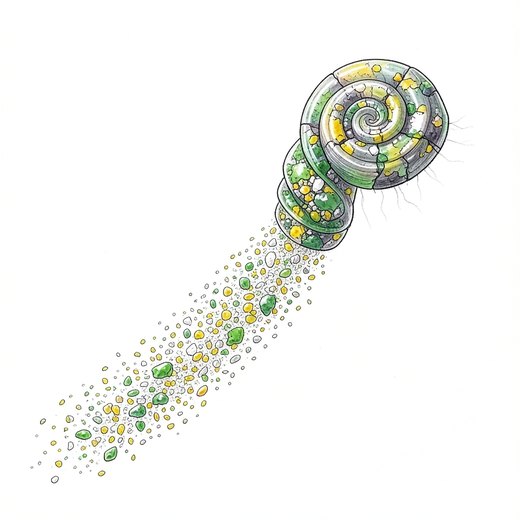
Fig. 6. Dispersal
Stream of consciousness
❦ dominant organWhat part of it travels into other minds, ideas and fields, and by what vector?
It carries silt, seeds and stones down to the sea, and it carries its own figure into thought, where time and the mind are each pictured as a stream.5, 1
drawn as: stream of consciousness · view: series
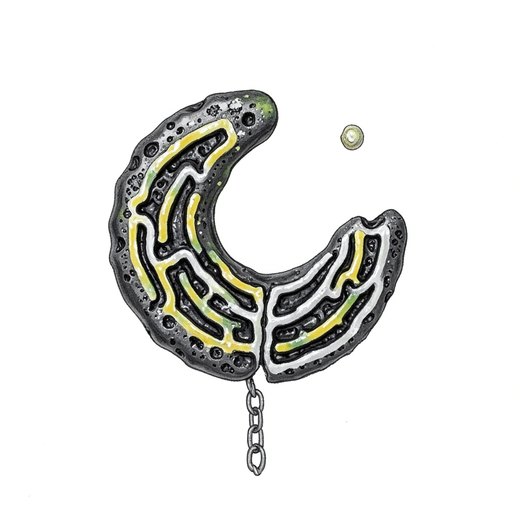
Fig. 7. Decay
Oxbow
What can it not digest, where does it fail, and what does it leave behind for others?
Where a bend is cut off it leaves a still oxbow that fills slowly with mud and reeds, and dams and thirsty fields can drain it before it reaches the sea.2
drawn as: oxbow · view: pressed
II Meaning associations
No relations recorded yet.
descent membership food web resemblance or friction
Lineage
A founder, dissected by hand.
Kin
same kind in Roget Archipelago, Ash, Clay, Cloud, Diamond, Erosion, Fire, Frost, Lake, Rain, Salt, Sand, Storm, Wind
same kind in Wilkins Cloud, Fire, Frost, Lake, Rain, Storm, Wind
same kind in WordNet Archipelago, Cloud, Lake
same kind in Llull Amber, Archipelago, Ash, Clay, Cloud, Diamond, Emergence, Entanglement, Entropy, Erosion, Fire, Frost, Iridescence, Lake, Petrification, Rain, Reflection, Resonance, Resonance (second reading), Salt, Sand, Storm, Weightlessness, Wind, Winter, Self-Ending Order
same phylum Entelechy, Memory, Music, Nostalgia, Prophecy, Ritual, Threshold, Wind, Tongue Horizon, Afterlistening
same dominant organ Ash, Breath, Miracle, Pointillism, Sand, Wind, Witnessed Relief
Genome
III In the world
Echoes
- the Nile in flood
- a standing wave below a rock
- the river of Heraclitus
- an oxbow lake left on a floodplain
IV Record
How it was drawn
its draw 4, a point in the morphospace (laws §8), drawn by flux-2-klein-4b.safetensors.
| axis | value | |
|---|---|---|
| book | mycelia | |
| symmetry | dendritic | |
| organization | chained | |
| silhouette | sac | |
| scale | microscopic | |
| proportion | sheared latent | |
| growth | faceted | |
| articulation | seamless latent | |
| openness | lattice latent | |
| skeleton | endoskeleton latent | |
| locomotion | undulating latent | |
| pattern | labyrinth | |
| coloration | plain latent | |
| substance | obsidian | |
| surface | ribbed | |
| palette | meadow | |
| luminosity | inner glow | |
| transparency | opaque latent | |
| gesture | sinks | |
| unity | unmarked latent | |
| modality | possible | |
| causation | efficient latent | |
| determinacy | unmarked latent | |
| fusion | graft | |
| anomaly | knotted | |
| graft | nets | |
| technique | silverpoint | |
| viewpoint | profile | |
| value | flat latent | |
| balance | unmarked latent | |
| density | intricate | |
| rhythm | alternating latent | |
| saturation | unmarked latent | |
| appendages | rhizoids, tentacles | |
| anchor (body) | a passionflower, a corona of fine filaments in rings around its centre | |
| anchor (detail) | a hailstone cut in half, concentric layers of clear and cloudy ice |
Sources
- Heraclitus, fragments (c. 500 BCE), in Hermann Diels, Die Fragmente der Vorsokratiker (1903)
- Luna B. Leopold, M. Gordon Wolman and John P. Miller, Fluvial Processes in Geomorphology (1964)
- Robert E. Horton, Erosional Development of Streams and Their Drainage Basins (Geological Society of America Bulletin, 1945)
- Herodotus, Histories (c. 430 BCE), Book 2, on Egypt as the gift of the river
- William James, The Principles of Psychology (1890), chapter 9, on the stream of thought
❦