a founder of the codex
Presence
Adessia lucens·the Here Glow
From Latin adesse, to be here and at hand, and lucens, shining, the glow of whatever is here.
- Level
- Conceptorganism
- Phylum
- Centre and peripheryimage schema
- Class
- Mechanismits attentional spotlight
- Niche
- Symbionta partner
- Mode
- Religionhow it keeps existing
- Stage
- Matureindividuated
- Status
- Living
- Habitat
- Ritual
Its kinds · Roget, 1852: Formation of Ideas · Wilkins, 1668: Natural Power · WordNet, 1990: State · Llull, 1308: E · Man
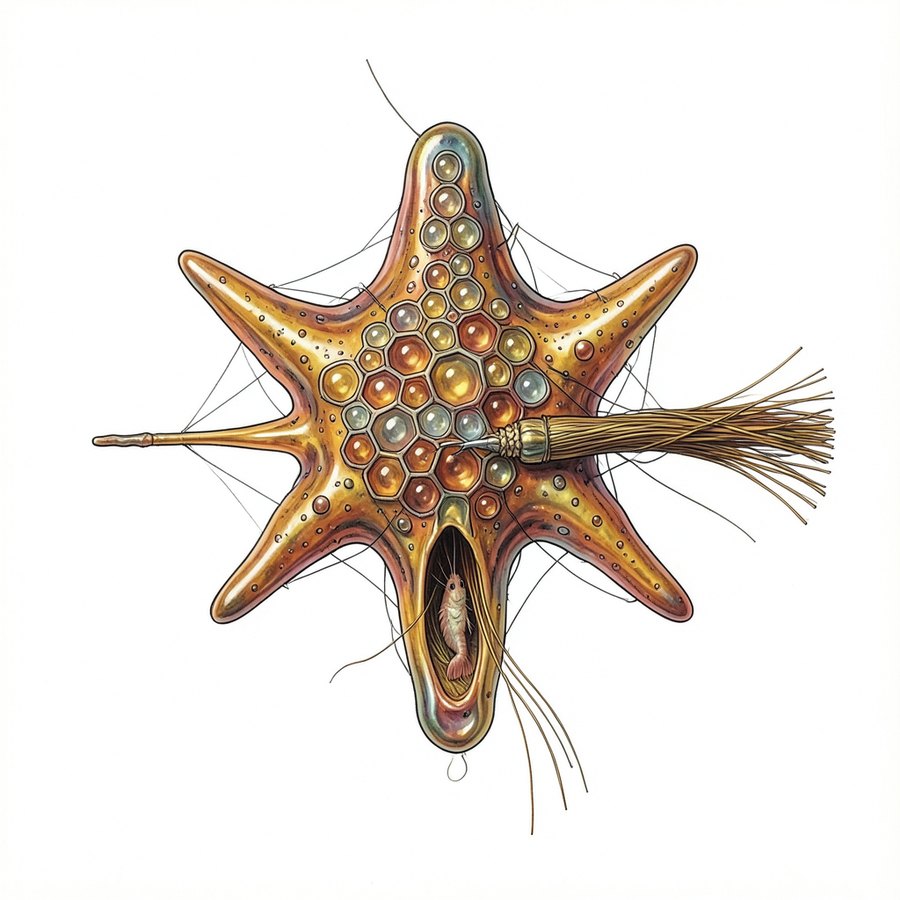
Presence joins the body's being here to attention on what is here, and that joining turns the passing moment into a lived one.
To be somewhere, the body and the attention have to arrive together.
behavior Settles in one place and glows faintly while it attends, and dims the moment its attention wanders off.
In the last hour, for how many minutes was your mind where your body was?
I Dissection
Each organ answers one question about the idea. The framed one, its mechanism, is the dominant organ: the being's class, the one the idea could not lose and stay itself.
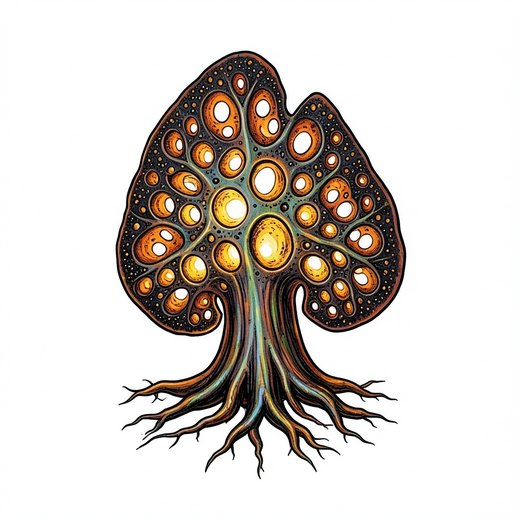
Fig. 1. Kernel
Here and now
Which premise, if it were false, would kill this idea?
Presence is being here in body and in attention at once, within reach of things and of others, in the moment that is happening.4
drawn as: here and now · view: cast
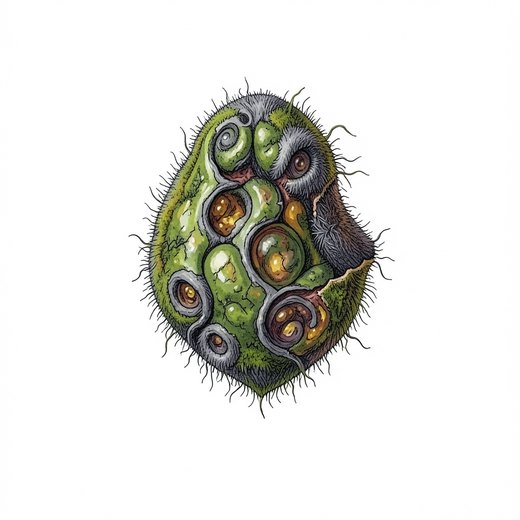
Fig. 2. Boundary
Peripersonal space
What sets it apart from what it is not, and how does it keep that distinction?
It is set against absence, the body gone elsewhere or the mind drifted off, and it holds only while both stay near.4
drawn as: peripersonal space · view: in situ
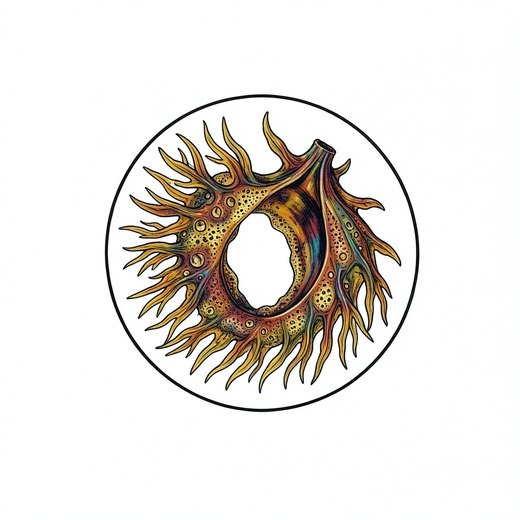
Fig. 3. Intake
Sensorium
What must it feed on to work? What has to be present, noticed or supplied?
It feeds on the senses, on light, sound, touch and the felt weight of the body, which give the world as it is now.2
drawn as: sensorium · view: microscope
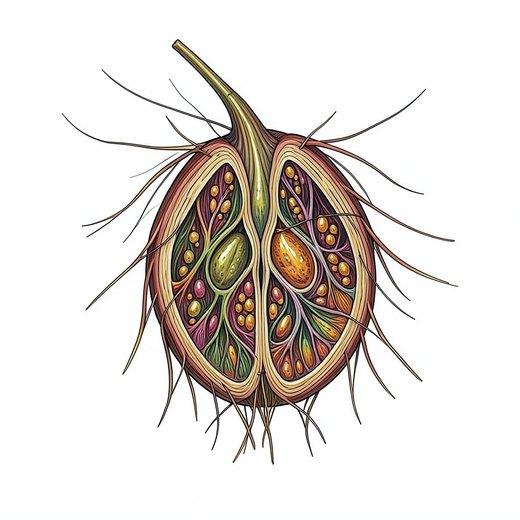
Fig. 4. Mechanism
Attentional spotlight
❦ dominant organHow does it turn what it takes in into what it gives out?
Attention takes one thread out of the many the senses offer and holds it clear, and what it holds becomes the here and now.1
drawn as: attentional spotlight · view: cross section

Fig. 5. Output
Saddle-back of time
What does it make possible, visible or knowable?
It makes a lived moment, a present a few seconds wide in which sights, sounds and feelings are held together as one now.1
drawn as: saddle-back of time · view: at work
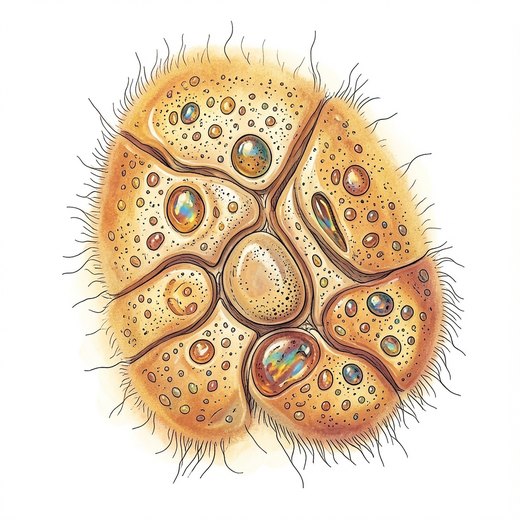
Fig. 6. Dispersal
Collective effervescence
What part of it travels into other minds, ideas and fields, and by what vector?
It passes by co-presence among bodies in one place that sense each other and know they are sensed, at a vigil, a performance or a meal.3
drawn as: collective effervescence · view: magnified
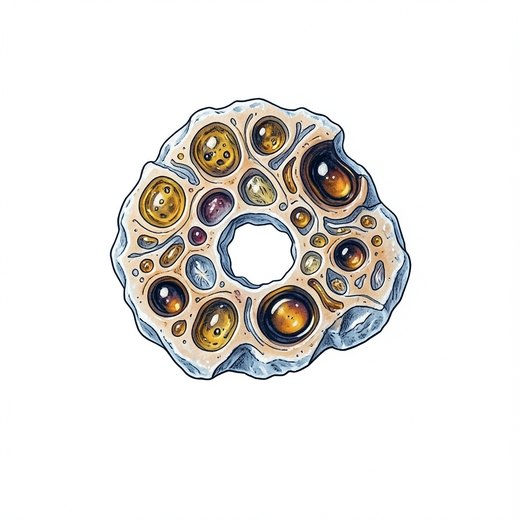
Fig. 7. Decay
Mind wandering
What can it not digest, where does it fail, and what does it leave behind for others?
It fails to distraction. A waking mind drifts from what it is doing almost half the time, and leaves hours lived through without being lived.5
drawn as: mind wandering · view: series
II Meaning associations
No relations recorded yet.
descent membership food web resemblance or friction
Lineage
A founder, dissected by hand.
Kin
same kind in Roget Apophenia, Dream, Faith, Memory, Oblivion, Placebo, Prophecy, Knowing Trust, Afterlistening, Commemorative Revision, Simultaneous Remembering, Hesychology, Subtractive Phenomenology
same kind in Wilkins Apophenia, Dream, Memory, Oblivion, Trance, Afterlistening, Simultaneous Remembering
same kind in WordNet Possession, Solitude, Threshold, Tinnitus, Trance, Weightlessness, The Shared Cell
same kind in Llull Echolalia, Glossolalia, Love, Memory, Nostalgia, Oblivion, Placebo, Possession, Prophecy, Solitude, Threshold, Trance, Volition, Knowing Trust, Rushmaker, Tongue Horizon, Witnessed Relief, Gazeroot (second reading), Commemorative Revision, The Shared Cell, Simultaneous Remembering, Hesychology
same phylum Aura, Eternity, Geomancy, Qualia
same dominant organ Chimera, Dream, Fire, Love, Lullaby, Metamorphosis, Music, Resonance, Ritual, Storm, Symbol, Winter, Rushmaker, Shared Breath, Self-Ending Order, Gazeroot (second reading), Commemorative Revision, The Swing Door, Foresilence, Simultaneous Remembering, Poetry, Subtractive Phenomenology
Genome
III In the world
Echoes
- Marina Abramović's The Artist Is Present (2010)
- the Real Presence in the Eucharist
- a vigil at a bedside
- a meditation bell calling the mind back
IV Record
How it was drawn
its draw 3, a point in the morphospace (laws §8), drawn by flux-2-klein-4b.safetensors.
| axis | value | |
|---|---|---|
| book | uranographia | |
| symmetry | amorphous | |
| organization | chained | |
| silhouette | star | |
| scale | microscopic | |
| proportion | graded latent | |
| growth | regenerated | |
| articulation | tethered | |
| openness | lattice latent | |
| skeleton | endoskeleton latent | |
| locomotion | undulating latent | |
| pattern | rosettes latent | |
| coloration | cryptic latent | |
| substance | amber | |
| surface | pitted | |
| palette | oilslick | |
| luminosity | sheen | |
| transparency | opaque latent | |
| gesture | sinks | |
| unity | aggregate | |
| modality | possible latent | |
| causation | final latent | |
| determinacy | fraying latent | |
| fusion | carried | |
| anomaly | tenant | |
| graft | lenses | |
| technique | chromolith | |
| viewpoint | above | |
| value | low key latent | |
| balance | cantilevered | |
| density | intricate latent | |
| rhythm | regular latent | |
| saturation | unmarked latent | |
| appendages | sails | |
| anchor (body) | a Kelvin-Helmholtz cloud, a row of curling breaking waves | |
| anchor (detail) | a mosaic of photoreceptor cells packed in a hexagonal pattern |
Sources
- William James, The Principles of Psychology (1890), chapters 11 and 15, on attention and the specious present
- Maurice Merleau-Ponty, Phenomenology of Perception (1945)
- Erving Goffman, Behavior in Public Places (1963)
- Hans Ulrich Gumbrecht, Production of Presence: What Meaning Cannot Convey (2004)
- Matthew A. Killingsworth and Daniel T. Gilbert, A Wandering Mind Is an Unhappy Mind (Science, 2010)
❦