a founder of the codex
Love
Erodesma tenax·the Drawing Bond
From Greek eros, desire, and desma, a bond, and Latin tenax, holding fast, a desire that becomes a bond and holds.
- Level
- Conceptorganism
- Phylum
- Linkimage schema
- Class
- Mechanismits crystallization
- Niche
- Symbionta partner
- Mode
- Attachmenthow it keeps existing
- Stage
- Matureindividuated
- Status
- Living
- Habitat
- Forest
Its kinds · Roget, 1852: Sympathetic Affections · Wilkins, 1668: Spiritual Action · WordNet, 1990: Feeling · Llull, 1308: E · Man
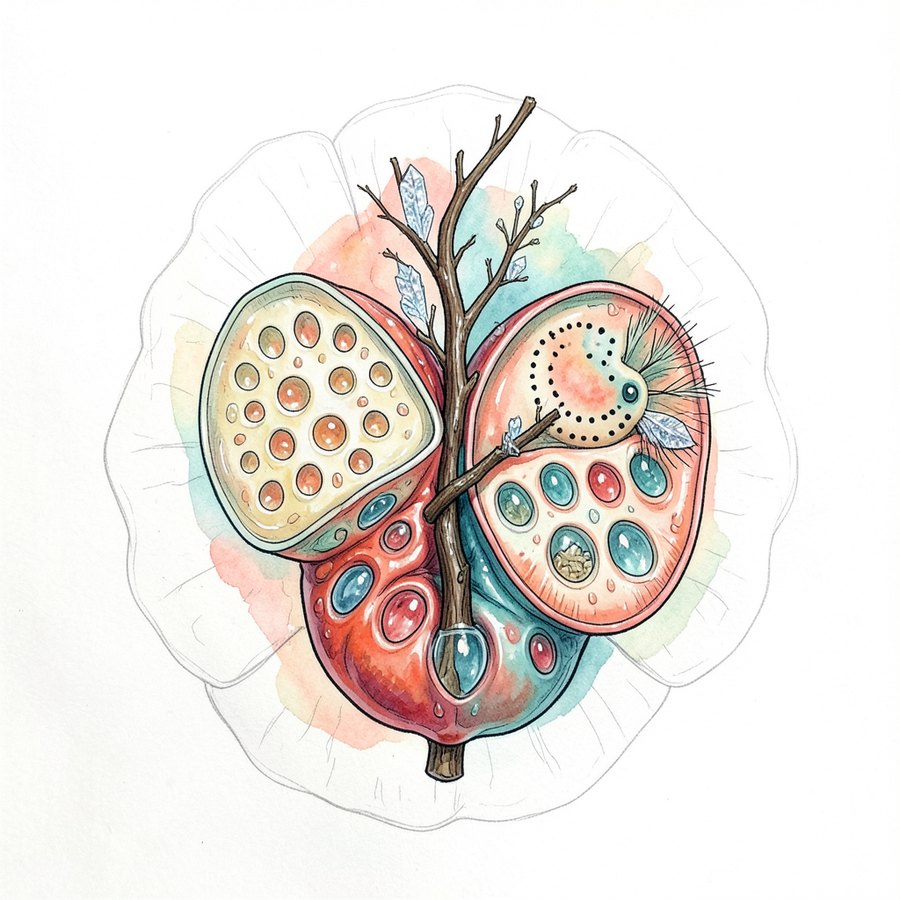
Love draws beings to one particular other and holds them there, by a pull that body and mind build together, and the bond becomes a base from which each can venture out.
Beings drawn to one another become a pair, and the pair holds them.
behavior It seeks out one other of its kind, grows toward it, and once joined it lives and travels as a pair.
Whose nearness have you come to rely on without noticing?
I Dissection
Each organ answers one question about the idea. The framed one, its mechanism, is the dominant organ: the being's class, the one the idea could not lose and stay itself.
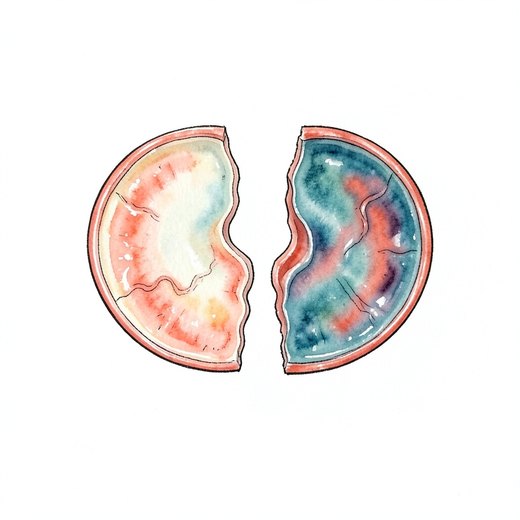
Fig. 1. Kernel
Other half
Which premise, if it were false, would kill this idea?
Beings are drawn to one particular other and want to stay near it, as if each were half of something whole.1
drawn as: other half · view: detached
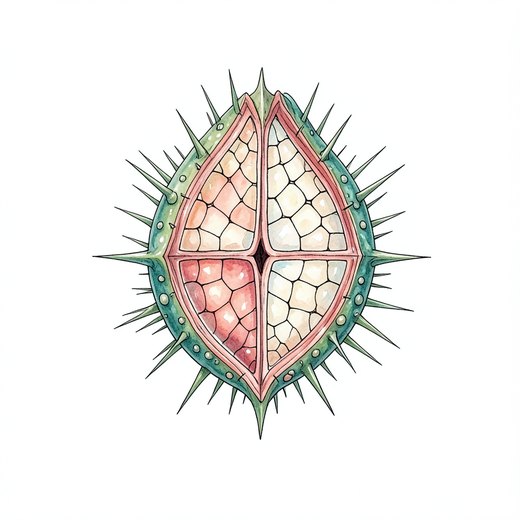
Fig. 2. Boundary
Green-eyed monster
What sets it apart from what it is not, and how does it keep that distinction?
It is set apart from passing desire by its hold on one irreplaceable being, and jealousy guards that hold.2, 3
drawn as: green-eyed monster · view: cross section
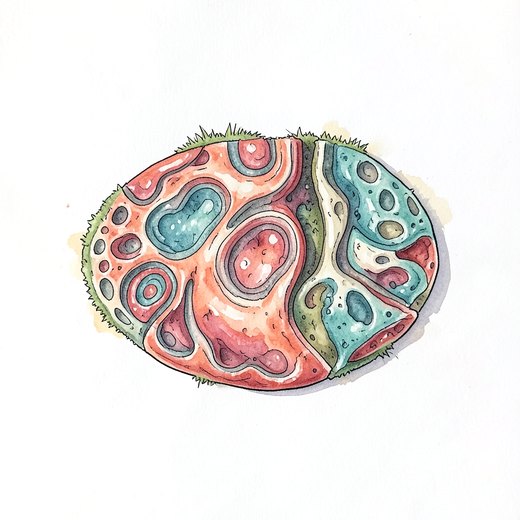
Fig. 3. Intake
Skin to skin
What must it feed on to work? What has to be present, noticed or supplied?
It feeds on nearness, touch and time spent together, on the other's answering look, and on the hope that the feeling is returned.2, 5
drawn as: skin to skin · view: in situ
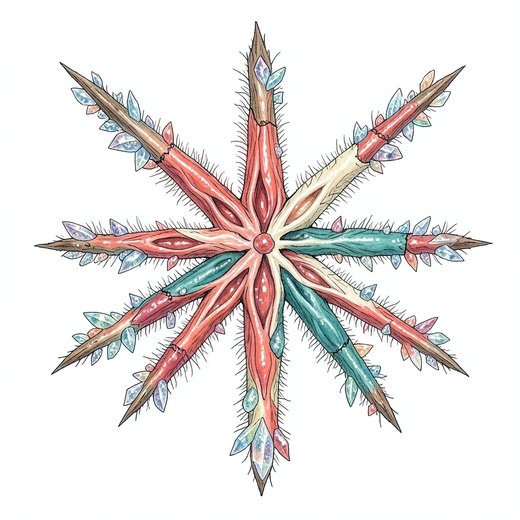
Fig. 4. Mechanism
Crystallization
❦ dominant organHow does it turn what it takes in into what it gives out?
Touch and closeness release oxytocin and vasopressin, which tie reward to one partner, and the mind covers that partner with perfections, as a bare bough left in a salt mine grows crystals.5, 2
drawn as: crystallization · view: magnified
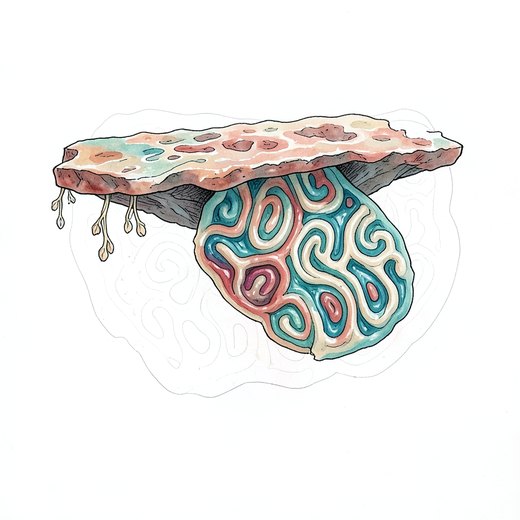
Fig. 5. Output
Secure base
What does it make possible, visible or knowable?
It gives a secure base from which a child or a partner sets out to explore and comes back, and care that outlasts self-interest.4, 3
drawn as: secure base · view: exploded
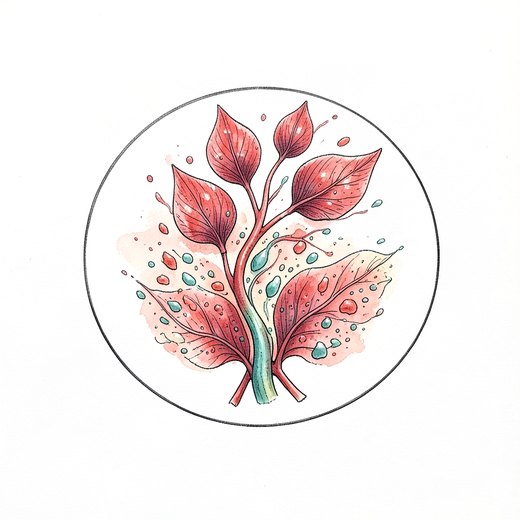
Fig. 6. Dispersal
Red rose
What part of it travels into other minds, ideas and fields, and by what vector?
It travels in songs, poems and stories of couples, in the Symposium's ladder that climbs from one body to beauty itself, and in emblems such as the red rose.1
drawn as: red rose · view: microscope
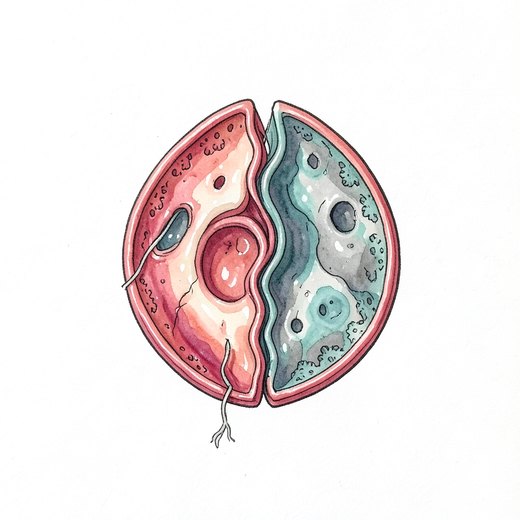
Fig. 7. Decay
Broken heart
What can it not digest, where does it fail, and what does it leave behind for others?
Separation brings protest, then despair, then detachment, and grief can strain the heart itself. Held too tight, it turns into control.3
drawn as: broken heart · view: cast
II Meaning associations
No relations recorded yet.
descent membership food web resemblance or friction
Lineage
A founder, dissected by hand.
Kin
same kind in Roget Lullaby, Solitude, Witnessed Relief, Gazeroot (second reading), The Shared Cell
same kind in Wilkins Faith, Fear, Nostalgia, Reflection, Silence, Volition, Knowing Trust, Witnessed Relief, Gazeroot (second reading), The Swing Door
same kind in WordNet Fear, Nostalgia, Vertigo
same kind in Llull Echolalia, Glossolalia, Memory, Nostalgia, Oblivion, Placebo, Possession, Presence, Prophecy, Solitude, Threshold, Trance, Volition, Knowing Trust, Rushmaker, Tongue Horizon, Witnessed Relief, Gazeroot (second reading), Commemorative Revision, The Shared Cell, Simultaneous Remembering, Hesychology
same phylum Apophenia, Archipelago, Entanglement, Mimesis, Resonance (second reading), Symbol, Shared Breath, Witnessed Relief, Gazeroot (second reading)
same dominant organ Chimera, Dream, Fire, Lullaby, Metamorphosis, Music, Presence, Resonance, Ritual, Storm, Symbol, Winter, Rushmaker, Shared Breath, Self-Ending Order, Gazeroot (second reading), Commemorative Revision, The Swing Door, Foresilence, Simultaneous Remembering, Poetry, Subtractive Phenomenology
Genome
III In the world
Echoes
- the split beings of Aristophanes in the Symposium
- prairie voles that pair for life
- a newborn held skin to skin
- a bough crystallized in a salt mine
IV Record
How it was drawn
its draw 1, a point in the morphospace (laws §8), drawn by flux-2-klein-4b.safetensors.
| axis | value | |
|---|---|---|
| book | pathemata | |
| symmetry | helical | |
| organization | solitary | |
| silhouette | bell | |
| scale | hand | |
| proportion | even latent | |
| growth | swelling | |
| articulation | telescoping latent | |
| openness | spongy latent | |
| skeleton | woody latent | |
| locomotion | rolling latent | |
| pattern | plain latent | |
| coloration | cryptic latent | |
| substance | tincture | |
| surface | pitted | |
| palette | coral | |
| luminosity | none | |
| transparency | transparent latent | |
| gesture | pulses | |
| unity | aggregate latent | |
| modality | unmarked latent | |
| causation | final latent | |
| determinacy | dissolving | |
| fusion | seam | |
| anomaly | echoes | |
| graft | vials | |
| technique | watercolour | |
| viewpoint | above | |
| value | high key latent | |
| balance | unmarked latent | |
| density | unmarked latent | |
| rhythm | clustered | |
| saturation | vivid | |
| appendages | armour plates, petals | |
| anchor (body) | a diatom, a glass shell in two halves perforated with ordered pores | |
| anchor (detail) | the figure-of-eight path of a honeybee's waggle dance, traced in dotted lines |
Sources
- Plato, Symposium (c. 385 BCE)
- Stendhal, De l'amour (1822)
- John Bowlby, Attachment and Loss, volume 1, Attachment (1969)
- Mary D. Salter Ainsworth and others, Patterns of Attachment (1978)
- Thomas R. Insel and Larry J. Young, The Neurobiology of Attachment (Nature Reviews Neuroscience, 2001)
❦