a founder of the codex
Archipelago
Nesodesmia submersa·the Scattered Range
From Greek nesos, island, and desmos, bond, and Latin submersa, sunk under water, islands bound together by what lies beneath the sea.
- Level
- Conceptorganism
- Phylum
- Linkimage schema
- Class
- Kernelits submarine ridge
- Niche
- Symbionta partner
- Mode
- Politicshow it keeps existing
- Stage
- Transindividualtransindividual
- Status
- Living
- Habitat
- Ocean
Its kinds · Roget, 1852: Inorganic Matter · Wilkins, 1668: World · WordNet, 1990: Object · Llull, 1308: I · Elementative
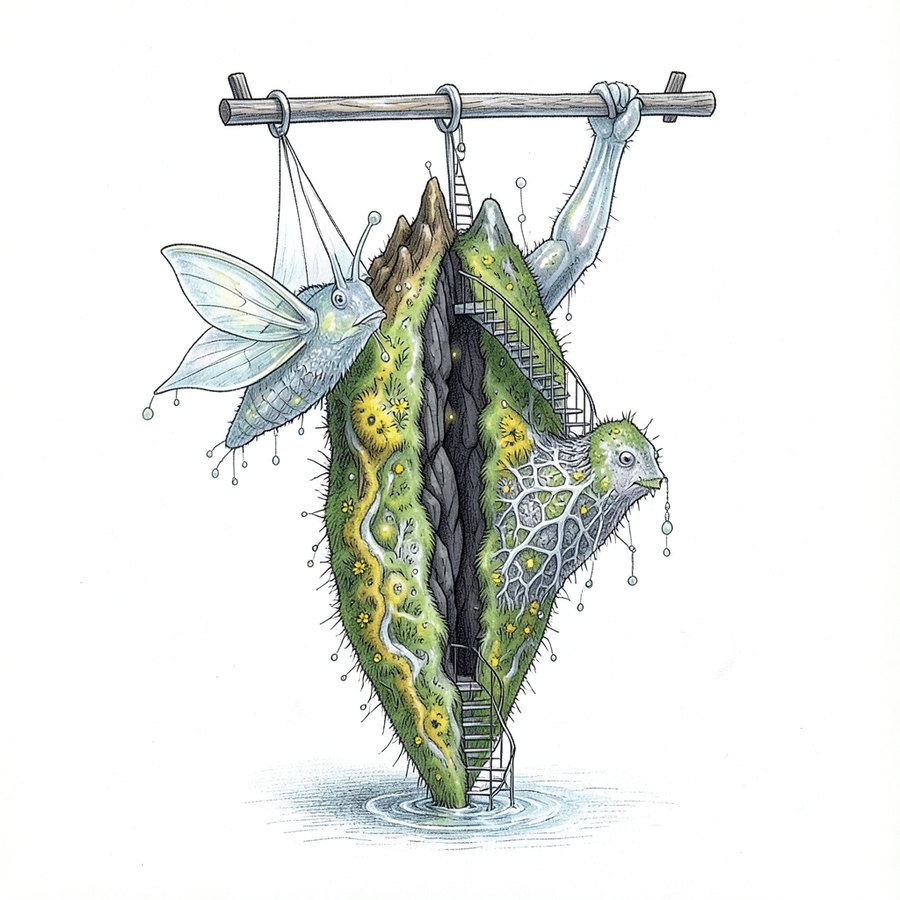
An archipelago is a scatter of islands that are the summits of one submerged range, one body divided by the sea, and its separation breeds kinds found only there.
What the sea scatters is joined beneath it, and each part grows strange in its separation.
behavior It lies spread across the sea in a long curve, each island slowly growing its own kinds, and it sinks back beneath the waves one island at a time.
Which of your scattered parts are joined beneath the surface, and what has each become alone?
I Dissection
Each organ answers one question about the idea. The framed one, its kernel, is the dominant organ: the being's class, the one the idea could not lose and stay itself.
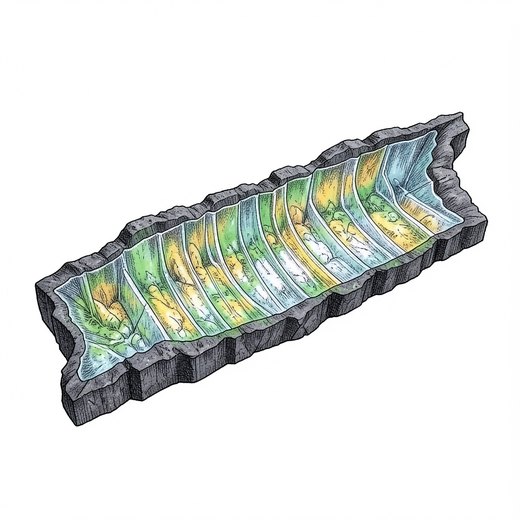
Fig. 1. Kernel
Submarine ridge
❦ dominant organWhich premise, if it were false, would kill this idea?
Its islands are the summits of one range beneath the sea, a chain built over a hotspot or an arc above a sinking plate, so the sea divides what is one body below.1
drawn as: submarine ridge · view: transparent
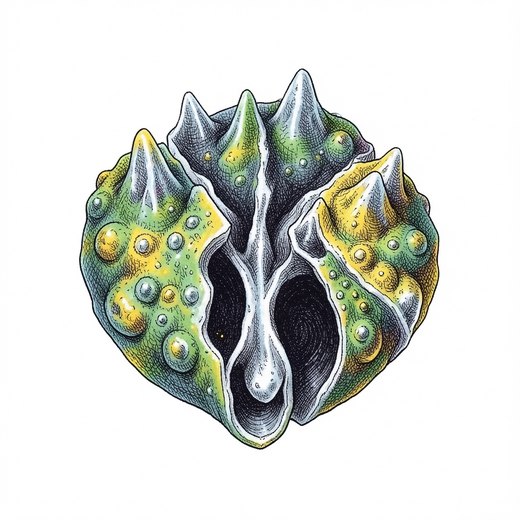
Fig. 2. Boundary
Deep strait
What sets it apart from what it is not, and how does it keep that distinction?
Straits too deep to have run dry in the ice ages keep its islands apart, so the plants and animals of each stay separate from those of the next.2
drawn as: deep strait · view: detached
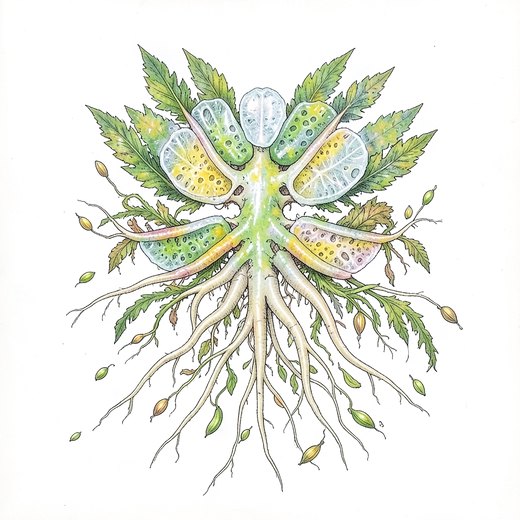
Fig. 3. Intake
Drift seed
What must it feed on to work? What has to be present, noticed or supplied?
It feeds on whatever crosses the water, seeds riding currents, birds blown off course and rafts of matted plants, and the life of each island begins from these few arrivals.2
drawn as: drift seed · view: pinned
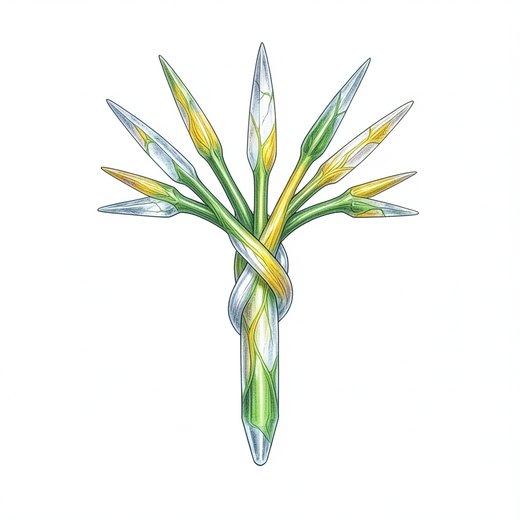
Fig. 4. Mechanism
Adaptive radiation
How does it turn what it takes in into what it gives out?
On each island a few arrivals breed apart and adapt to its ground, so one stock splits into many kinds, as among the finches and tortoises of the Galápagos.2
drawn as: adaptive radiation · view: cast
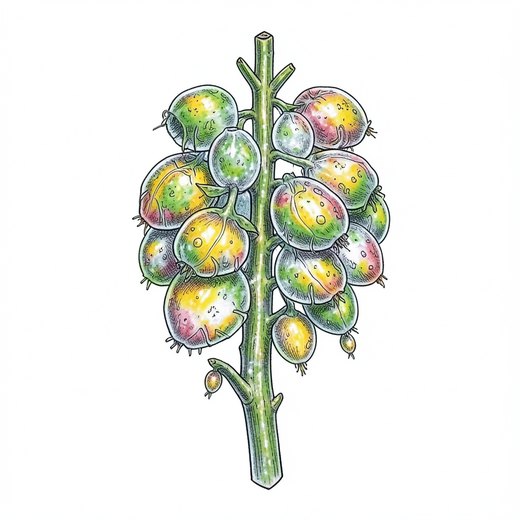
Fig. 5. Output
Giant tortoise
What does it make possible, visible or knowable?
It breeds kinds found only on its islands, giant tortoises, dwarf elephants and flightless birds, and these island kinds were among the first clues to how species form.2
drawn as: giant tortoise · view: series
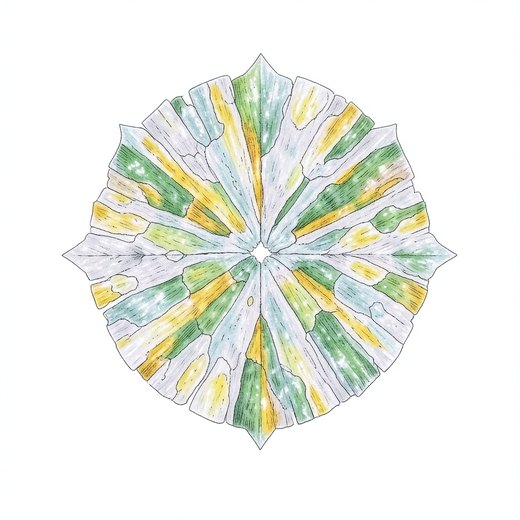
Fig. 6. Dispersal
Kula ring
What part of it travels into other minds, ideas and fields, and by what vector?
It travels as the kula ring, where shell necklaces and armbands circle the islands in opposite directions, and in thought as a way of joining scattered places while each keeps its own nature.4, 5
drawn as: kula ring · view: pressed
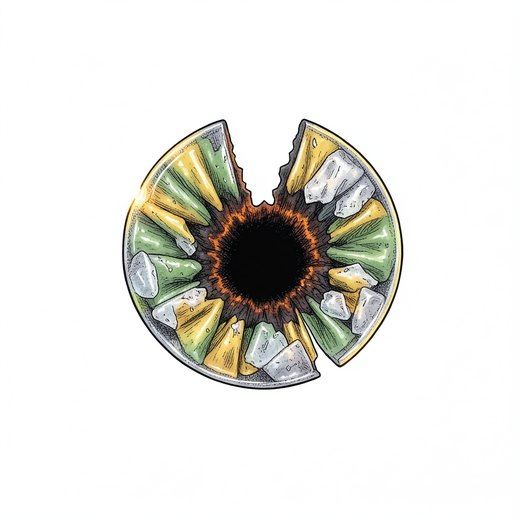
Fig. 7. Decay
Atoll
What can it not digest, where does it fail, and what does it leave behind for others?
As its volcanoes cool and drift away from their source they sink, and each island ends as a ring of coral round an empty lagoon, then as a drowned, flat-topped seamount.3
drawn as: atoll · view: magnified
II Meaning associations
No relations recorded yet.
descent membership food web resemblance or friction
Lineage
A founder, dissected by hand.
Kin
same kind in Roget Ash, Clay, Cloud, Diamond, Erosion, Fire, Frost, Lake, Rain, River, Salt, Sand, Storm, Wind
same kind in Wilkins Erosion, Possession
same kind in WordNet Cloud, Lake, River
same kind in Llull Amber, Ash, Clay, Cloud, Diamond, Emergence, Entanglement, Entropy, Erosion, Fire, Frost, Iridescence, Lake, Petrification, Rain, Reflection, Resonance, Resonance (second reading), River, Salt, Sand, Storm, Weightlessness, Wind, Winter, Self-Ending Order
same phylum Apophenia, Entanglement, Love, Mimesis, Resonance (second reading), Symbol, Shared Breath, Witnessed Relief, Gazeroot (second reading)
same dominant organ Entanglement, Entelechy, Eternity, Geomancy, Qualia, Salt, Syllable, Symmetry, Vertigo, Volition, Weightlessness, Knowing Trust, Hesychology
Genome
- island
- isolation
- ridge
- relation also in Gazeroot (second reading)
- divergence
III In the world
Echoes
- the Galápagos
- the islands of Hawaii
- the kula ring of the Trobriand Islands
- the Aegean, the first sea called an archipelago
IV Record
How it was drawn
its draw 5, a point in the morphospace (laws §8), drawn by flux-2-klein-4b.safetensors.
| axis | value | |
|---|---|---|
| book | nidi | |
| symmetry | fractal | |
| organization | chained | |
| silhouette | beam | |
| scale | immense | |
| proportion | sheared latent | |
| growth | faceted | |
| articulation | jointed latent | |
| openness | sheet latent | |
| skeleton | unmarked latent | |
| locomotion | unmarked latent | |
| pattern | rosettes latent | |
| coloration | eyespots latent | |
| substance | ice | |
| surface | filamentous | |
| palette | meadow | |
| luminosity | points | |
| transparency | layered | |
| gesture | sinks | |
| unity | unmarked latent | |
| modality | possible latent | |
| causation | unmarked latent | |
| determinacy | doubled | |
| fusion | mirrored | |
| anomaly | budding | |
| graft | stair | |
| technique | hatching | |
| viewpoint | three quarter | |
| value | chiaroscuro latent | |
| balance | top heavy | |
| density | unmarked latent | |
| rhythm | unmarked latent | |
| saturation | unmarked latent | |
| appendages | beaded filaments, sails | |
| anchor (body) | a sea angel, a translucent sea snail swimming on two wing-like lobes | |
| anchor (detail) | a slime mold spreading as a veined network across a surface |
Sources
- J. Tuzo Wilson, A Possible Origin of the Hawaiian Islands (Canadian Journal of Physics, 1963)
- Alfred Russel Wallace, Island Life (1880)
- Charles Darwin, The Structure and Distribution of Coral Reefs (1842)
- Bronisław Malinowski, Argonauts of the Western Pacific (1922)
- Édouard Glissant, Traité du Tout-Monde (1997), on archipelagic thought
❦