a founder of the codex
Vertigo
Ilingia praeceps·the Reeling Edge
From Greek ilinx, a whirlpool and the whirling of vertigo, and Latin praeceps, headlong and steep, the whirl that comes at a steep edge.
- Level
- Conceptorganism
- Phylum
- Verticalityimage schema
- Class
- Kernelits vection
- Niche
- Extremophileabsence
- Mode
- Attachmenthow it keeps existing
- Stage
- Matureindividuated
- Status
- Living
- Habitat
- Body
Its kinds · Roget, 1852: Organic Matter · Wilkins, 1668: Disease · WordNet, 1990: Feeling · Llull, 1308: G · Sensitive
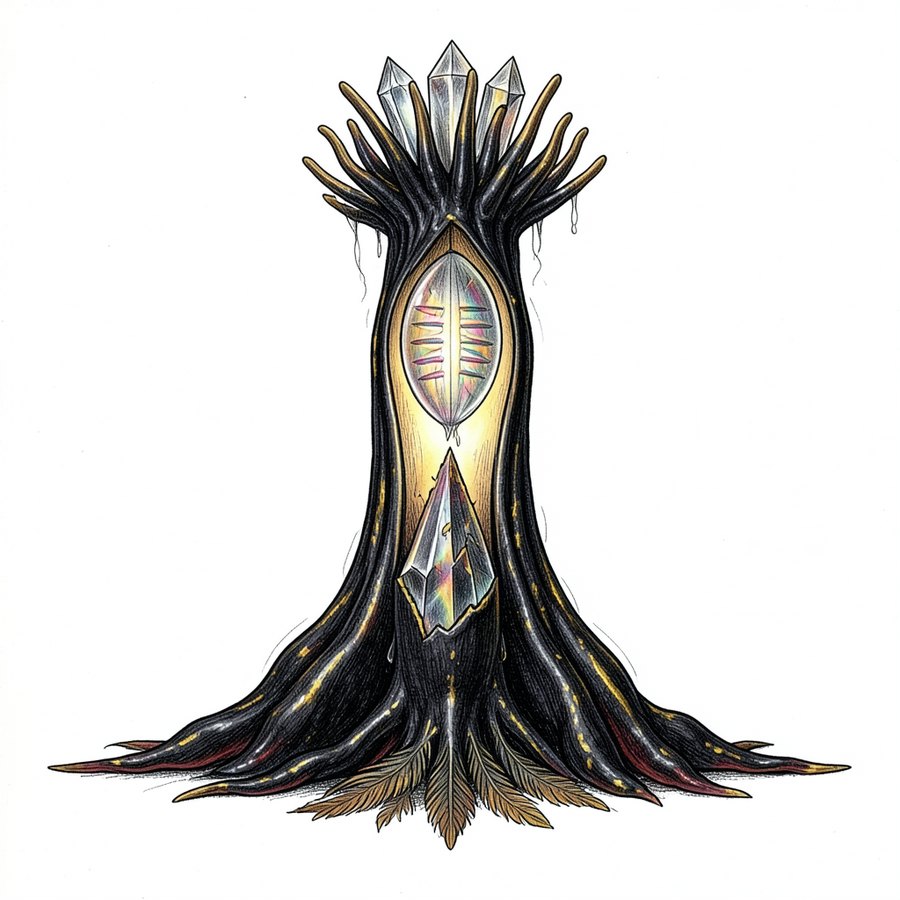
Vertigo is the felt loss of ground when the senses disagree about which way is down, and at a height it joins the fear of falling to a pull toward the drop.
At an edge the fear of falling and the wish to fall are one feeling.
behavior Clings to high edges and spins in place, tilting further the longer it looks down.
At the edge of a drop, which part of you leans back and which part leans forward?
I Dissection
Each organ answers one question about the idea. The framed one, its kernel, is the dominant organ: the being's class, the one the idea could not lose and stay itself.
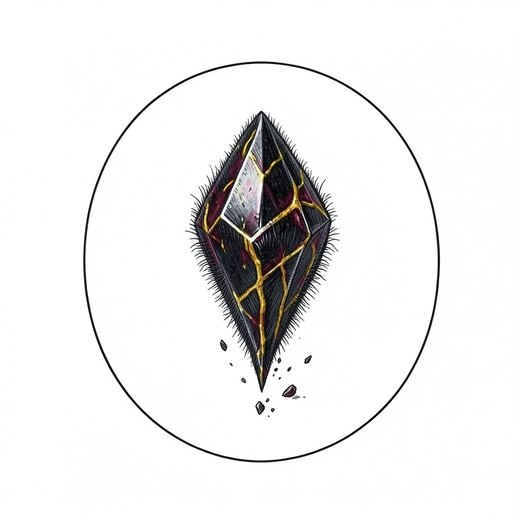
Fig. 1. Kernel
Vection
❦ dominant organWhich premise, if it were false, would kill this idea?
Vertigo is the false sense that the body or the world is moving, the ground slipping away while everything stands still.1
drawn as: vection · view: microscope
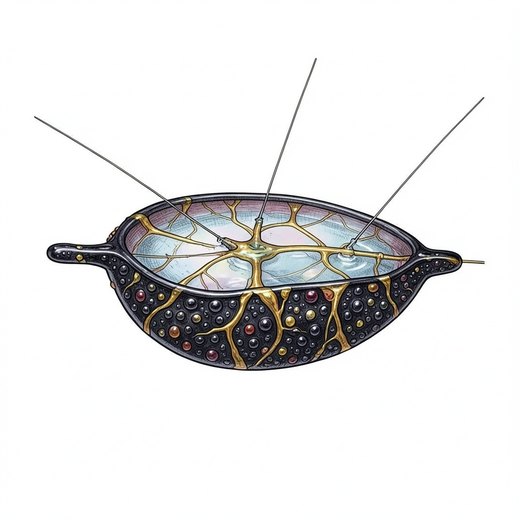
Fig. 2. Boundary
Plumb line
What sets it apart from what it is not, and how does it keep that distinction?
It is set against balance, the agreement of the inner ear, the eyes and the feet about which way is down, and it begins where that agreement breaks.1
drawn as: plumb line · view: transparent
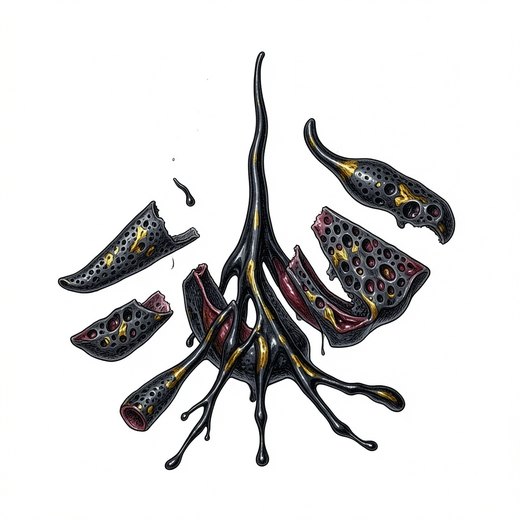
Fig. 3. Intake
Visual cliff
What must it feed on to work? What has to be present, noticed or supplied?
It feeds on heights and voids, where the nearest still thing lies too far below for the eyes to steady the body, and on spinning and swaying.1
drawn as: visual cliff · view: pinned
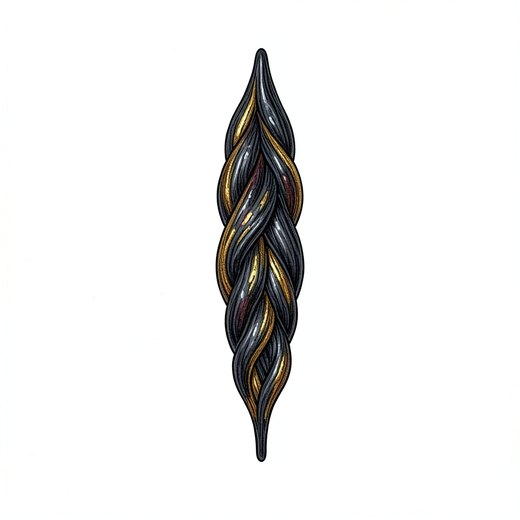
Fig. 4. Mechanism
Sensory conflict
How does it turn what it takes in into what it gives out?
The inner ear, the eyes and the muscles report different motions, and the brain, caught between them, answers with a sense of turning, nausea and the urge to grip.2, 1
drawn as: sensory conflict · view: series
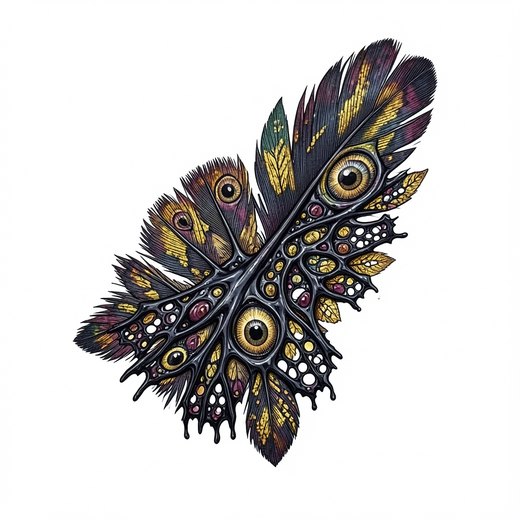
Fig. 5. Output
Dizziness of freedom
What does it make possible, visible or knowable?
It gives a dizzy awe, the pull and the fear of the drop at once, which Kierkegaard took as the image of anxiety, the dizziness of freedom.4
drawn as: dizziness of freedom · view: pressed
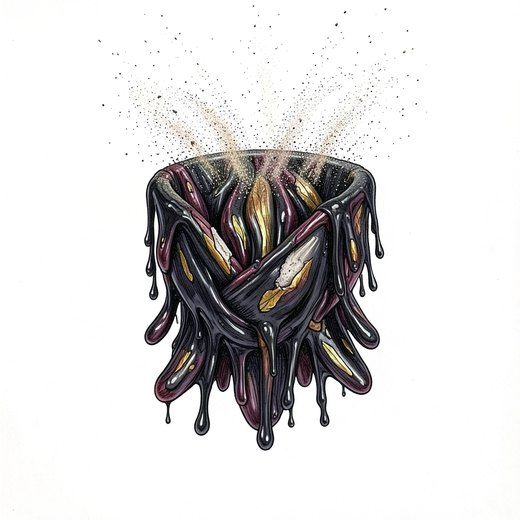
Fig. 6. Dispersal
Call of the void
What part of it travels into other minds, ideas and fields, and by what vector?
It travels as the image of the fall, the void below that seems to call one down, and as games that seek it on swings, rides and whirling dances.5, 3
drawn as: call of the void · view: in situ
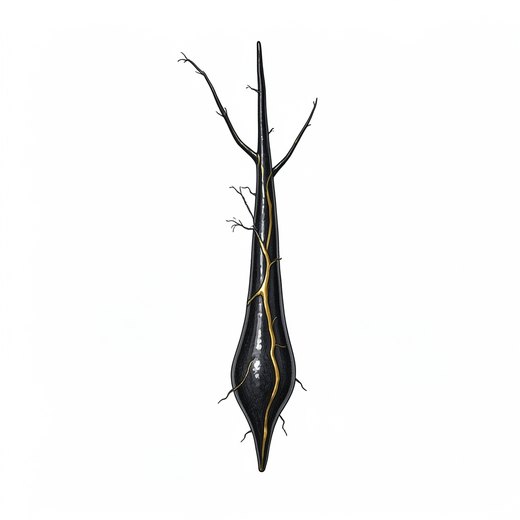
Fig. 7. Decay
Sea legs
What can it not digest, where does it fail, and what does it leave behind for others?
It wears off with repetition, as sailors find their sea legs and dancers learn to spin, and leaves a body steadier at the edge.1
drawn as: sea legs · view: detached
II Meaning associations
No relations recorded yet.
descent membership food web resemblance or friction
Lineage
A founder, dissected by hand.
Kin
same kind in Roget Amber, Breath, Chiaroscuro, Chimera, Entelechy, Iridescence, Music, Silence, Tinnitus, Shared Breath
same kind in Wilkins Placebo, Tinnitus
same kind in WordNet Fear, Love, Nostalgia
same kind in Llull Aura, Awakening, Chimera, Fear, Qualia, Silence, Tinnitus, Babelhum, Shared Breath, The Swing Door
same phylum Awakening, Cloud, Erosion, Faith, Innocence, Miracle, Rain, Weightlessness
same dominant organ Archipelago, Entanglement, Entelechy, Eternity, Geomancy, Qualia, Salt, Syllable, Symmetry, Volition, Weightlessness, Knowing Trust, Hesychology
Genome
- dizziness
- height
- imbalance
- awe
- falling
III In the world
Echoes
- Alfred Hitchcock's Vertigo (1958)
- looking down from a cliff edge
- a child spinning until the room turns
- a sailor finding sea legs
IV Record
How it was drawn
its draw 4, a point in the morphospace (laws §8), drawn by flux-2-klein-4b.safetensors.
| axis | value | |
|---|---|---|
| book | flora | |
| symmetry | asymmetric | |
| organization | chained | |
| silhouette | creeping | |
| scale | hand | |
| proportion | tapering | |
| growth | faceted | |
| articulation | telescoping latent | |
| openness | lattice latent | |
| skeleton | unmarked latent | |
| locomotion | rolling latent | |
| pattern | gradient latent | |
| coloration | plain latent | |
| substance | slime | |
| surface | pleated | |
| palette | obsidian | |
| luminosity | inner glow | |
| transparency | opaque latent | |
| gesture | quivers | |
| unity | aggregate latent | |
| modality | contingent latent | |
| causation | formal latent | |
| determinacy | crisp latent | |
| fusion | nested | |
| anomaly | sideways | |
| graft | origami | |
| technique | hatching | |
| viewpoint | below | |
| value | high key latent | |
| balance | top heavy | |
| density | intricate latent | |
| rhythm | alternating | |
| saturation | accent latent | |
| appendages | plumes | |
| anchor (body) | a sea anemone, a column crowned with rings of tentacles | |
| anchor (detail) | a comb jelly, an oval glassy body with eight rows of beating iridescent combs |
Sources
- Thomas Brandt, Vertigo: Its Multisensory Syndromes (1991)
- J. T. Reason and J. J. Brand, Motion Sickness (1975)
- Roger Caillois, Man, Play and Games (1958)
- Søren Kierkegaard, The Concept of Anxiety (1844)
- Milan Kundera, The Unbearable Lightness of Being (1984)
❦