a founder of the codex
Possession
Enthearia inquilina·the Ridden Vessel
From Greek entheos, with a god within, and Latin inquilinus, a lodger, a body lodging a presence that is other than itself.
- Level
- Conceptorganism
- Phylum
- Containerimage schema
- Class
- Boundaryits amnesic barrier
- Niche
- Parasitethe mechanism of a host idea
- Mode
- Religionhow it keeps existing
- Stage
- Matureindividuated
- Status
- Living
- Habitat
- Body
Its kinds · Roget, 1852: Religious Affections · Wilkins, 1668: World · WordNet, 1990: State · Llull, 1308: E · Man
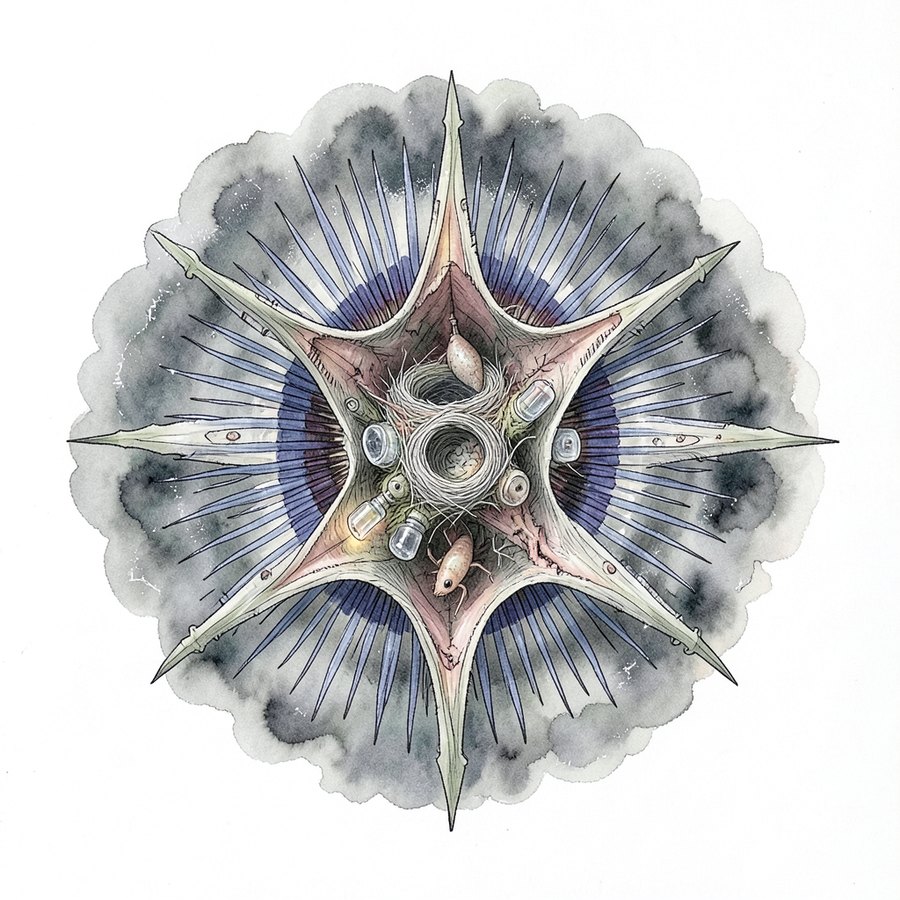
A person can be inhabited by another presence that moves and speaks through the body, and a group that recognises the tenant lets it say and demand what the host alone would keep unsaid.
A body can lend itself to another presence, and that presence says what the host alone keeps unsaid.
behavior It lies quiet in its host for long stretches, then rises at a certain rhythm and moves the whole body as its own.
When did a voice speak through you that you would hesitate to call your own?
I Dissection
Each organ answers one question about the idea. The framed one, its boundary, is the dominant organ: the being's class, the one the idea could not lose and stay itself.
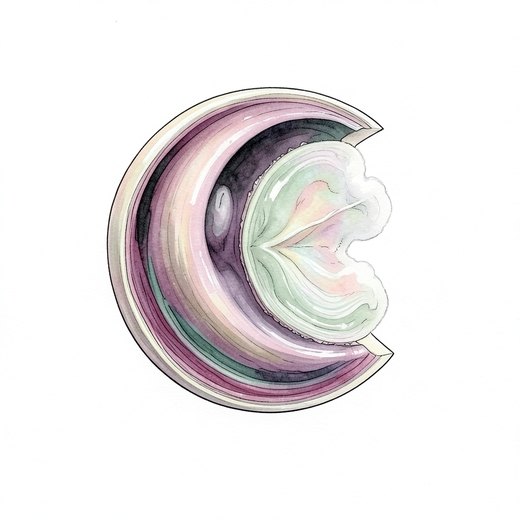
Fig. 1. Kernel
Indwelling
Which premise, if it were false, would kill this idea?
A person can be inhabited by another presence, a spirit, a god or a force, which acts and speaks through the body while the person's own self steps aside.1, 2
drawn as: indwelling · view: cross section
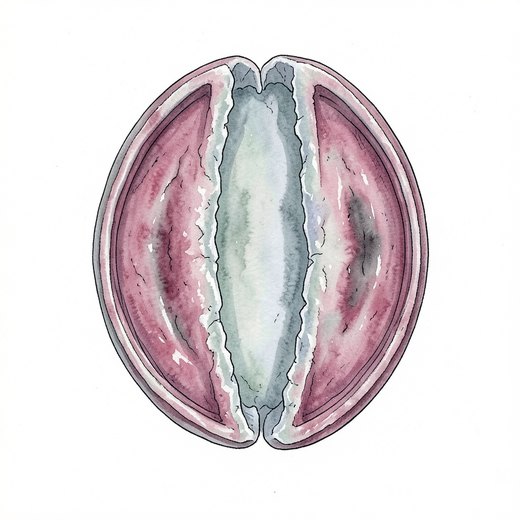
Fig. 2. Boundary
Amnesic barrier
❦ dominant organWhat sets it apart from what it is not, and how does it keep that distinction?
It is set apart from trance by its tenant, who has a name, a voice and a manner of its own. The host usually remembers nothing of what the tenant did.1, 3
drawn as: amnesic barrier · view: cast
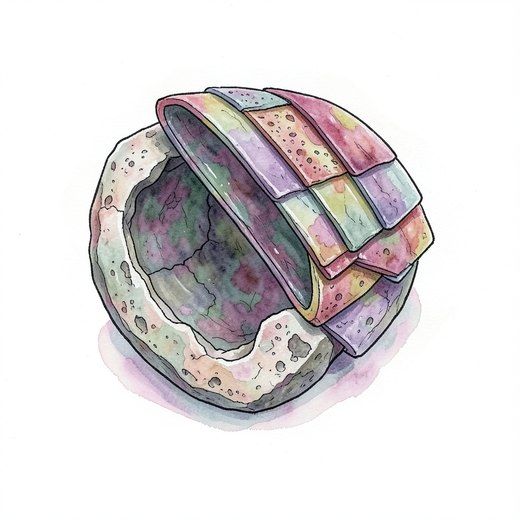
Fig. 3. Intake
Swept house
What must it feed on to work? What has to be present, noticed or supplied?
It feeds on a host left open by illness, grief or strain, on a lore that names the spirits, and on a group ready to receive them.2, 5
drawn as: swept house · view: at work
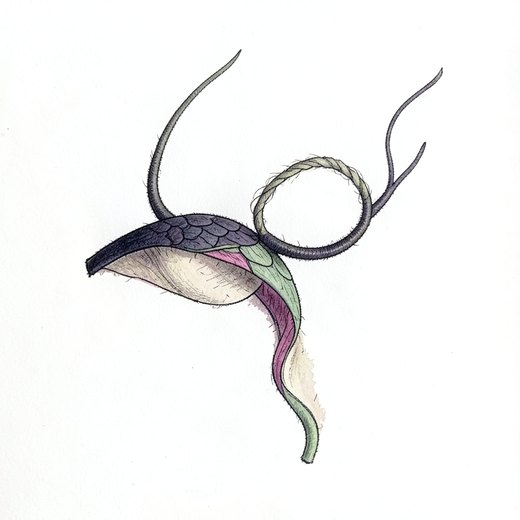
Fig. 4. Mechanism
Ridden horse
How does it turn what it takes in into what it gives out?
The rite calls the spirit with its own song or rhythm, the spirit mounts the host as a rider mounts a horse, and the group then speaks and bargains with it.3, 2
drawn as: ridden horse · view: detached
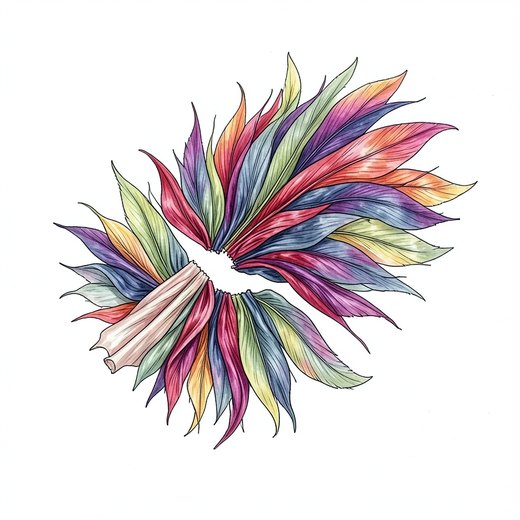
Fig. 5. Output
Dancing god
What does it make possible, visible or knowable?
It lets spirits appear among the living, dressed, dancing and speaking through their hosts. Through them, people with little say can make demands that others meet.2, 3
drawn as: dancing god · view: exploded
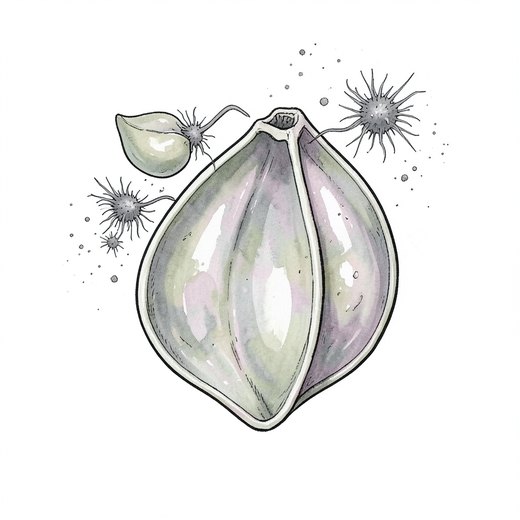
Fig. 6. Dispersal
Outbreak
What part of it travels into other minds, ideas and fields, and by what vector?
It spreads from host to host within a group, as among the nuns of Loudun, and initiation turns each host into an adept who draws in others.4, 2
drawn as: outbreak · view: cast
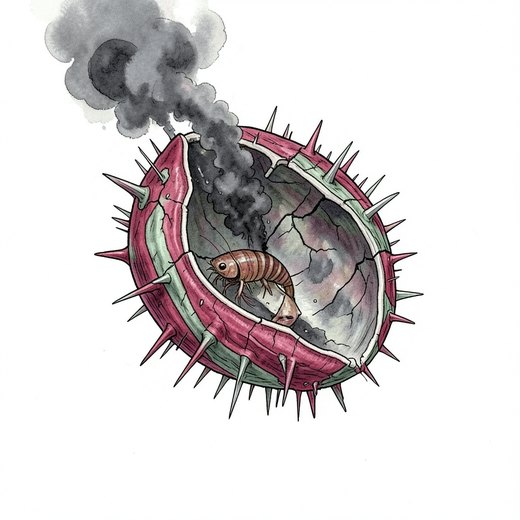
Fig. 7. Decay
Exorcism
What can it not digest, where does it fail, and what does it leave behind for others?
Exorcism drives the tenant out, and medicine reads the same signs as dissociation or illness. At Loudun the public exorcisms became theatre for crowds.4, 1
drawn as: exorcism · view: magnified
II Meaning associations
No relations recorded yet.
descent membership food web resemblance or friction
Lineage
A founder, dissected by hand.
Kin
same kind in Roget Geomancy, Miracle, Ritual, Trance
same kind in Wilkins Archipelago, Erosion
same kind in WordNet Presence, Solitude, Threshold, Tinnitus, Trance, Weightlessness, The Shared Cell
same kind in Llull Echolalia, Glossolalia, Love, Memory, Nostalgia, Oblivion, Placebo, Presence, Prophecy, Solitude, Threshold, Trance, Volition, Knowing Trust, Rushmaker, Tongue Horizon, Witnessed Relief, Gazeroot (second reading), Commemorative Revision, The Shared Cell, Simultaneous Remembering, Hesychology
same phylum Amber, Clay, Dream, Lake, Placebo, Solitude, Tinnitus, Winter, Knowing Trust, The Shared Cell
same dominant organ Amber, Aura, Cloud, Diamond, Equinox, Frost, Reflection, Solitude, Threshold, Tongue Horizon, The Shared Cell
Genome
- tenant
- host
- spirit also in Glossolalia
- displacement
- voice also in Breath, Echolalia, Lullaby, Poetry, Shared Breath
III In the world
Echoes
- a lwa riding its horse in Haitian Vodou
- the zar spirits of northern Sudan
- the possessed nuns of Loudun
- the question "what possessed you?"
IV Record
How it was drawn
its draw 5, a point in the morphospace (laws §8), drawn by flux-2-klein-4b.safetensors.
| axis | value | |
|---|---|---|
| book | nidi | |
| symmetry | fractal | |
| organization | segmented | |
| silhouette | star | |
| scale | immense | |
| proportion | compressed latent | |
| growth | regenerated | |
| articulation | tethered latent | |
| openness | hollow | |
| skeleton | spicules latent | |
| locomotion | sessile latent | |
| pattern | labyrinth latent | |
| coloration | countershaded | |
| substance | silk | |
| surface | spined | |
| palette | rose | |
| luminosity | inner glow | |
| transparency | clouded latent | |
| gesture | closes | |
| unity | integral latent | |
| modality | unmarked latent | |
| causation | final latent | |
| determinacy | doubled latent | |
| fusion | nested | |
| anomaly | tenant | |
| graft | vials | |
| technique | watercolour | |
| viewpoint | profile | |
| value | high key latent | |
| balance | unmarked latent | |
| density | sparse latent | |
| rhythm | regular | |
| saturation | muted latent | |
| appendages | bladders, valves | |
| anchor (body) | a passionflower, a corona of fine filaments in rings around its centre | |
| anchor (detail) | a cave swiftlet's nest, a cup of hardened saliva fixed to rock |
Sources
- Traugott Konstantin Oesterreich, Die Besessenheit (1921)
- I. M. Lewis, Ecstatic Religion: An Anthropological Study of Spirit Possession and Shamanism (1971)
- Janice Boddy, Wombs and Alien Spirits: Women, Men, and the Zar Cult in Northern Sudan (1989)
- Michel de Certeau, La possession de Loudun (1970)
- Matthew 12:43-45
❦