a founder of the codex
Glossolalia
Lalopneuma effundens·the Fervent Babble
From Greek lalein, to babble, and pneuma, breath and spirit, and Latin effundens, pouring out, a spirit poured out as sound.
- Level
- Conceptorganism
- Phylum
- Forceimage schema
- Class
- Outputits outpouring
- Niche
- Parasitethe mechanism of a host idea
- Mode
- Religionhow it keeps existing
- Stage
- Matureindividuated
- Status
- Living
- Habitat
- Ritual
Its kinds · Roget, 1852: Communication of Ideas · Wilkins, 1668: Discourse · WordNet, 1990: Communication · Llull, 1308: E · Man
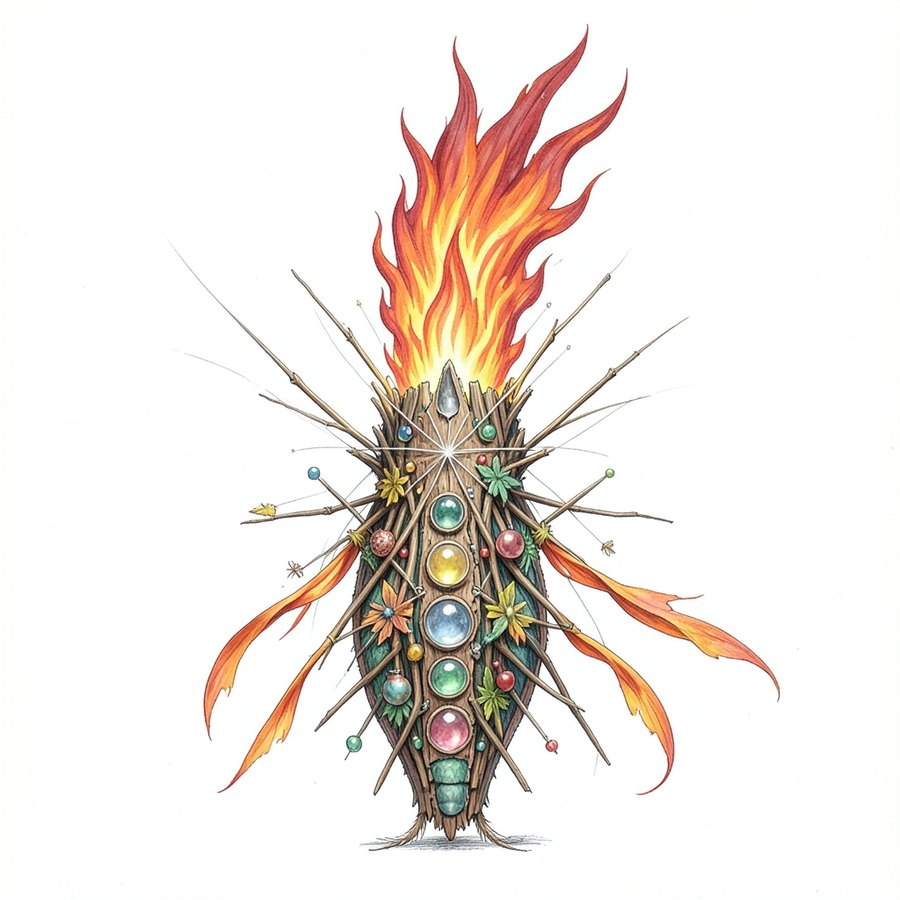
Glossolalia is fluent speech in an invented tongue, built from the speaker's own sounds in the rise and fall of talk, and its fervour reaches hearers ahead of any meaning.
Sound can carry feeling ahead of meaning, and a voice let go can feel like another voice speaking through it.
behavior It gathers pressure in a crowd, bursts into a stream of bright sound, and quiets when the crowd disperses.
What does your voice say when you let it run ahead of your words?
I Dissection
Each organ answers one question about the idea. The framed one, its output, is the dominant organ: the being's class, the one the idea could not lose and stay itself.
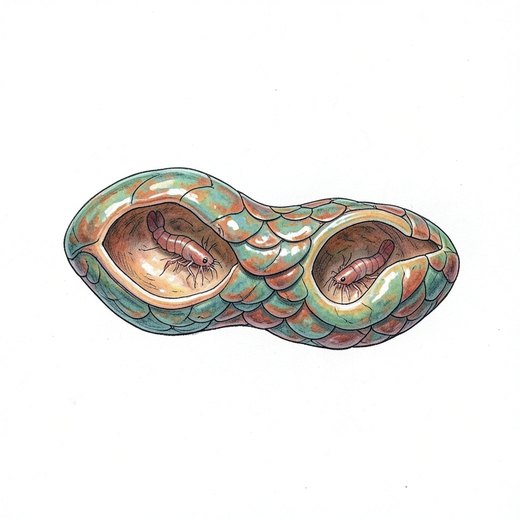
Fig. 1. Kernel
Intonation contour
Which premise, if it were false, would kill this idea?
Sound can carry feeling apart from meaning. Syllables strung in the rise and fall of speech convey fervour, pleading or joy by sound alone.3
drawn as: intonation contour · view: exploded
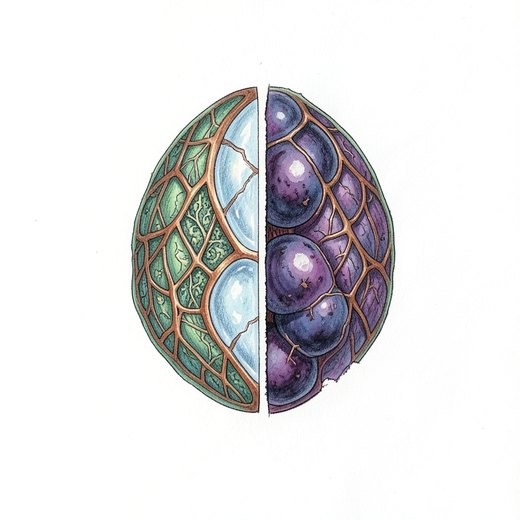
Fig. 2. Boundary
New wine
What sets it apart from what it is not, and how does it keep that distinction?
Its hearers set it apart from drunken babble. At the first Pentecost some in the crowd mocked the speakers as full of new wine, while others heard their own languages.1
drawn as: new wine · view: in situ
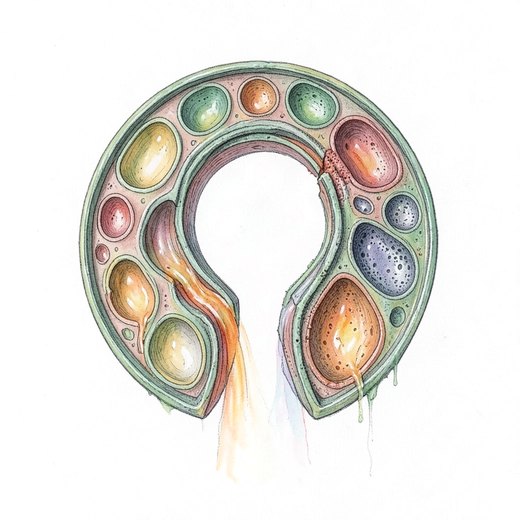
Fig. 3. Intake
Imposition of hands
What must it feed on to work? What has to be present, noticed or supplied?
It is received in company. Hands laid on in prayer, the urging of the group and the sound of others already speaking draw a newcomer to let the voice go.1, 3
drawn as: imposition of hands · view: transparent
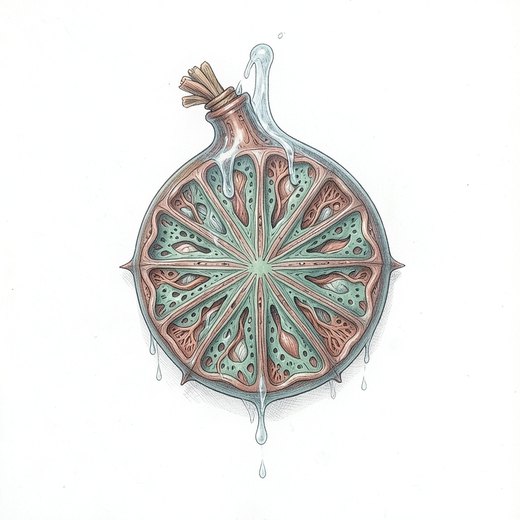
Fig. 4. Mechanism
Frontal lobes
How does it turn what it takes in into what it gives out?
Activity falls in the frontal lobes, which plan and steer speech, while the voice runs on, so the speech flows uncomposed.4
drawn as: frontal lobes · view: transparent
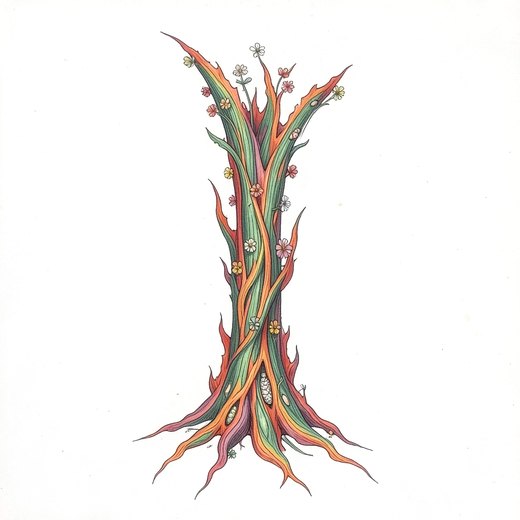
Fig. 5. Output
Outpouring
❦ dominant organWhat does it make possible, visible or knowable?
It gives the speaker a feeling of release and of being spoken through, and to the gathering it is a sign that the Spirit has come.1, 4
drawn as: outpouring · view: exploded
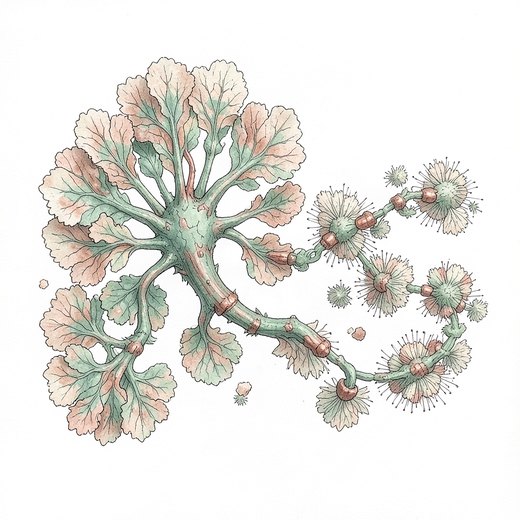
Fig. 6. Dispersal
Sound poem
What part of it travels into other minds, ideas and fields, and by what vector?
It travels by example from one fervent gathering to the next across the churches of the world, and into art as the sound poem, which Hugo Ball chanted in Zurich in 1916.5, 3
drawn as: sound poem · view: magnified
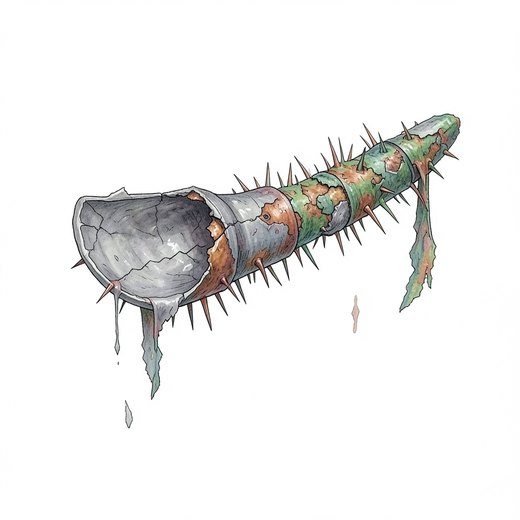
Fig. 7. Decay
Clanging cymbal
What can it not digest, where does it fail, and what does it leave behind for others?
It edifies the speaker alone unless someone interprets it. Paul ranked it below plain speech, and likened tongues spoken without love to a clanging cymbal.2
drawn as: clanging cymbal · view: series
II Meaning associations
No relations recorded yet.
descent membership food web resemblance or friction
Lineage
A founder, dissected by hand.
Kin
same kind in Roget Echolalia, Pointillism, Syllable, Symbol, Babelhum, Poetry
same kind in Wilkins Echolalia, Prophecy, Syllable, Symbol, Babelhum, Tongue Horizon, Poetry
same kind in WordNet Chiaroscuro, Echolalia, Lullaby, Music, Prophecy, Syllable, Symbol, Babelhum, Poetry
same kind in Llull Echolalia, Love, Memory, Nostalgia, Oblivion, Placebo, Possession, Presence, Prophecy, Solitude, Threshold, Trance, Volition, Knowing Trust, Rushmaker, Tongue Horizon, Witnessed Relief, Gazeroot (second reading), Commemorative Revision, The Shared Cell, Simultaneous Remembering, Hesychology
same phylum Diamond, Fear, Fire, Oblivion, Spring, Storm, Volition, Rushmaker, Self-Ending Order
same dominant organ Apophenia, Awakening, Chiaroscuro, Echolalia, Emergence, Erosion, Iridescence, Mimesis, Nostalgia, Placebo, Rain, Spring, Babelhum, Afterlistening, Tide of Days
Genome
- sound also in Tongue Horizon
- fervour
- release also in Oblivion, Spring, Storm, Weightlessness
- spirit also in Possession
- babble
III In the world
Echoes
- a Pentecostal prayer meeting
- the first Pentecost in Jerusalem
- Hugo Ball's Gadji beri bimba at the Cabaret Voltaire
- a child babbling to itself before it has words
IV Record
How it was drawn
its draw 5, a point in the morphospace (laws §8), drawn by flux-2-klein-4b.safetensors.
| axis | value | |
|---|---|---|
| book | uranographia | |
| symmetry | radial 8 | |
| organization | solitary | |
| silhouette | fusiform | |
| scale | hand | |
| proportion | swollen latent | |
| growth | budding | |
| articulation | tethered latent | |
| openness | spongy latent | |
| skeleton | test latent | |
| locomotion | gliding latent | |
| pattern | speckled latent | |
| coloration | warning latent | |
| substance | paper | |
| surface | crackled | |
| palette | verdigris | |
| luminosity | points | |
| transparency | transparent latent | |
| gesture | emits | |
| unity | fragment latent | |
| modality | necessary latent | |
| causation | efficient | |
| determinacy | unmarked latent | |
| fusion | sprouting | |
| anomaly | sideways | |
| graft | lenses | |
| technique | silverpoint | |
| viewpoint | motion | |
| value | chiaroscuro | |
| balance | unmarked latent | |
| density | intricate latent | |
| rhythm | unmarked latent | |
| saturation | vivid | |
| appendages | valves, frills | |
| anchor (body) | a bowerbird's bower, an avenue of sticks decorated with collected bright objects | |
| anchor (detail) | a Chladni figure, sand gathered into the nodal lines of a vibrating plate |
Sources
- The Acts of the Apostles, 2:1-13 and 19:6
- Paul, First Letter to the Corinthians, chapters 13 and 14
- William J. Samarin, Tongues of Men and Angels: The Religious Language of Pentecostalism (1972)
- Andrew B. Newberg and others, The Measurement of Regional Cerebral Blood Flow during Glossolalia: A Preliminary SPECT Study (Psychiatry Research: Neuroimaging, 2006)
- Hugo Ball, Flight Out of Time: A Dada Diary (1927), on the sound poems of 1916
❦