a founder of the codex
Prophecy
Mantipolypus praesens·the Foreseeing Polyp
From Greek mantis, a seer, and polypous, many-footed, and Latin praesens, present, for a seer that reads what is coming in what is here.
- Level
- Conceptorganism
- Phylum
- Pathimage schema
- Class
- Intakeits augury
- Niche
- Extremophileabsence
- Mode
- Religionhow it keeps existing
- Stage
- Matureindividuated
- Status
- Living
- Habitat
- Ritual
Its kinds · Roget, 1852: Formation of Ideas · Wilkins, 1668: Discourse · WordNet, 1990: Communication · Llull, 1308: E · Man
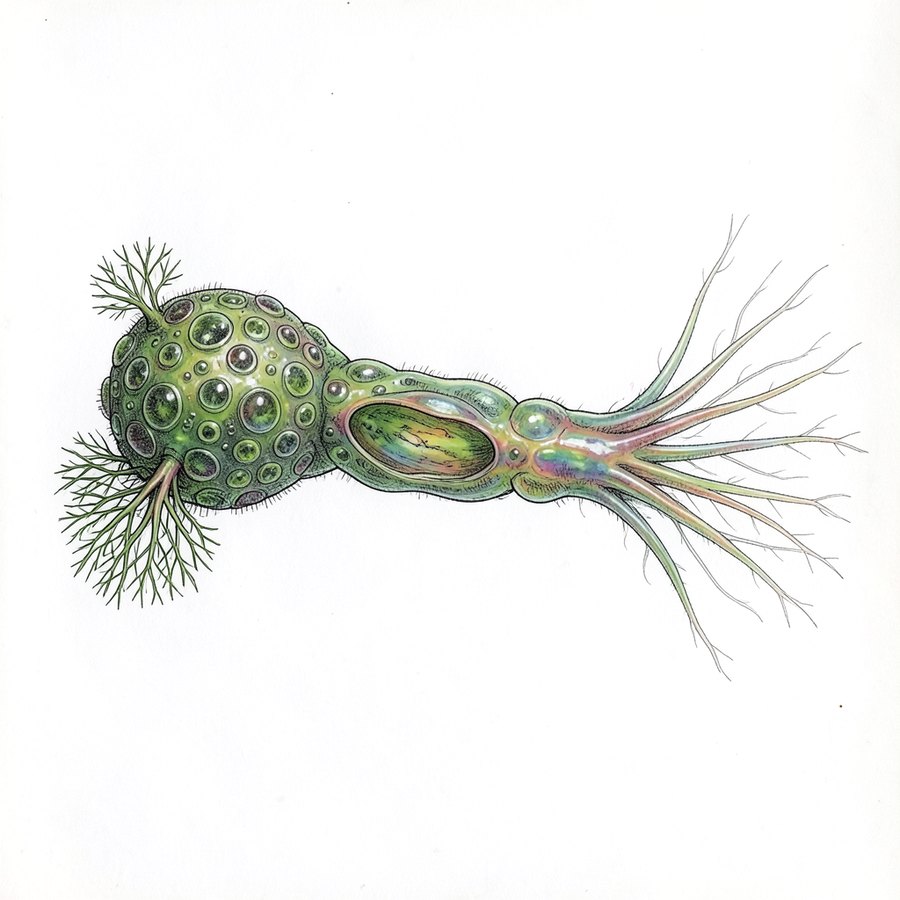
A prophecy claims to know the future, yet every prophecy is made from signs read closely in the present, and once spoken it can change the future it names.
The future is read in the present, by whoever attends closely to what is here.
behavior Sits still with its tentacles spread, tasting every current, and now and then lifts one bright stalk toward what is coming.
What in this present moment already shows what tomorrow will bring?
I Dissection
Each organ answers one question about the idea. The framed one, its intake, is the dominant organ: the being's class, the one the idea could not lose and stay itself.
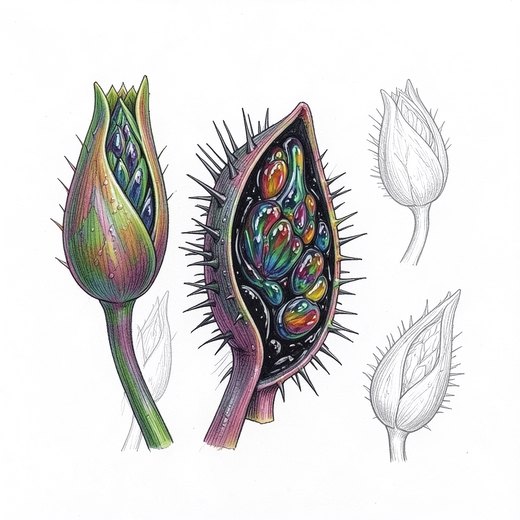
Fig. 1. Kernel
Second sight
Which premise, if it were false, would kill this idea?
Some part of the future can be known before it arrives, and spoken aloud by one who sees it.2
drawn as: second sight · view: pinned
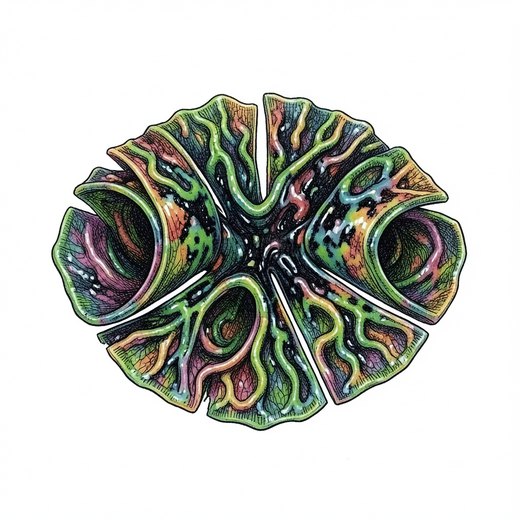
Fig. 2. Boundary
Sealed scroll
What sets it apart from what it is not, and how does it keep that distinction?
It is defined against hindsight, which explains what happened after the fact. Once an outcome is known people judge they saw it coming, so a true prophecy stands on record before the event.5
drawn as: sealed scroll · view: pinned
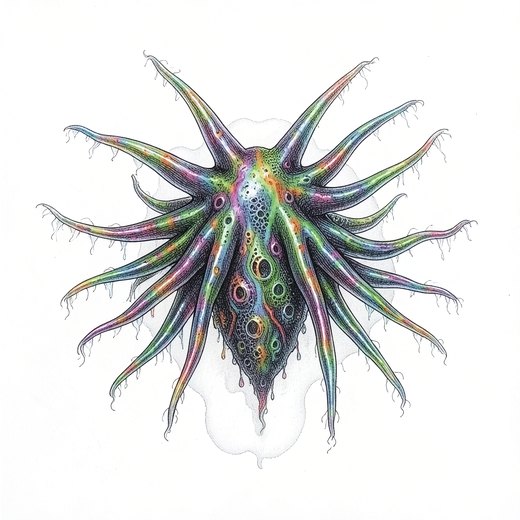
Fig. 3. Intake
Augury
❦ dominant organWhat must it feed on to work? What has to be present, noticed or supplied?
It feeds on signs met in the present, the flight of birds, the entrails of a sacrifice, dreams and comets, so each prophecy begins as close attention to what is here now.2
drawn as: augury · view: at work
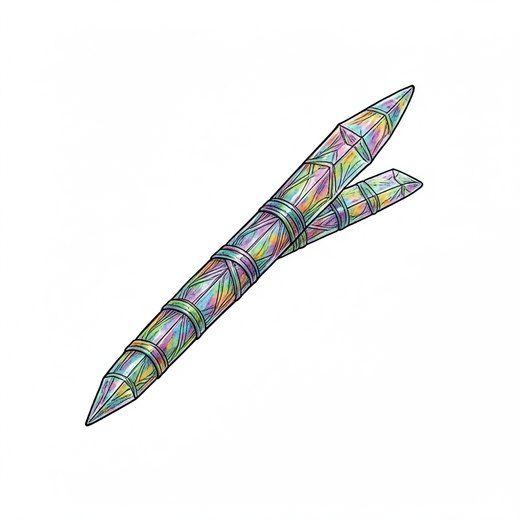
Fig. 4. Mechanism
Extrapolation
How does it turn what it takes in into what it gives out?
It reads a pattern in the signs and carries it forward, by analogy, by rule or by inspired seeing, and an oracle's answer is often worded to fit more than one outcome.2, 1
drawn as: extrapolation · view: detached
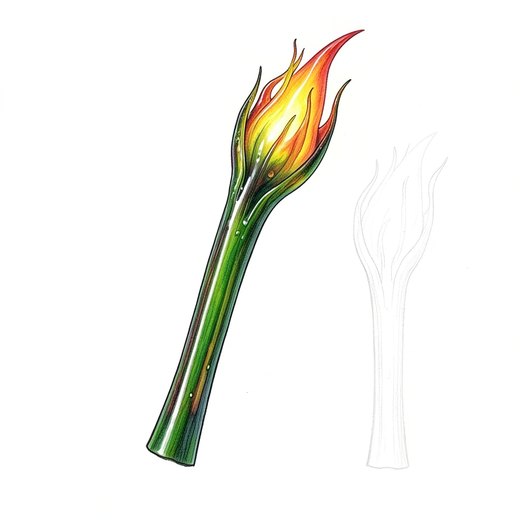
Fig. 5. Output
Oracle
What does it make possible, visible or knowable?
It gives a statement of what will happen, which lets its hearers prepare, flee or wait, and it can bring itself about once they act on it, as a rumour of failure empties a sound bank.3
drawn as: oracle · view: series
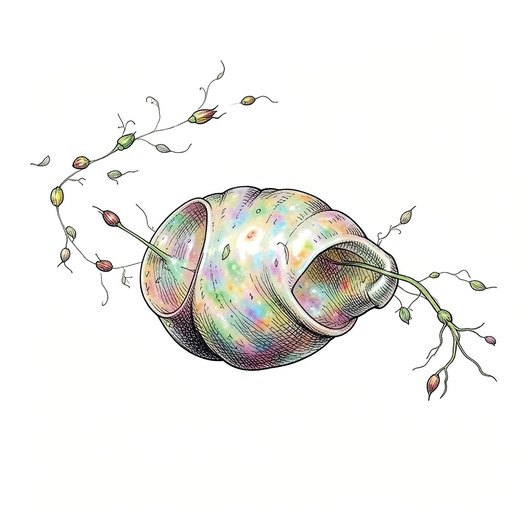
Fig. 6. Dispersal
Grapevine
What part of it travels into other minds, ideas and fields, and by what vector?
It travels by word of mouth from the shrine to the city, and each retelling sharpens or bends it until it reaches people far from the first voice.1
drawn as: grapevine · view: series
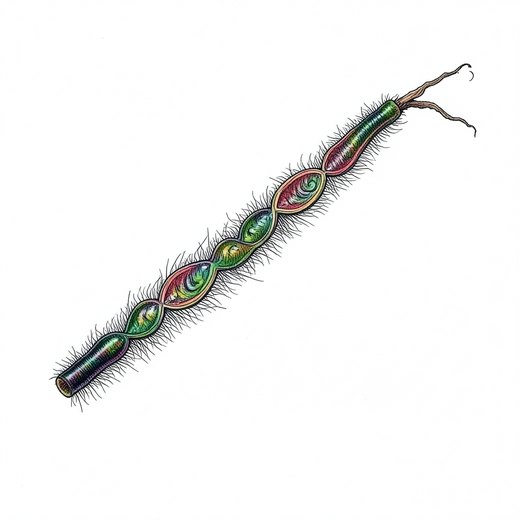
Fig. 7. Decay
Great Disappointment
What can it not digest, where does it fail, and what does it leave behind for others?
It fails when the foretold day comes and passes unchanged. Its believers then often reread it and preach it harder, and it leaves behind a habit of waiting for the next date.4
drawn as: Great Disappointment · view: cross section
II Meaning associations
No relations recorded yet.
descent membership food web resemblance or friction
Lineage
A founder, dissected by hand.
Kin
same kind in Roget Apophenia, Dream, Faith, Memory, Oblivion, Placebo, Presence, Knowing Trust, Afterlistening, Commemorative Revision, Simultaneous Remembering, Hesychology, Subtractive Phenomenology
same kind in Wilkins Echolalia, Glossolalia, Syllable, Symbol, Babelhum, Tongue Horizon, Poetry
same kind in WordNet Chiaroscuro, Echolalia, Glossolalia, Lullaby, Music, Syllable, Symbol, Babelhum, Poetry
same kind in Llull Echolalia, Glossolalia, Love, Memory, Nostalgia, Oblivion, Placebo, Possession, Presence, Solitude, Threshold, Trance, Volition, Knowing Trust, Rushmaker, Tongue Horizon, Witnessed Relief, Gazeroot (second reading), Commemorative Revision, The Shared Cell, Simultaneous Remembering, Hesychology
same phylum Entelechy, Memory, Music, Nostalgia, Ritual, River, Threshold, Wind, Tongue Horizon, Afterlistening
same dominant organ Clay, Faith, Fear, Lake, Patience, Resonance (second reading), Silence, Tinnitus, Trance
Genome
III In the world
Echoes
- the oracle at Delphi
- a weather forecast
- a bank run set off by a rumour
- a doomsday date that comes and goes
IV Record
How it was drawn
its draw 1, a point in the morphospace (laws §8), drawn by flux-2-klein-4b.safetensors.
| axis | value | |
|---|---|---|
| book | humores | |
| symmetry | fractal | |
| organization | chained | |
| silhouette | filiform | |
| scale | hand | |
| proportion | even latent | |
| growth | budding | |
| articulation | seamless latent | |
| openness | solid latent | |
| skeleton | spicules latent | |
| locomotion | walking latent | |
| pattern | gradient | |
| coloration | cryptic latent | |
| substance | mesoglea | |
| surface | veined | |
| palette | oilslick | |
| luminosity | none | |
| transparency | clouded latent | |
| gesture | dissolves | |
| unity | integral latent | |
| modality | possible latent | |
| causation | unmarked latent | |
| determinacy | dissolving | |
| fusion | replaced | |
| anomaly | larger inside | |
| graft | none | |
| technique | hatching | |
| viewpoint | motion | |
| value | flat latent | |
| balance | grounded latent | |
| density | intricate | |
| rhythm | clustered latent | |
| saturation | accent latent | |
| appendages | bladders, cilia | |
| anchor (body) | a volvox, a hollow sphere of green cells with daughter spheres inside | |
| anchor (detail) | a Purkinje neuron, a flat fan of densely branching dendrites |
Sources
- Herodotus, Histories (5th century BCE), book 1, on the oracles given to Croesus
- Cicero, De Divinatione (44 BCE)
- Robert K. Merton, The Self-Fulfilling Prophecy (The Antioch Review, 1948)
- Leon Festinger, Henry W. Riecken and Stanley Schachter, When Prophecy Fails (1956)
- Baruch Fischhoff, Hindsight ≠ Foresight (Journal of Experimental Psychology, Human Perception and Performance, 1975)
❦