a founder of the codex
Sand
Psammoplethos migrans·the Drifting Multitude
From Greek psammos, sand, and plethos, multitude, and Latin migrans, wandering, a multitude of grains always on the move.
- Level
- Conceptorganism
- Phylum
- Scaleimage schema
- Class
- Dispersalits barchan
- Niche
- Extremophileabsence
- Mode
- Techniquehow it keeps existing
- Stage
- Matureindividuated
- Status
- Living
- Habitat
- Ocean
Its kinds · Roget, 1852: Inorganic Matter · Wilkins, 1668: Stone · WordNet, 1990: Substance · Llull, 1308: I · Elementative
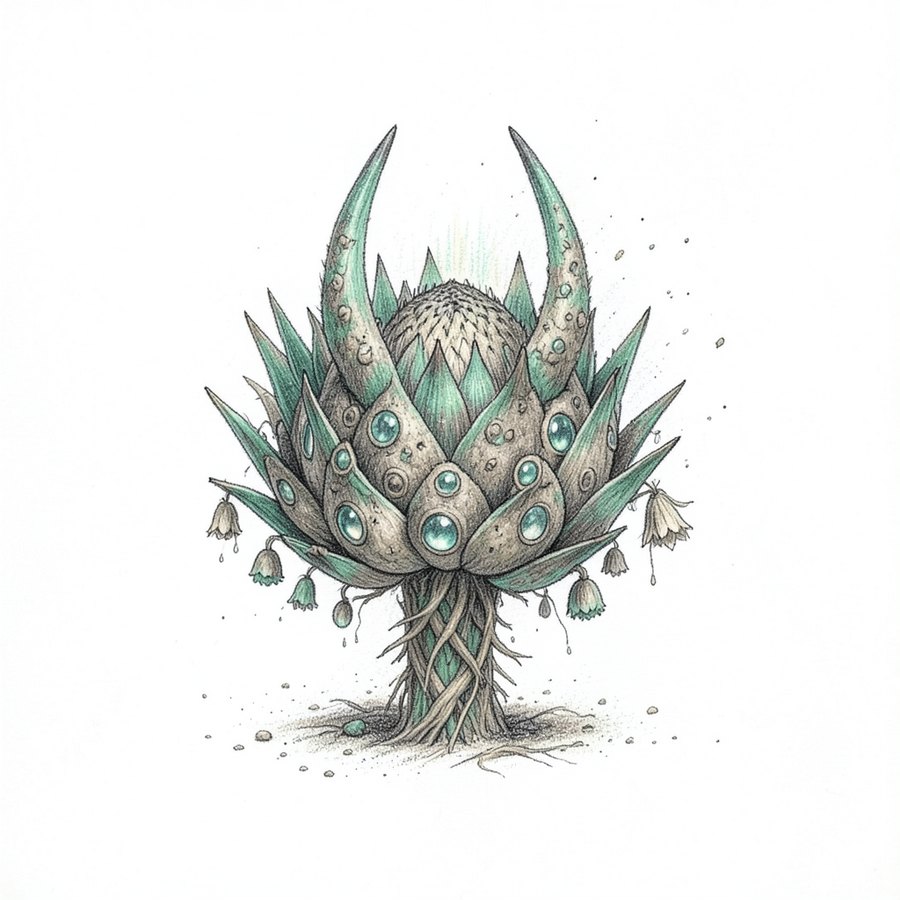
Sand is stone worn into grains small enough to flow and hard enough to last, so it drifts in dunes, holds water between its grains and melts into glass.
Stone worn small enough flows like water, and what flows can be melted into a mirror.
behavior It lies still as stone until the wind rises, then streams forward in low leaps and piles into crescents that walk downwind.
What in you has been worn into a multitude, and what mirror could it be melted into?
I Dissection
Each organ answers one question about the idea. The framed one, its dispersal, is the dominant organ: the being's class, the one the idea could not lose and stay itself.
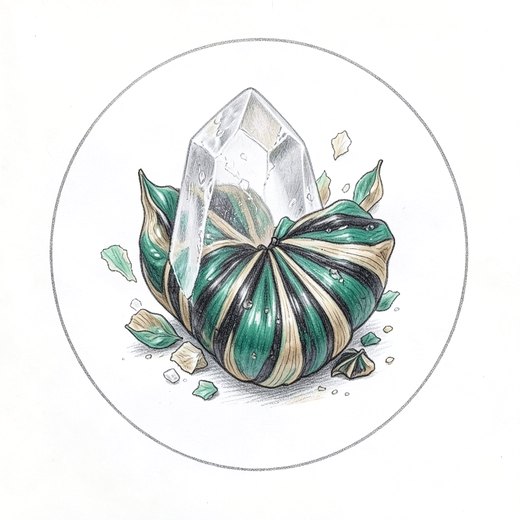
Fig. 1. Kernel
Quartz grain
Which premise, if it were false, would kill this idea?
Sand is rock broken into grains between a sixteenth of a millimetre and two millimetres across, most of them quartz, the common mineral that best resists wear.1
drawn as: quartz grain · view: microscope
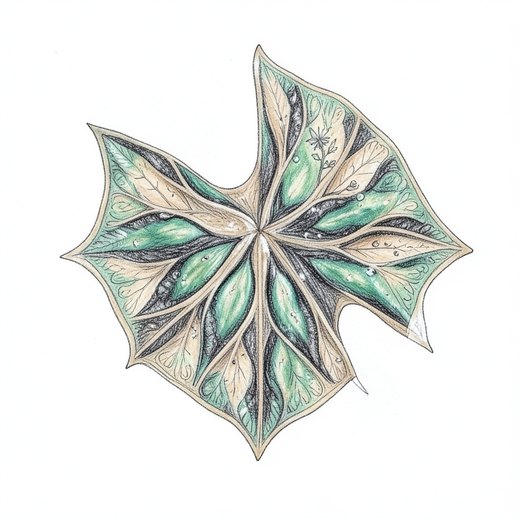
Fig. 2. Boundary
Angle of repose
What sets it apart from what it is not, and how does it keep that distinction?
Coarser than silt and finer than gravel, its dry grains hold to one another by friction alone, so sand pours like water yet stands in heaps whose sides keep a fixed slope.2
drawn as: angle of repose · view: pressed
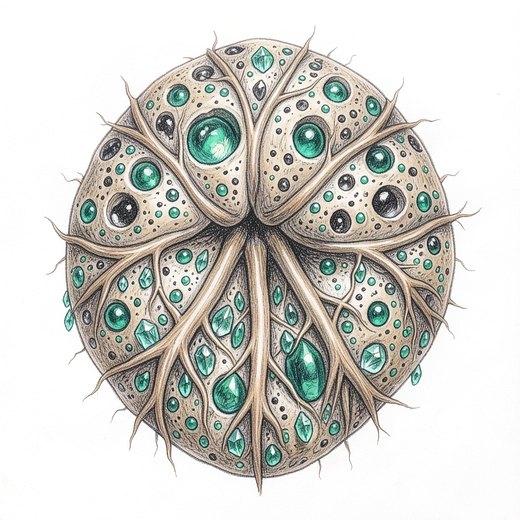
Fig. 3. Intake
Rotten granite
What must it feed on to work? What has to be present, noticed or supplied?
It feeds on rock broken by frost, roots and water, above all granite, whose feldspar rots to clay and frees the quartz.1
drawn as: rotten granite · view: magnified
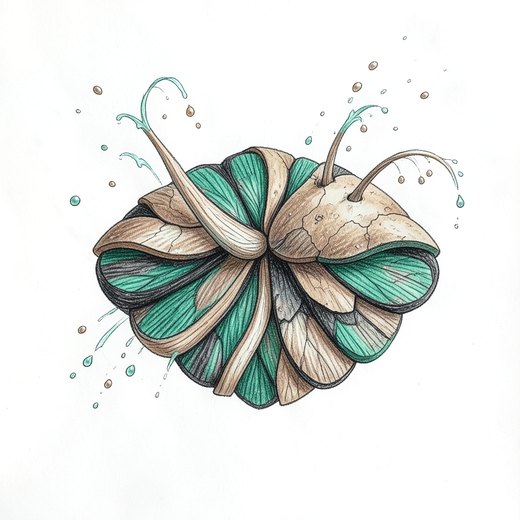
Fig. 4. Mechanism
Saltation
How does it turn what it takes in into what it gives out?
Wind lifts grains in low leaps, and each grain that lands knocks others up, so the surface creeps forward and ripples form across it.2
drawn as: saltation · view: cast
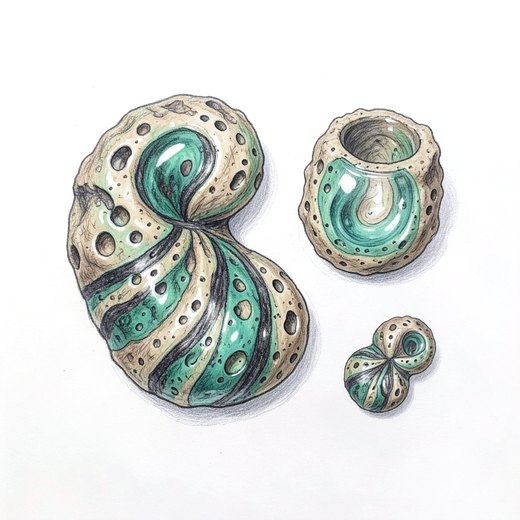
Fig. 5. Output
Fulgurite
What does it make possible, visible or knowable?
Melted, it turns to glass, in hollow tubes where lightning strikes a dune and in furnaces where it is fused with soda and lime into windows and mirrors.3
drawn as: fulgurite · view: detached
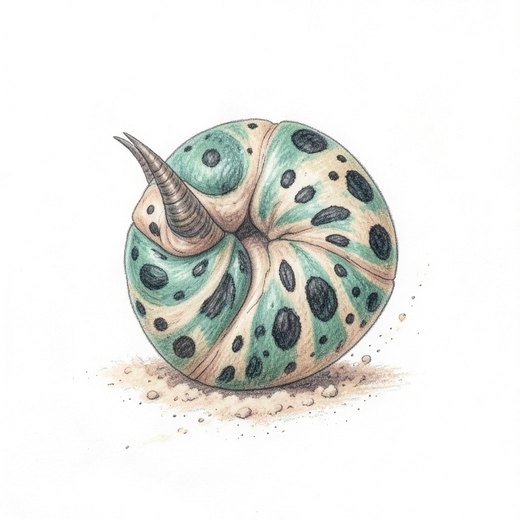
Fig. 6. Dispersal
Barchan
❦ dominant organWhat part of it travels into other minds, ideas and fields, and by what vector?
Wind drives it in crescent dunes that walk downwind year by year, and it travels in thought as time running out in an hourglass and as a whole world seen in one grain.2, 5
drawn as: barchan · view: series
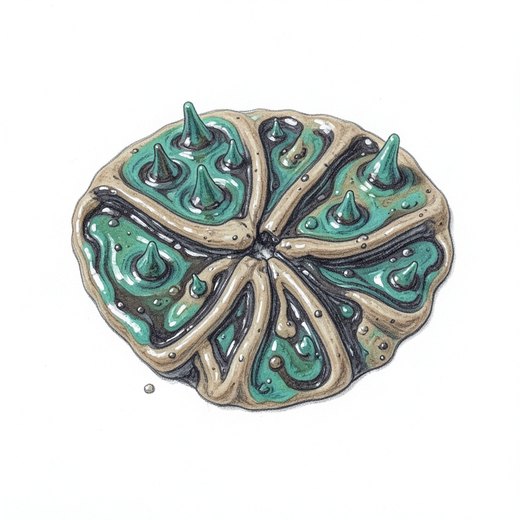
Fig. 7. Decay
Liquefaction
What can it not digest, where does it fail, and what does it leave behind for others?
Shaken while soaked, its grains lose their grip on one another and the ground flows like a liquid, so buildings sink and wet sand boils up through the surface.4
drawn as: liquefaction · view: pressed
II Meaning associations
No relations recorded yet.
descent membership food web resemblance or friction
Lineage
A founder, dissected by hand.
Kin
same kind in Roget Archipelago, Ash, Clay, Cloud, Diamond, Erosion, Fire, Frost, Lake, Rain, River, Salt, Storm, Wind
same kind in Wilkins Amber, Ash, Clay, Diamond, Petrification, Salt
same kind in WordNet Amber, Ash, Clay, Diamond, Salt
same kind in Llull Amber, Archipelago, Ash, Clay, Cloud, Diamond, Emergence, Entanglement, Entropy, Erosion, Fire, Frost, Iridescence, Lake, Petrification, Rain, Reflection, Resonance, Resonance (second reading), River, Salt, Storm, Weightlessness, Wind, Winter, Self-Ending Order
same phylum Entropy, Frost, Iridescence, Patience, Silence, Trance, Hesychology
same dominant organ Ash, Breath, Miracle, Pointillism, River, Wind, Witnessed Relief
Genome
- grain
- multitude
- drift also in Cloud, Simultaneous Remembering, Tongue Horizon
- friction
- glass
III In the world
Echoes
- an hourglass running out
- the dunes of the Namib
- a beach at low tide
- a windowpane
IV Record
How it was drawn
its draw 4, a point in the morphospace (laws §8), drawn by flux-2-klein-4b.safetensors.
| axis | value | |
|---|---|---|
| book | pathemata | |
| symmetry | dendritic | |
| organization | solitary | |
| silhouette | cluster | |
| scale | microscopic | |
| proportion | even latent | |
| growth | encrusted | |
| articulation | imbricate latent | |
| openness | spongy latent | |
| skeleton | woody | |
| locomotion | drifting latent | |
| pattern | speckled latent | |
| coloration | cryptic latent | |
| substance | mud | |
| surface | frosted | |
| palette | malachite | |
| luminosity | points | |
| transparency | layered latent | |
| gesture | dissolves | |
| unity | integral latent | |
| modality | possible latent | |
| causation | efficient | |
| determinacy | doubled | |
| fusion | replaced | |
| anomaly | none | |
| graft | mirrors | |
| technique | crayon | |
| viewpoint | below | |
| value | chiaroscuro latent | |
| balance | top heavy latent | |
| density | intricate latent | |
| rhythm | regular latent | |
| saturation | unmarked latent | |
| appendages | bells, petals | |
| anchor (body) | a protea, a large cone of bracts around a dense centre | |
| anchor (detail) | fine fungal threads wrapped around root tips |
Sources
- F. J. Pettijohn, Paul Edwin Potter and Raymond Siever, Sand and Sandstone (1972)
- R. A. Bagnold, The Physics of Blown Sand and Desert Dunes (1941)
- Vince Beiser, The World in a Grain: The Story of Sand and How It Transformed Civilization (2018)
- H. Bolton Seed and I. M. Idriss, Simplified Procedure for Evaluating Soil Liquefaction Potential (Journal of the Soil Mechanics and Foundations Division, 1971)
- William Blake, Auguries of Innocence (written about 1803, published 1863)
❦