a founder of the codex
Qualia
Qualiocellus intimus·the Inward Eye
From Latin qualis, of what kind, and ocellus, little eye, and intimus, innermost; the little eye of what kind, turned inward.
- Level
- Conceptorganism
- Phylum
- Centre and peripheryimage schema
- Class
- Kernelits redness of red
- Niche
- Producerraw experience
- Mode
- Fictionhow it keeps existing
- Stage
- Matureindividuated
- Status
- Living
- Habitat
- Laboratory
Its kinds · Roget, 1852: Affections in General · Wilkins, 1668: Sensible Quality · WordNet, 1990: Cognition · Llull, 1308: G · Sensitive
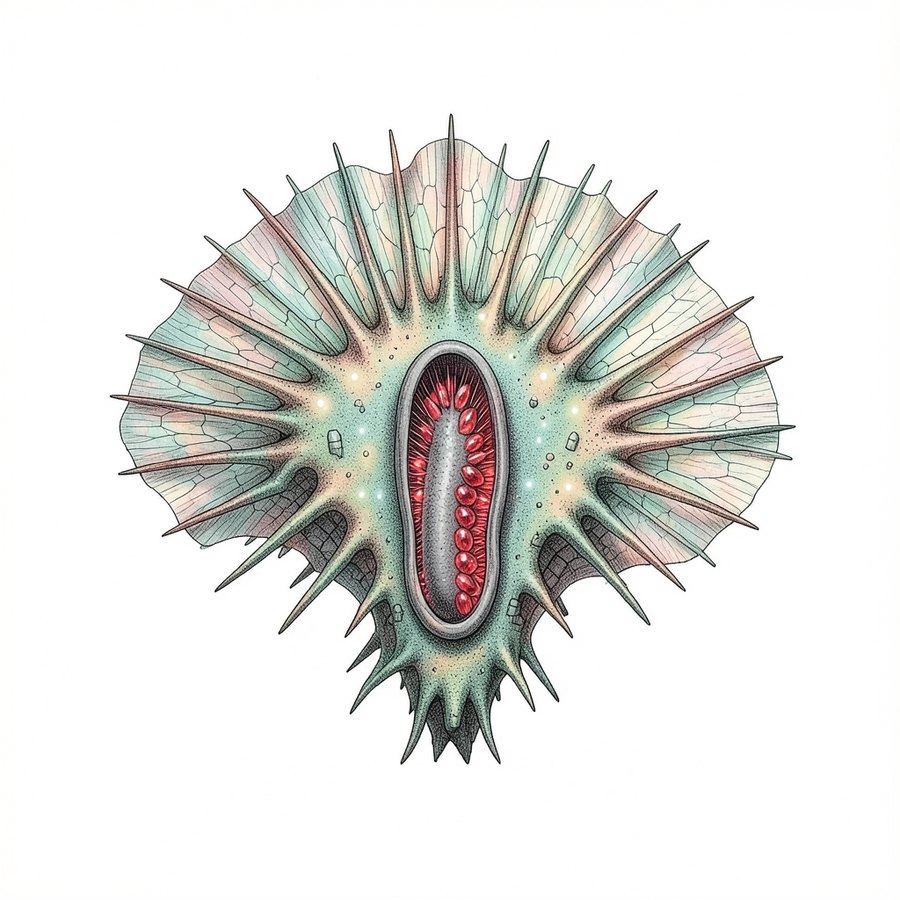
Every experience has a felt quality that no complete description of the brain seems to contain, so knowing everything about seeing red is not the same as seeing it.
What it is like cannot be told from outside.
behavior Shows its colours only to whatever stands inside it; from outside it looks grey.
What would be left out of a perfect description of your morning?
I Dissection
Each organ answers one question about the idea. The framed one, its kernel, is the dominant organ: the being's class, the one the idea could not lose and stay itself.
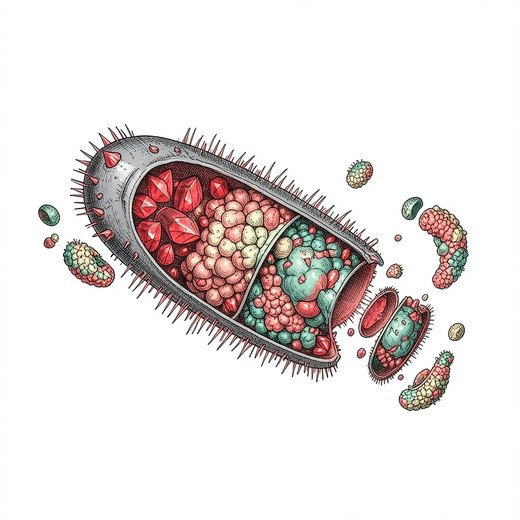
Fig. 1. Kernel
Redness of red
❦ dominant organWhich premise, if it were false, would kill this idea?
There is something it is like to see red or taste salt, a felt quality that a complete description of the brain does not seem to contain.2
drawn as: redness of red · view: exploded
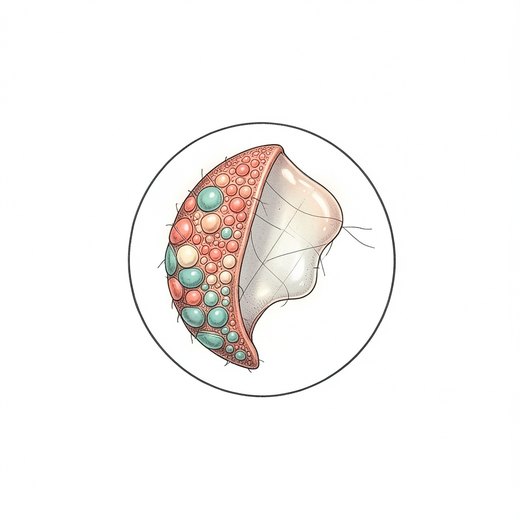
Fig. 2. Boundary
Privileged access
What sets it apart from what it is not, and how does it keep that distinction?
It is kept private; no one can feel another's red, and the gap between the felt and the explained is where it lives.4
drawn as: privileged access · view: microscope
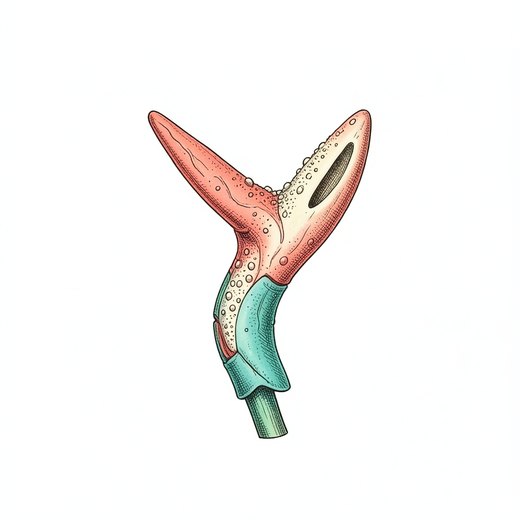
Fig. 3. Intake
Point of view
What must it feed on to work? What has to be present, noticed or supplied?
It feeds on sensation as it is lived, from one point of view, never on a report of it.1
drawn as: point of view · view: series
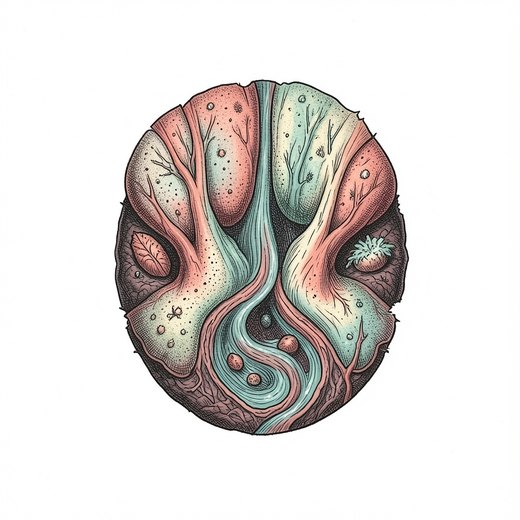
Fig. 4. Mechanism
Hard problem
How does it turn what it takes in into what it gives out?
A stimulus is taken up by a body and becomes, for someone, a colour, a pain or a smell; how it becomes felt is the question the idea keeps open.2
drawn as: hard problem · view: in situ
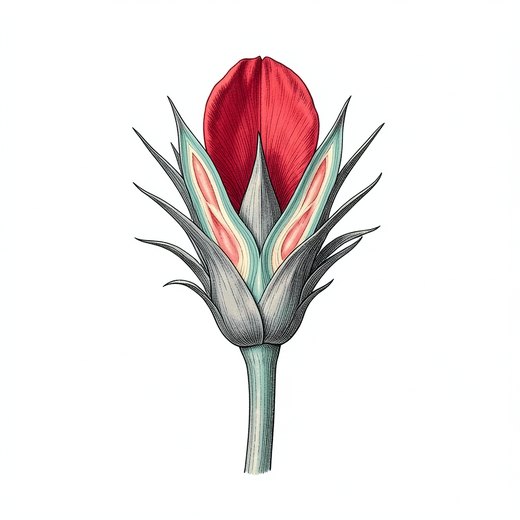
Fig. 5. Output
Ripe tomato
What does it make possible, visible or knowable?
It shows what complete knowledge would still leave out; Mary, who knows all the physics of colour, still learns something the first time she sees red.3
drawn as: ripe tomato · view: cross section
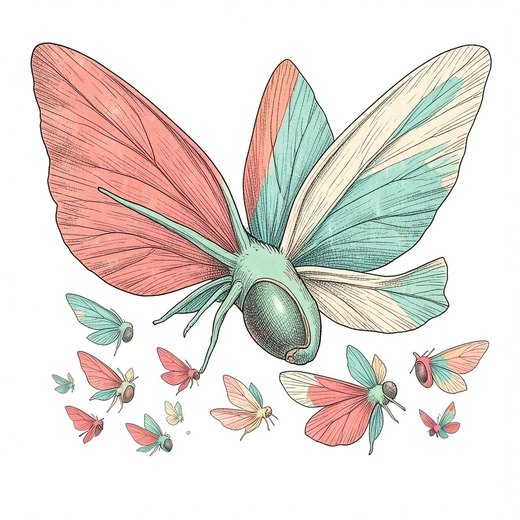
Fig. 6. Dispersal
Black-and-white room
What part of it travels into other minds, ideas and fields, and by what vector?
It travels in thought experiments, the bat, Mary's room, the inverted spectrum, told again until they belong to every argument about mind.3, 2
drawn as: black-and-white room · view: magnified
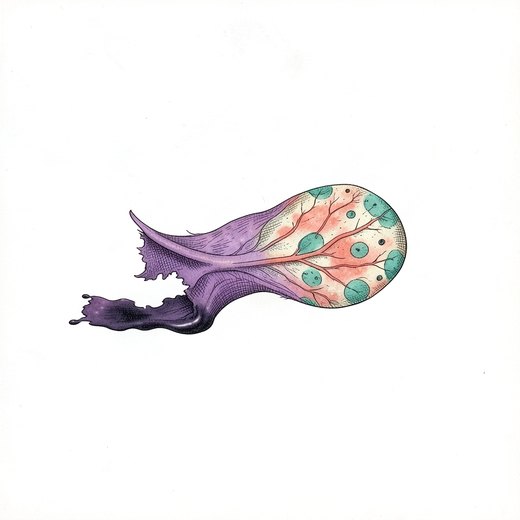
Fig. 7. Decay
Explanatory gap
What can it not digest, where does it fail, and what does it leave behind for others?
It cannot be measured or shared, and its critics say it dissolves under examination into judgements and dispositions; it leaves behind the explanatory gap.5, 4
drawn as: explanatory gap · view: detached
II Meaning associations
descent membership food web resemblance or friction
Lineage
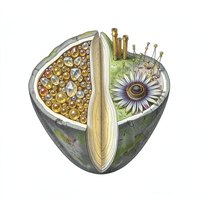
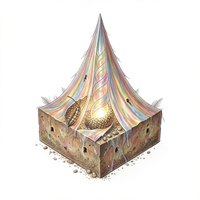
A founder, dissected by hand.
Offspring
Food web
- feeds the output of Silence → its intake
Silence makes audible what was masked; Qualia feeds on sensation as it is lived. Quiet is where lived experience can be noticed at all. - feeds the output of Breath → its intake
Breath gives a pace that calms the whole body; a steady breath is the oldest instrument for holding attention on experience. - friction its decay rubs against the mechanism of Breath
Qualia cannot be measured or shared; Breath is measured easily, a rhythm in the brainstem. One is all inside, the other readable from outside. - homology its kernel resembles the kernel of Silence
Both say that something is present that a plain description leaves out, the small sounds under the quiet and the felt quality under the account.
Kin
same kind in Wilkins Aura, Chiaroscuro, Iridescence
same kind in WordNet Apophenia, Dream, Faith, Memory, Oblivion, Silence, Volition, Afterlistening, Simultaneous Remembering, Hesychology, Subtractive Phenomenology
same kind in Llull Aura, Awakening, Chimera, Fear, Silence, Tinnitus, Vertigo, Babelhum, Shared Breath, The Swing Door
same phylum Aura, Eternity, Geomancy, Presence
same dominant organ Archipelago, Entanglement, Entelechy, Eternity, Geomancy, Salt, Syllable, Symmetry, Vertigo, Volition, Weightlessness, Knowing Trust, Hesychology
Genome
- feeling
- privacy
- perception
- ineffability
- point_of_view
III In the world
Echoes
- Mary's black-and-white room
- the bat's world of echoes
- an inverted spectrum
- the redness of red
IV Record
How it was drawn
its draw 1, a point in the morphospace (laws §8), drawn by flux-2-klein-4b.safetensors.
| axis | value | |
|---|---|---|
| book | pathemata | |
| symmetry | asymmetric | |
| organization | nested | |
| silhouette | fan | |
| scale | microscopic | |
| proportion | tapering latent | |
| growth | apical | |
| articulation | sutured latent | |
| openness | hollow | |
| skeleton | unmarked latent | |
| locomotion | drifting | |
| pattern | speckled | |
| coloration | plain latent | |
| substance | aura | |
| surface | iridescent | |
| palette | coral | |
| luminosity | points | |
| transparency | clouded latent | |
| gesture | sinks | |
| unity | integral latent | |
| modality | unmarked latent | |
| causation | final latent | |
| determinacy | crisp latent | |
| fusion | graft | |
| anomaly | larger inside | |
| graft | arches | |
| technique | engraving | |
| viewpoint | profile | |
| value | unmarked latent | |
| balance | leaning latent | |
| density | intricate latent | |
| rhythm | regular latent | |
| saturation | unmarked latent | |
| appendages | spines | |
| anchor (body) | a pyrosome, a hollow glowing tube made of thousands of small bodies | |
| anchor (detail) | a dragonfly wing, a clear membrane divided by a fine net of veins |
Sources
- C. I. Lewis, Mind and the World-Order (1929)
- Thomas Nagel, What Is It Like to Be a Bat? (1974)
- Frank Jackson, Epiphenomenal Qualia (1982)
- Joseph Levine, Materialism and Qualia: The Explanatory Gap (1983)
- Daniel Dennett, Quining Qualia (1988)
❦