a founder of the codex
Lake
Limnaria tenens·the Held Sky
From Greek limne, lake, and Latin tenens, holding, the still water that holds what flows into it and the sky above it.
- Level
- Conceptorganism
- Phylum
- Containerimage schema
- Class
- Intakeits catchment
- Niche
- Consumerother ideas
- Mode
- Attachmenthow it keeps existing
- Stage
- Matureindividuated
- Status
- Living
- Habitat
- Archive
Its kinds · Roget, 1852: Inorganic Matter · Wilkins, 1668: Element · WordNet, 1990: Object · Llull, 1308: I · Elementative
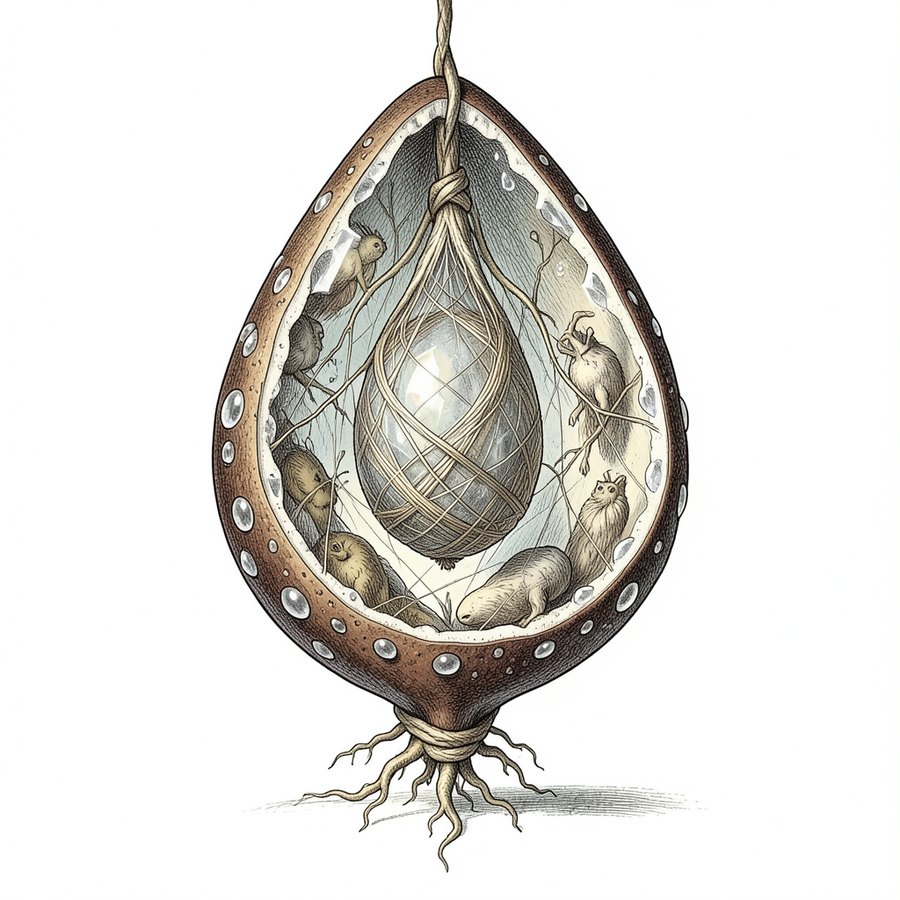
A lake is still water held in a basin, which keeps what flows into it, lets it settle in layers, and mirrors the sky on a surface calm enough to hold it.
What is held still long enough settles, clears and shows the sky.
behavior It lies still for years, takes in whatever the slopes send down, and on calm mornings shows the whole sky on its surface.
What has been settling in you, layer by layer, while your surface stayed calm?
I Dissection
Each organ answers one question about the idea. The framed one, its intake, is the dominant organ: the being's class, the one the idea could not lose and stay itself.
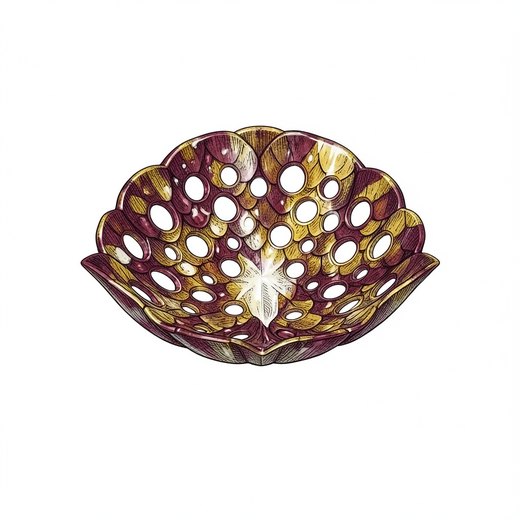
Fig. 1. Kernel
Standing water
Which premise, if it were false, would kill this idea?
A lake is water held still in a basin, filled faster than it drains, so that it stays for years and becomes a small world of its own.2, 3
drawn as: standing water · view: detached
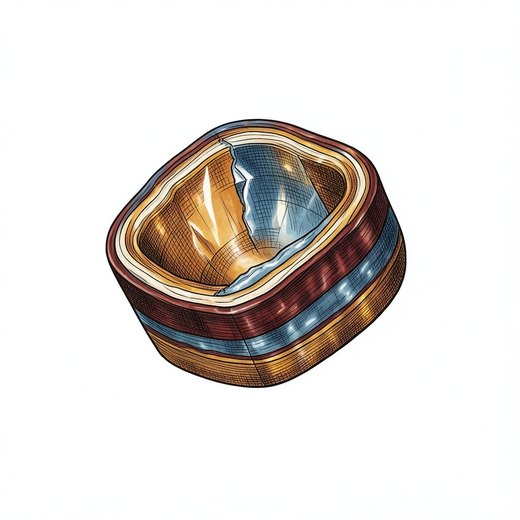
Fig. 2. Boundary
Thermocline
What sets it apart from what it is not, and how does it keep that distinction?
Its stillness sets it apart from a river, and in summer it layers, warm water floating on cold with a sharp step in temperature between them.3, 1
drawn as: thermocline · view: transparent
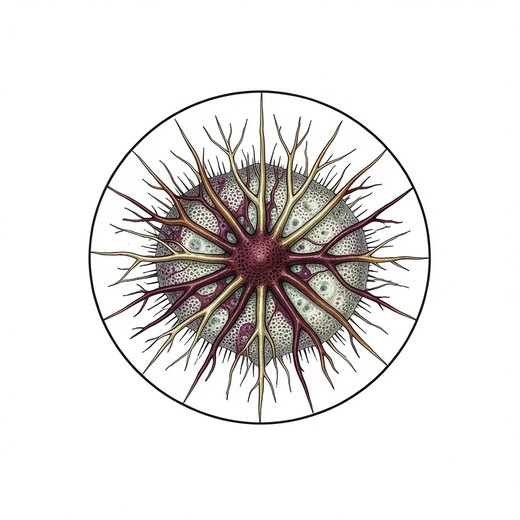
Fig. 3. Intake
Catchment
❦ dominant organWhat must it feed on to work? What has to be present, noticed or supplied?
It gathers what flows in from its whole catchment, streams, rain and runoff, with the silt, leaves and salts they carry, and keeps most of it.3
drawn as: catchment · view: microscope
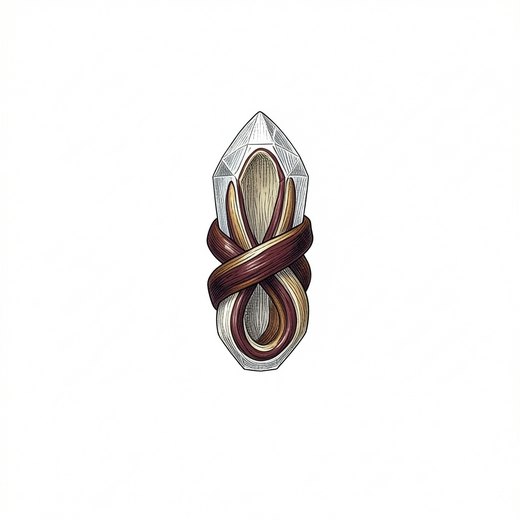
Fig. 4. Mechanism
Sediment trap
How does it turn what it takes in into what it gives out?
Still water lets what it gathers sink, so silt, pollen and dead plankton settle to the floor in thin yearly layers while the water above clears.3
drawn as: sediment trap · view: cast
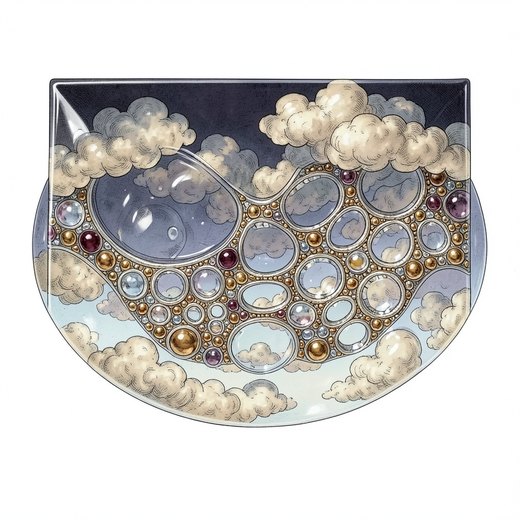
Fig. 5. Output
Earth's eye
What does it make possible, visible or knowable?
Its calm surface doubles the sky and the shore, and Thoreau called it the earth's eye, in which a watcher measures the depth of their own nature.4
drawn as: earth's eye · view: transparent
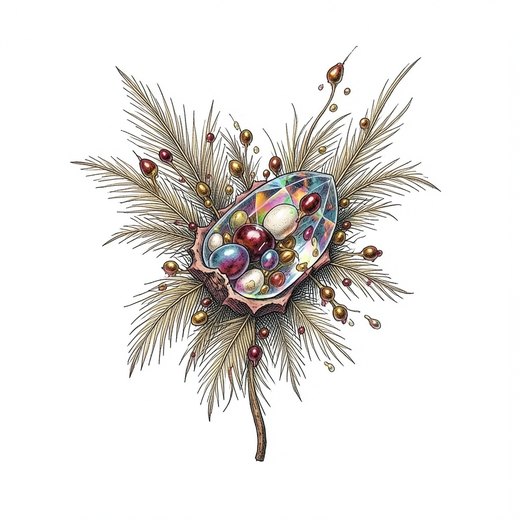
Fig. 6. Dispersal
Waterfowl
What part of it travels into other minds, ideas and fields, and by what vector?
Its life travels from basin to basin on waterbirds, whose feet and feathers carry seeds, snails and eggs in clinging mud.5
drawn as: waterfowl · view: in situ
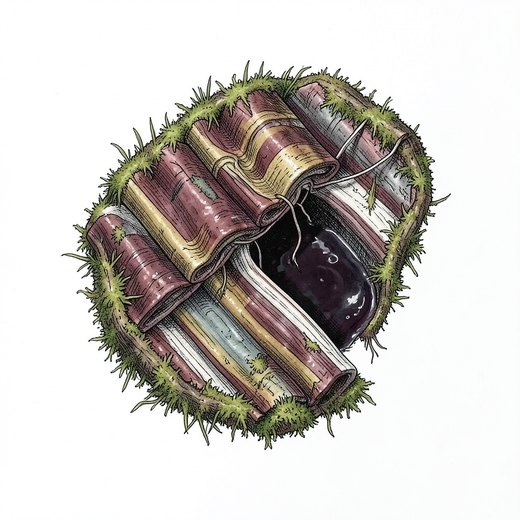
Fig. 7. Decay
Peat bog
What can it not digest, where does it fail, and what does it leave behind for others?
Left alone it fills with its own mud and weed until it turns to marsh and then bog, and cut off from its rivers it shrinks to salt flats, as the Aral Sea did.3
drawn as: peat bog · view: pressed
II Meaning associations
No relations recorded yet.
descent membership food web resemblance or friction
Lineage
A founder, dissected by hand.
Kin
same kind in Roget Archipelago, Ash, Clay, Cloud, Diamond, Erosion, Fire, Frost, Rain, River, Salt, Sand, Storm, Wind
same kind in Wilkins Cloud, Fire, Frost, Rain, River, Storm, Wind
same kind in WordNet Archipelago, Cloud, River
same kind in Llull Amber, Archipelago, Ash, Clay, Cloud, Diamond, Emergence, Entanglement, Entropy, Erosion, Fire, Frost, Iridescence, Petrification, Rain, Reflection, Resonance, Resonance (second reading), River, Salt, Sand, Storm, Weightlessness, Wind, Winter, Self-Ending Order
same phylum Amber, Clay, Dream, Placebo, Possession, Solitude, Tinnitus, Winter, Knowing Trust, The Shared Cell
same dominant organ Clay, Faith, Fear, Patience, Prophecy, Resonance (second reading), Silence, Tinnitus, Trance
Genome
- stillness also in Eternity, Frost, Hesychology
- gathering
- depth also in Diamond
- mirror
- sediment also in Erosion
III In the world
Echoes
- a mountain lake doubling its peaks
- Walden Pond
- the shrunken Aral Sea
- a pollen core drawn from a lake floor
IV Record
How it was drawn
its draw 1, a point in the morphospace (laws §8), drawn by flux-2-klein-4b.safetensors.
| axis | value | |
|---|---|---|
| book | nidi | |
| symmetry | dendritic | |
| organization | solitary | |
| silhouette | sac | |
| scale | microscopic | |
| proportion | even latent | |
| growth | faceted | |
| articulation | imbricate latent | |
| openness | lattice | |
| skeleton | exoskeleton latent | |
| locomotion | sessile | |
| pattern | gradient latent | |
| coloration | countershaded | |
| substance | crystal | |
| surface | frosted | |
| palette | oxblood | |
| luminosity | none | |
| transparency | translucent latent | |
| gesture | sinks | |
| unity | unmarked latent | |
| modality | unmarked latent | |
| causation | material latent | |
| determinacy | fraying latent | |
| fusion | nested | |
| anomaly | knotted | |
| graft | mirrors | |
| technique | engraving | |
| viewpoint | below | |
| value | unmarked latent | |
| balance | top heavy latent | |
| density | graded detail latent | |
| rhythm | unmarked latent | |
| saturation | unmarked latent | |
| appendages | bladders | |
| anchor (body) | a geode cut open, its cavity lined with crystal points | |
| anchor (detail) | a silk cocoon, an oval case of wound threads around an insect pupa |
Sources
- François-Alphonse Forel, Le Léman: monographie limnologique (1892–1904)
- Stephen A. Forbes, The Lake as a Microcosm (1887)
- G. Evelyn Hutchinson, A Treatise on Limnology, Volume I (1957)
- Henry David Thoreau, Walden (1854), chapter The Ponds
- Charles Darwin, On the Origin of Species (1859), on the dispersal of freshwater life by birds
❦