a founder of the codex
Volition
Voluntaria eligens·the Choosing Knot
From Latin voluntas, will, and eligere, to choose, for a will that picks one way out of many.
- Level
- Conceptorganism
- Phylum
- Forceimage schema
- Class
- Kernelits prime mover
- Niche
- Consumerother ideas
- Mode
- Moralityhow it keeps existing
- Stage
- Matureindividuated
- Status
- Living
- Habitat
- Market
Its kinds · Roget, 1852: Individual Volition · Wilkins, 1668: Spiritual Action · WordNet, 1990: Cognition · Llull, 1308: E · Man
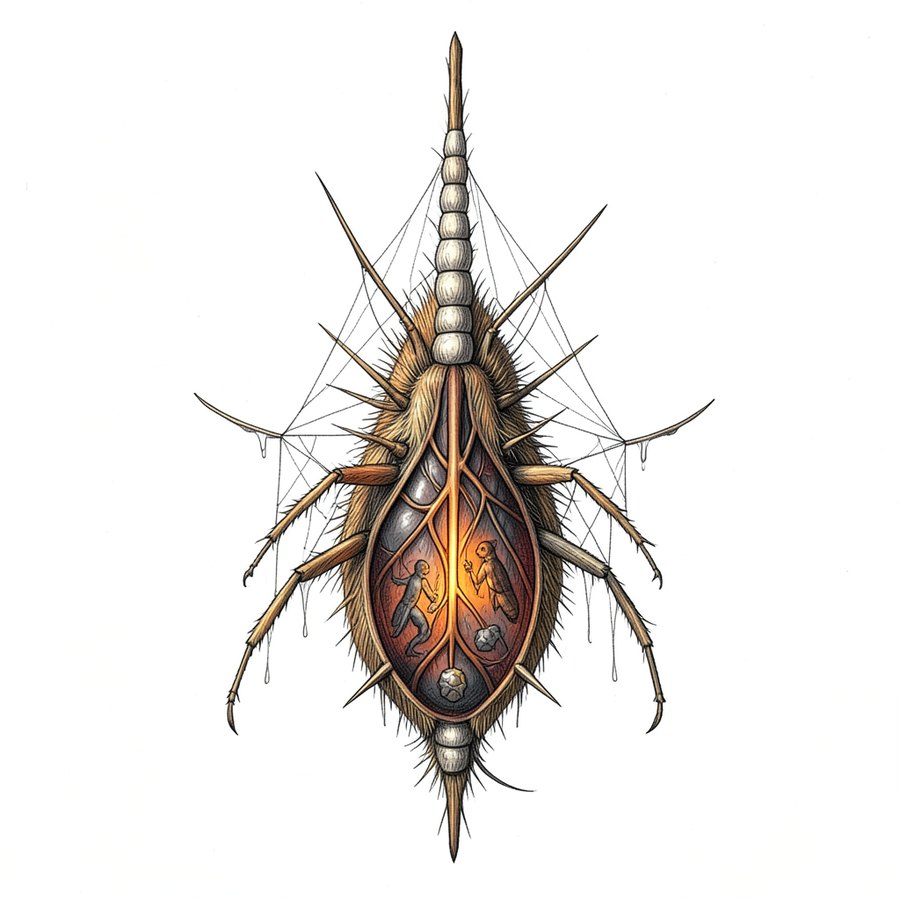
An act is willed when it follows from a choice the agent makes after weighing desires and reasons, and the will shows itself most plainly where it fails to carry the act through.
An act is one's own when it follows from a choice one would stand behind.
behavior Hesitates with every limb drawn in, then moves all at once in one direction and lives with where it lands.
When did you last do what you had decided against, and who decided?
I Dissection
Each organ answers one question about the idea. The framed one, its kernel, is the dominant organ: the being's class, the one the idea could not lose and stay itself.
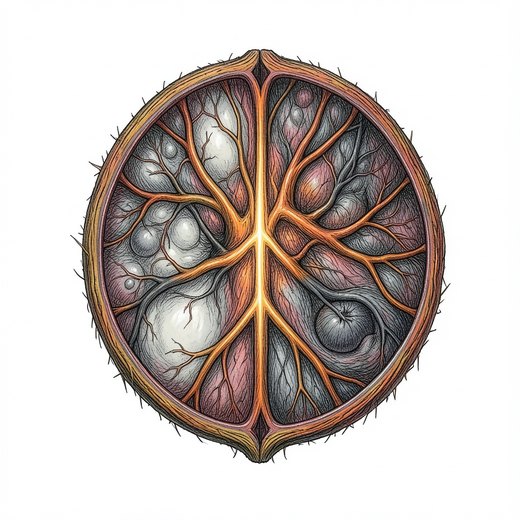
Fig. 1. Kernel
Prime mover
❦ dominant organWhich premise, if it were false, would kill this idea?
Its premise is that an act can come from a choice the agent makes and owns, so the act belongs to them and they answer for it.1
drawn as: prime mover · view: cross section
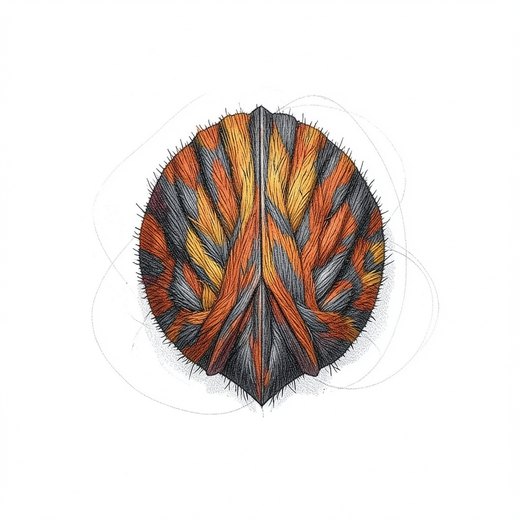
Fig. 2. Boundary
Unwilling addict
What sets it apart from what it is not, and how does it keep that distinction?
It is defined against compulsion, the act forced from outside or driven by a craving the agent disowns, as in the unwilling addict.1, 4
drawn as: unwilling addict · view: at work
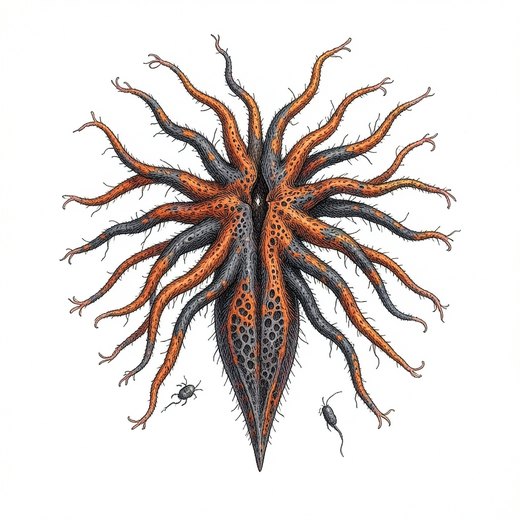
Fig. 3. Intake
Second-order desires
What must it feed on to work? What has to be present, noticed or supplied?
It feeds on desires and reasons, and on desires about desires, the wish to be moved by some wants and freed from others.4
drawn as: second-order desires · view: detached
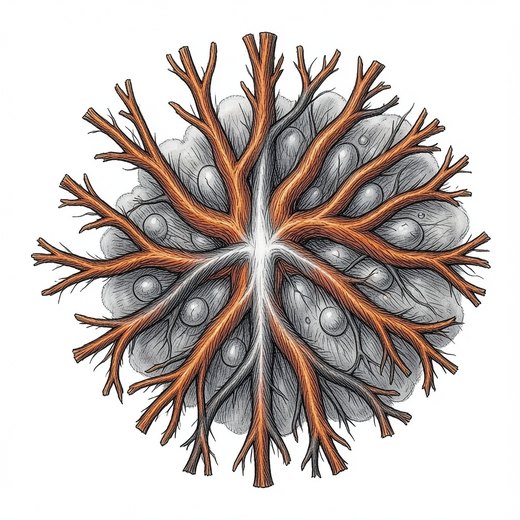
Fig. 4. Mechanism
Crossroads
How does it turn what it takes in into what it gives out?
It deliberates, weighing means toward an end until one course prevails, and the chosen idea, held steadily in mind, sets the body moving.1, 3
drawn as: crossroads · view: magnified
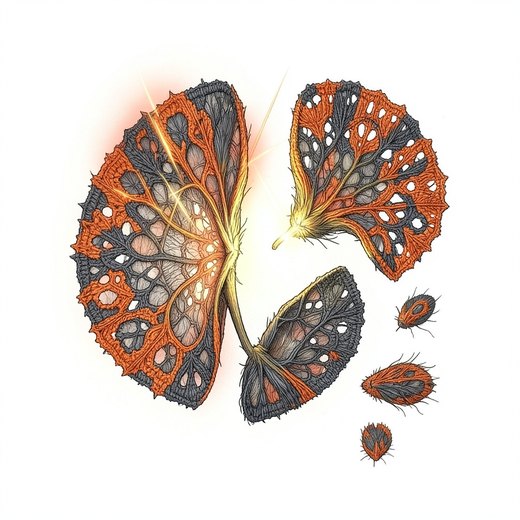
Fig. 5. Output
Rubicon
What does it make possible, visible or knowable?
It issues in action, a movement begun on purpose, though the brain's readiness for that movement rises a fraction of a second before the felt moment of deciding.5
drawn as: Rubicon · view: pressed
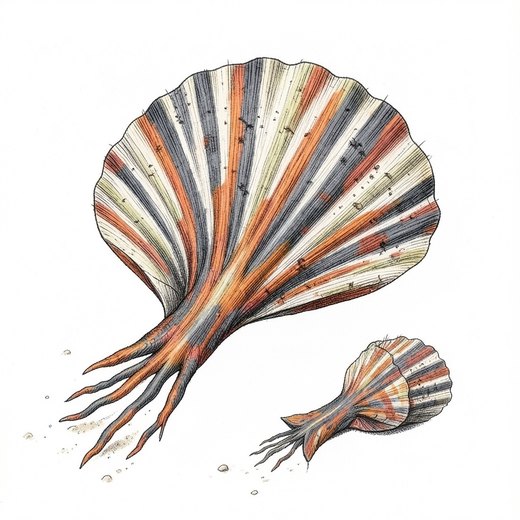
Fig. 6. Dispersal
Guilty mind
What part of it travels into other minds, ideas and fields, and by what vector?
It travels through consequences, the praise, blame, reward and punishment that hold an agent to what was chosen and carry responsibility into law.1
drawn as: guilty mind · view: series
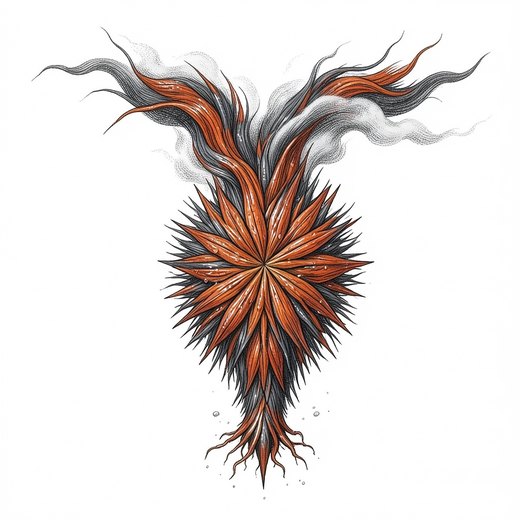
Fig. 7. Decay
Unruly horse
What can it not digest, where does it fail, and what does it leave behind for others?
It fails in akrasia, seeing the better course and taking the worse, a will divided against itself. It leaves the old question of how free it ever was.1, 2
drawn as: unruly horse · view: cast
II Meaning associations
No relations recorded yet.
descent membership food web resemblance or friction
Lineage
A founder, dissected by hand.
Kin
same kind in Roget Patience
same kind in Wilkins Faith, Fear, Love, Nostalgia, Reflection, Silence, Knowing Trust, Witnessed Relief, Gazeroot (second reading), The Swing Door
same kind in WordNet Apophenia, Dream, Faith, Memory, Oblivion, Qualia, Silence, Afterlistening, Simultaneous Remembering, Hesychology, Subtractive Phenomenology
same kind in Llull Echolalia, Glossolalia, Love, Memory, Nostalgia, Oblivion, Placebo, Possession, Presence, Prophecy, Solitude, Threshold, Trance, Knowing Trust, Rushmaker, Tongue Horizon, Witnessed Relief, Gazeroot (second reading), Commemorative Revision, The Shared Cell, Simultaneous Remembering, Hesychology
same phylum Diamond, Fear, Fire, Glossolalia, Oblivion, Spring, Storm, Rushmaker, Self-Ending Order
same dominant organ Archipelago, Entanglement, Entelechy, Eternity, Geomancy, Qualia, Salt, Syllable, Symmetry, Vertigo, Weightlessness, Knowing Trust, Hesychology
Genome
- choice
- will
- deliberation
- agency
- akrasia
III In the world
Echoes
- Libet's experiment on the readiness potential
- a New Year's resolution
- Odysseus bound to the mast to hear the Sirens
- a plea of diminished responsibility in court
IV Record
How it was drawn
its draw 3, a point in the morphospace (laws §8), drawn by flux-2-klein-4b.safetensors.
| axis | value | |
|---|---|---|
| book | minerals | |
| symmetry | helical | |
| organization | solitary | |
| silhouette | spire | |
| scale | microscopic | |
| proportion | sheared latent | |
| growth | intercalary | |
| articulation | jointed latent | |
| openness | hollow | |
| skeleton | unmarked latent | |
| locomotion | sessile latent | |
| pattern | labyrinth latent | |
| coloration | warning latent | |
| substance | woven fibre | |
| surface | spined | |
| palette | ember | |
| luminosity | sheen | |
| transparency | clouded latent | |
| gesture | gathers | |
| unity | fragment latent | |
| modality | necessary latent | |
| causation | efficient | |
| determinacy | fraying latent | |
| fusion | graft | |
| anomaly | scale clash | |
| graft | nets | |
| technique | hatching | |
| viewpoint | below | |
| value | chiaroscuro | |
| balance | top heavy latent | |
| density | unmarked latent | |
| rhythm | clustered latent | |
| saturation | vivid latent | |
| appendages | sails | |
| anchor (body) | stalactites, slow hanging columns of dripped stone | |
| anchor (detail) | a paper wasp nest, hexagonal paper cells hanging from a single stalk |
Sources
- Aristotle, Nicomachean Ethics, books 3 and 7 (4th century BCE)
- Augustine, Confessions, book 8 (c. 400)
- William James, The Principles of Psychology (1890), chapter 26, Will
- Harry G. Frankfurt, Freedom of the Will and the Concept of a Person (Journal of Philosophy, 1971)
- Benjamin Libet, Curtis A. Gleason, Elwood W. Wright and Dennis K. Pearl, Time of Conscious Intention to Act in Relation to Onset of Cerebral Activity (Brain, 1983)
❦