a founder of the codex
Clay
Pelotypus retinens·the Pliant Earth
From Greek pelos, clay, and typos, imprint, and Latin retinens, keeping, the earth that takes a print and keeps it.
- Level
- Conceptorganism
- Phylum
- Containerimage schema
- Class
- Intakeits seal impression
- Niche
- Producerraw experience
- Mode
- Fictionhow it keeps existing
- Stage
- Matureindividuated
- Status
- Living
- Habitat
- Archive
Its kinds · Roget, 1852: Inorganic Matter · Wilkins, 1668: Stone · WordNet, 1990: Substance · Llull, 1308: I · Elementative
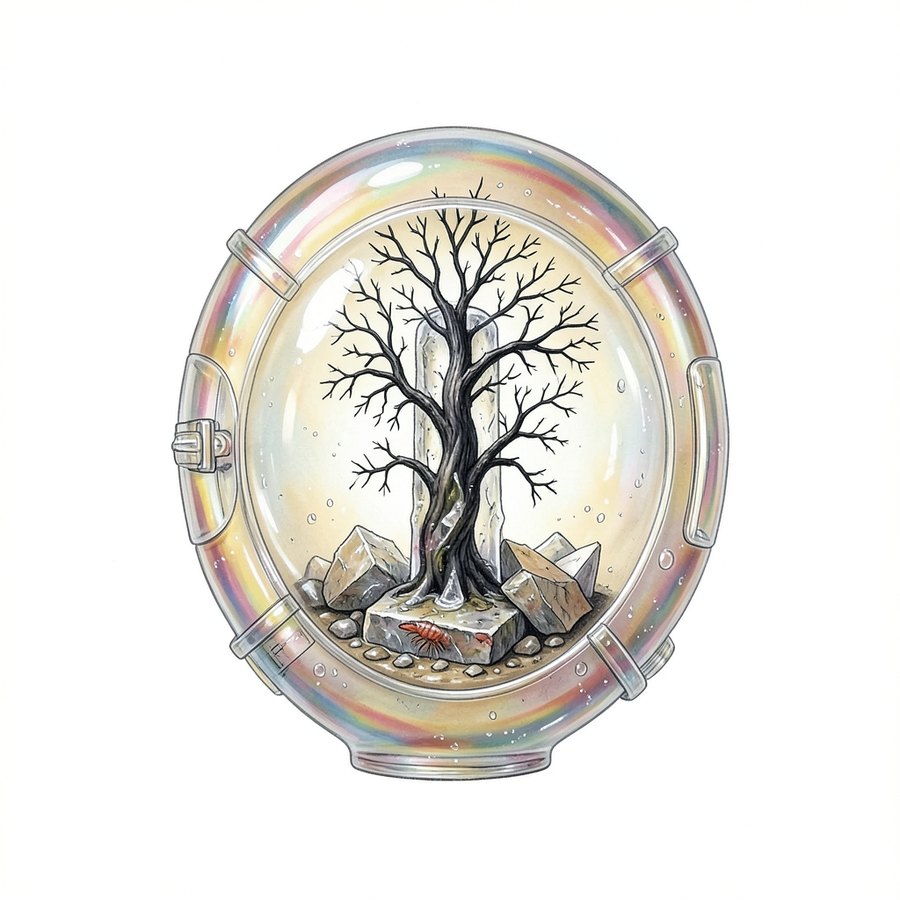
Clay is earth fine enough to take any shape when wet and keep it once dried and fired, so it became the first material in which people made vessels, figures and written records.
What yields to every hand keeps the mark of each, and fire makes the mark last.
behavior It sags and yields while wet, stiffens as it dries, and after the kiln holds its shape and every fingerprint for thousands of years.
Whose hands have left their prints in you, and what fire has set them?
I Dissection
Each organ answers one question about the idea. The framed one, its intake, is the dominant organ: the being's class, the one the idea could not lose and stay itself.
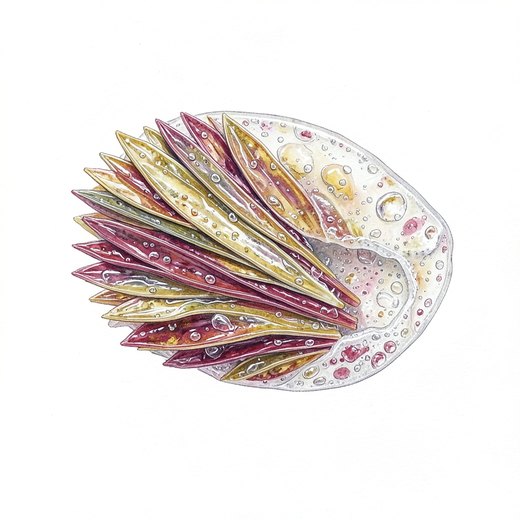
Fig. 1. Kernel
Phyllosilicate
Which premise, if it were false, would kill this idea?
Clay is rock weathered into mineral flakes finer than dust, and water between the flakes lets them slide and then hold, so a wet lump takes any shape and keeps it.1
drawn as: phyllosilicate · view: transparent
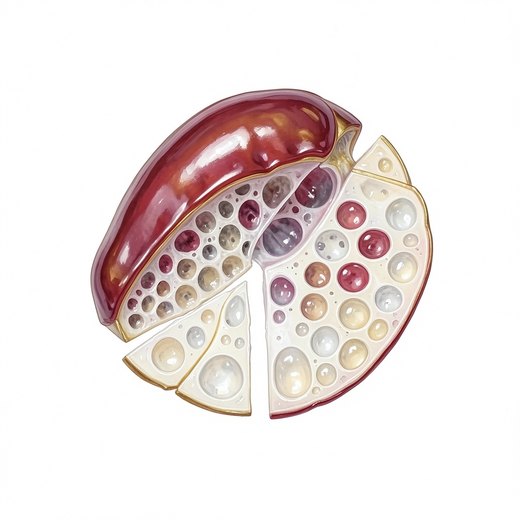
Fig. 2. Boundary
Glaze
What sets it apart from what it is not, and how does it keep that distinction?
Unfired, it slumps back to mud in water. Fired at low heat it stays porous until a glaze, a skin of glass melted onto its surface, seals it.2
drawn as: glaze · view: pinned
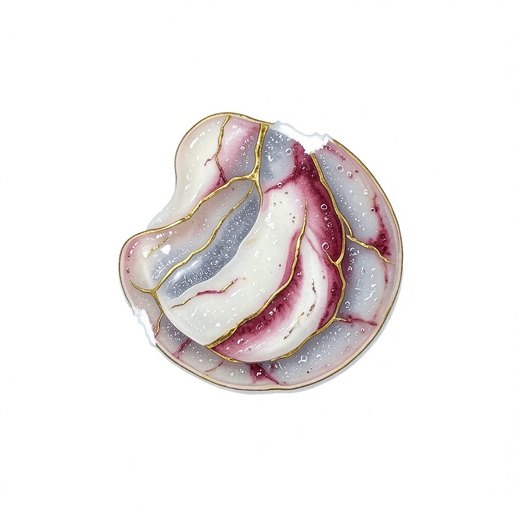
Fig. 3. Intake
Seal impression
❦ dominant organWhat must it feed on to work? What has to be present, noticed or supplied?
It takes the press of any hand or tool and keeps the print of a seal, a reed stylus or a thumb down to the finest line.3
drawn as: seal impression · view: in situ
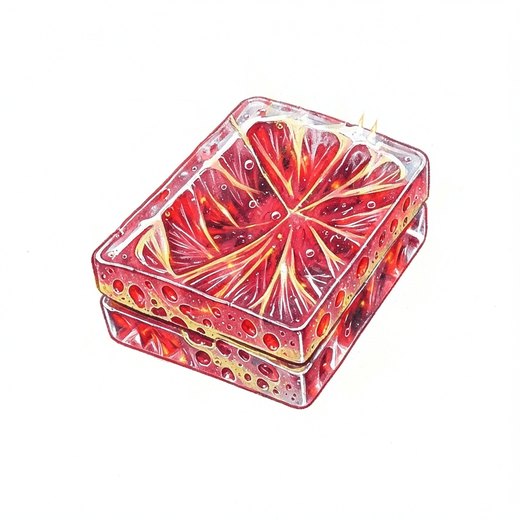
Fig. 4. Mechanism
Kiln
How does it turn what it takes in into what it gives out?
Drying draws the water out until the flakes lock, and firing in a kiln fuses them, turning soft earth into ceramic that keeps its shape for thousands of years.2
drawn as: kiln · view: cast
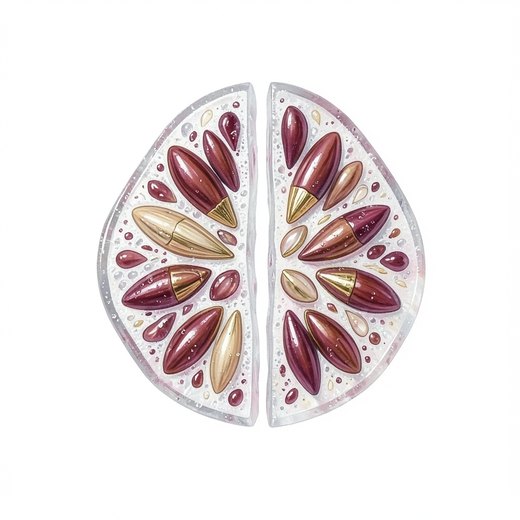
Fig. 5. Output
Earthenware
What does it make possible, visible or knowable?
It gave humanity its first fired things, figurines, pots and bricks, and the small tokens with which Mesopotamians kept accounts before writing.2, 3
drawn as: earthenware · view: pressed
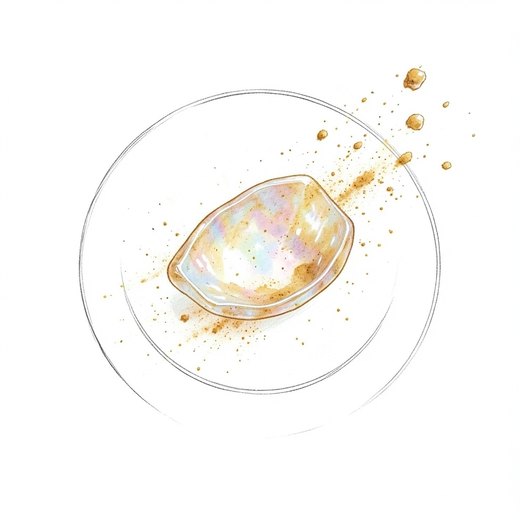
Fig. 6. Dispersal
Golem
What part of it travels into other minds, ideas and fields, and by what vector?
It travels in stories of beings shaped from clay and woken to life, the first people kneaded by gods and the golem roused by a holy name.4
drawn as: golem · view: microscope
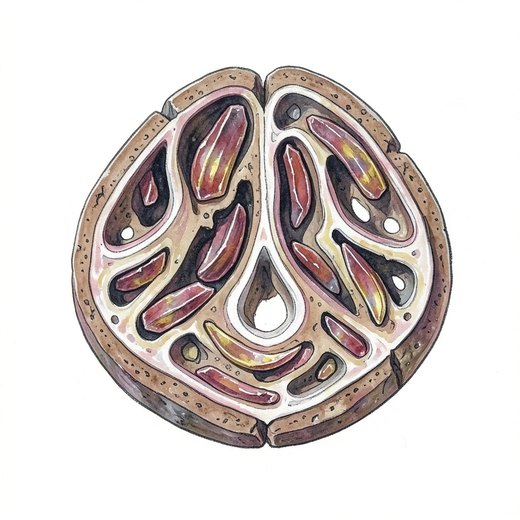
Fig. 7. Decay
Potsherd
What can it not digest, where does it fail, and what does it leave behind for others?
Fired clay is brittle and breaks, yet its shards outlast almost everything else people make, so potsherds are the commonest find of archaeology and date the layers they lie in.5
drawn as: potsherd · view: cross section
II Meaning associations
No relations recorded yet.
descent membership food web resemblance or friction
Lineage
A founder, dissected by hand.
Kin
same kind in Roget Archipelago, Ash, Cloud, Diamond, Erosion, Fire, Frost, Lake, Rain, River, Salt, Sand, Storm, Wind
same kind in Wilkins Amber, Ash, Diamond, Petrification, Salt, Sand
same kind in WordNet Amber, Ash, Diamond, Salt, Sand
same kind in Llull Amber, Archipelago, Ash, Cloud, Diamond, Emergence, Entanglement, Entropy, Erosion, Fire, Frost, Iridescence, Lake, Petrification, Rain, Reflection, Resonance, Resonance (second reading), River, Salt, Sand, Storm, Weightlessness, Wind, Winter, Self-Ending Order
same phylum Amber, Dream, Lake, Placebo, Possession, Solitude, Tinnitus, Winter, Knowing Trust, The Shared Cell
same dominant organ Faith, Fear, Lake, Patience, Prophecy, Resonance (second reading), Silence, Tinnitus, Trance
Genome
- plasticity
- impression
- firing
- vessel
- making
III In the world
Echoes
- a potter's wheel turning
- cuneiform tablets from Mesopotamia
- a fingerprint fired into an ancient pot
- the golem of Prague
IV Record
How it was drawn
its draw 1, a point in the morphospace (laws §8), drawn by flux-2-klein-4b.safetensors.
| axis | value | |
|---|---|---|
| book | meteora | |
| symmetry | dendritic | |
| organization | segmented | |
| silhouette | columnar | |
| scale | hand | |
| proportion | compressed latent | |
| growth | encrusted | |
| articulation | imbricate | |
| openness | spongy latent | |
| skeleton | spicules latent | |
| locomotion | sessile latent | |
| pattern | spots latent | |
| coloration | cryptic latent | |
| substance | ice | |
| surface | crackled | |
| palette | gilt | |
| luminosity | inner glow | |
| transparency | translucent | |
| gesture | sinks | |
| unity | integral latent | |
| modality | necessary latent | |
| causation | formal latent | |
| determinacy | crisp latent | |
| fusion | nested | |
| anomaly | tenant | |
| graft | origami | |
| technique | gouache | |
| viewpoint | below | |
| value | chiaroscuro latent | |
| balance | grounded latent | |
| density | sparse latent | |
| rhythm | regular | |
| saturation | muted latent | |
| appendages | valves | |
| anchor (body) | a soap bubble, a sphere of iridescent film | |
| anchor (detail) | manganese dendrites, fern-like black branching on stone |
Sources
- Ralph E. Grim, Clay Mineralogy (1953)
- Bernard Leach, A Potter's Book (1940)
- Denise Schmandt-Besserat, Before Writing, volume 1: From Counting to Cuneiform (1992)
- Gershom Scholem, Zur Kabbala und ihrer Symbolik (1960), on the idea of the golem
- W. M. Flinders Petrie, Sequences in Prehistoric Remains (Journal of the Anthropological Institute, 1899)
❦