a founder of the codex
Tinnitus
Endophonus tacitus·the Inner Chime
From Greek endon, within, and phōnē, sound, and Latin tacitus, silent, a sound from within that is heard in silence.
- Level
- Conceptorganism
- Phylum
- Containerimage schema
- Class
- Intakeits noise notch
- Niche
- Extremophileabsence
- Mode
- Habithow it keeps existing
- Stage
- Matureindividuated
- Status
- Living
- Habitat
- Body
Its kinds · Roget, 1852: Organic Matter · Wilkins, 1668: Disease · WordNet, 1990: State · Llull, 1308: G · Sensitive
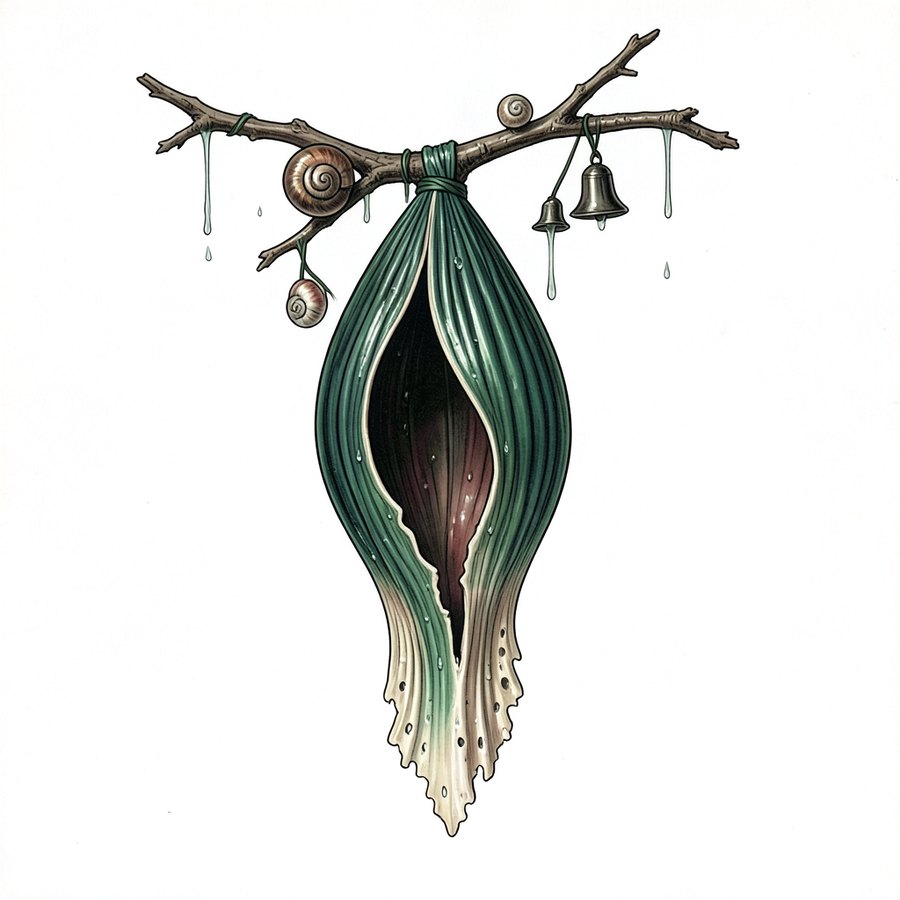
Tinnitus is a sound made by the hearing system itself, most often where hearing has been lost, and its hearer alone hears it, loudest in silence.
Where sound from outside goes missing, hearing fills the gap with a sound of its own.
behavior It hums steadily under every other sound, rises when the room goes quiet, and sinks from notice when it is left alone.
What sound in your head have you mistaken for the room?
I Dissection
Each organ answers one question about the idea. The framed one, its intake, is the dominant organ: the being's class, the one the idea could not lose and stay itself.
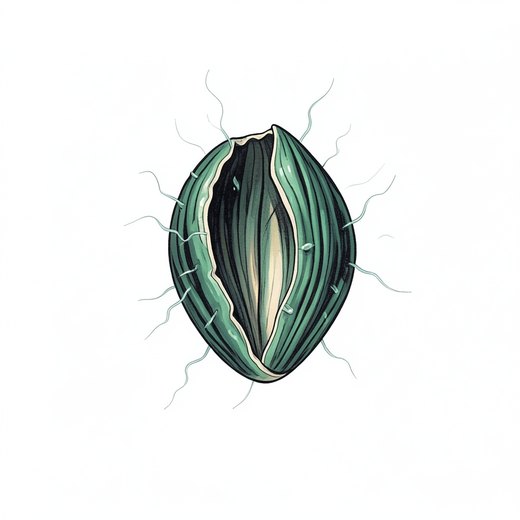
Fig. 1. Kernel
Phantom sound
Which premise, if it were false, would kill this idea?
Hearing makes sound of its own when sound from outside is missing. In a soundproof room most listeners with normal hearing soon hear a hum or a ring.1, 2
drawn as: phantom sound · view: magnified
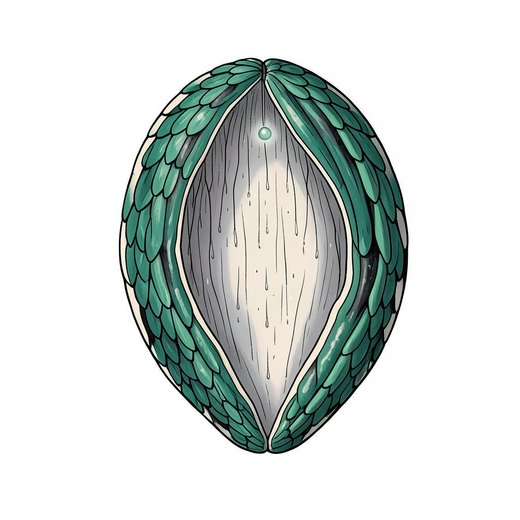
Fig. 2. Boundary
White noise
What sets it apart from what it is not, and how does it keep that distinction?
It is heard by its hearer alone, and outer sound hides it. Rain, wind or a hiss of white noise covers the ring, which returns when the room falls quiet.2
drawn as: white noise · view: cast
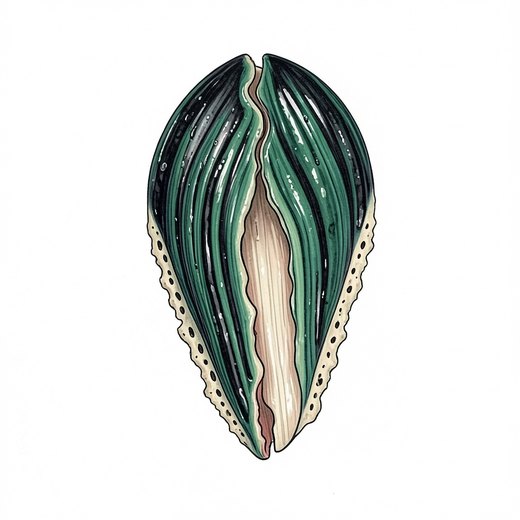
Fig. 3. Intake
Noise notch
❦ dominant organWhat must it feed on to work? What has to be present, noticed or supplied?
It feeds on missing sound. Loud noise kills hair cells tuned near 4000 hertz and carves a notch in hearing, and the ring often sits near the pitch of that gap.3
drawn as: noise notch · view: at work
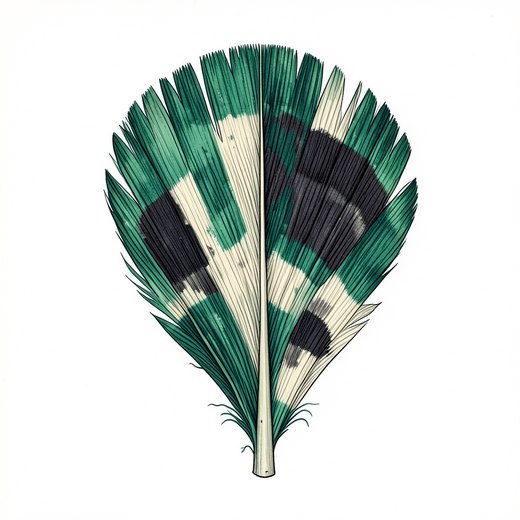
Fig. 4. Mechanism
Tonotopic map
How does it turn what it takes in into what it gives out?
Deprived of input, nerve cells tuned to the lost pitches fire on their own and in step, and the brain's map of pitch shifts to crowd around the gap.3
drawn as: tonotopic map · view: transparent
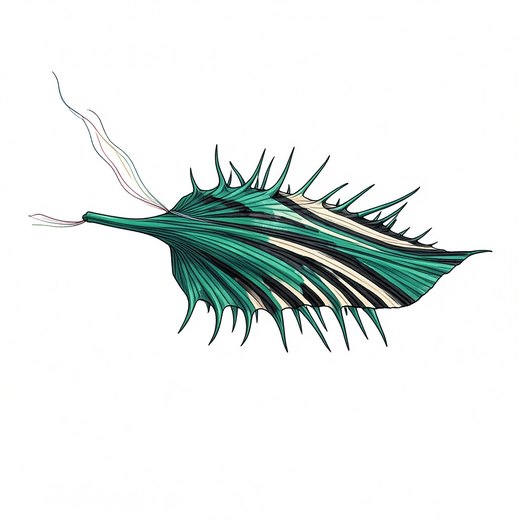
Fig. 5. Output
Cochlear echo
What does it make possible, visible or knowable?
It shows that the ear makes sound itself. A microphone sealed in the ear canal records faint tones the cochlea sends out, echoes of its own amplifying cells.4
drawn as: cochlear echo · view: detached
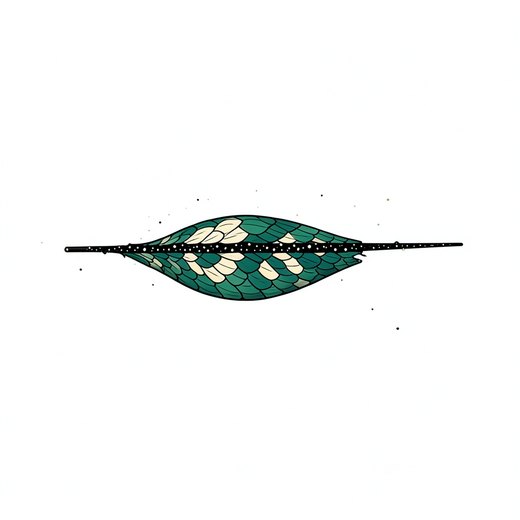
Fig. 6. Dispersal
High E
What part of it travels into other minds, ideas and fields, and by what vector?
It travels into music. Smetana wrote the whistling that heralded his deafness into his first string quartet, as a long high E that cuts across the finale.5
drawn as: high E · view: in situ
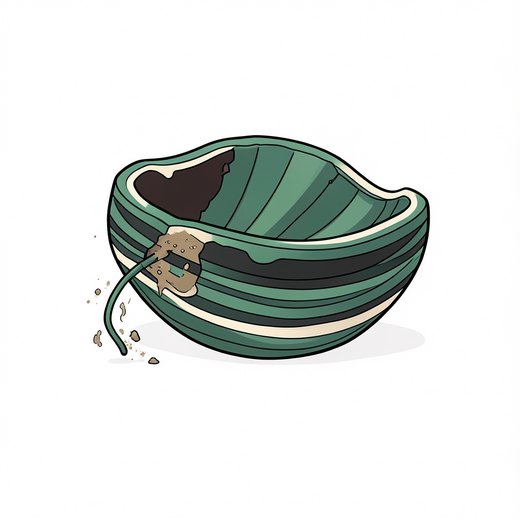
Fig. 7. Decay
Severed nerve
What can it not digest, where does it fail, and what does it leave behind for others?
It outlasts its cause. Cutting the hearing nerve often leaves the ring in place, and it fades only as the brain learns to file it among harmless sounds.3, 2
drawn as: severed nerve · view: cross section
II Meaning associations
No relations recorded yet.
descent membership food web resemblance or friction
Lineage
A founder, dissected by hand.
Kin
same kind in Roget Amber, Breath, Chiaroscuro, Chimera, Entelechy, Iridescence, Music, Silence, Vertigo, Shared Breath
same kind in Wilkins Placebo, Vertigo
same kind in WordNet Possession, Presence, Solitude, Threshold, Trance, Weightlessness, The Shared Cell
same kind in Llull Aura, Awakening, Chimera, Fear, Qualia, Silence, Vertigo, Babelhum, Shared Breath, The Swing Door
same phylum Amber, Clay, Dream, Lake, Placebo, Possession, Solitude, Winter, Knowing Trust, The Shared Cell
same dominant organ Clay, Faith, Fear, Lake, Patience, Prophecy, Resonance (second reading), Silence, Trance
Genome
III In the world
Echoes
- ringing ears after a loud concert
- a high whine in a silent bedroom
- the long high E in Smetana's first string quartet
- the hum heard inside a soundproof booth
IV Record
How it was drawn
its draw 1, a point in the morphospace (laws §8), drawn by flux-2-klein-4b.safetensors.
| axis | value | |
|---|---|---|
| book | pathemata | |
| symmetry | asymmetric | |
| organization | nested | |
| silhouette | pendant | |
| scale | hand | |
| proportion | even latent | |
| growth | regenerated | |
| articulation | jointed latent | |
| openness | hollow | |
| skeleton | exoskeleton | |
| locomotion | sessile latent | |
| pattern | rosettes latent | |
| coloration | countershaded | |
| substance | gill tissue | |
| surface | glossy | |
| palette | malachite | |
| luminosity | sheen | |
| transparency | opaque latent | |
| gesture | closes | |
| unity | unmarked latent | |
| modality | possible latent | |
| causation | unmarked latent | |
| determinacy | doubled latent | |
| fusion | sprouting | |
| anomaly | scale clash | |
| graft | pipes | |
| technique | chromolith | |
| viewpoint | cutaway | |
| value | unmarked latent | |
| balance | cantilevered latent | |
| density | sparse latent | |
| rhythm | regular latent | |
| saturation | muted latent | |
| appendages | bells | |
| anchor (body) | mistletoe growing out of the branch of its host | |
| anchor (detail) | a cochlea, a coiled tapering spiral of chambers |
Sources
- Morris F. Heller and Moe Bergman, Tinnitus Aurium in Normally Hearing Persons (Annals of Otology, Rhinology and Laryngology, 1953)
- Pawel J. Jastreboff, Phantom Auditory Perception (Tinnitus): Mechanisms of Generation and Perception (Neuroscience Research, 1990)
- Jos J. Eggermont and Larry E. Roberts, The Neuroscience of Tinnitus (Trends in Neurosciences, 2004)
- David T. Kemp, Stimulated Acoustic Emissions from within the Human Auditory System (Journal of the Acoustical Society of America, 1978)
- Bedřich Smetana, String Quartet No. 1 in E minor, From My Life (1876)
❦